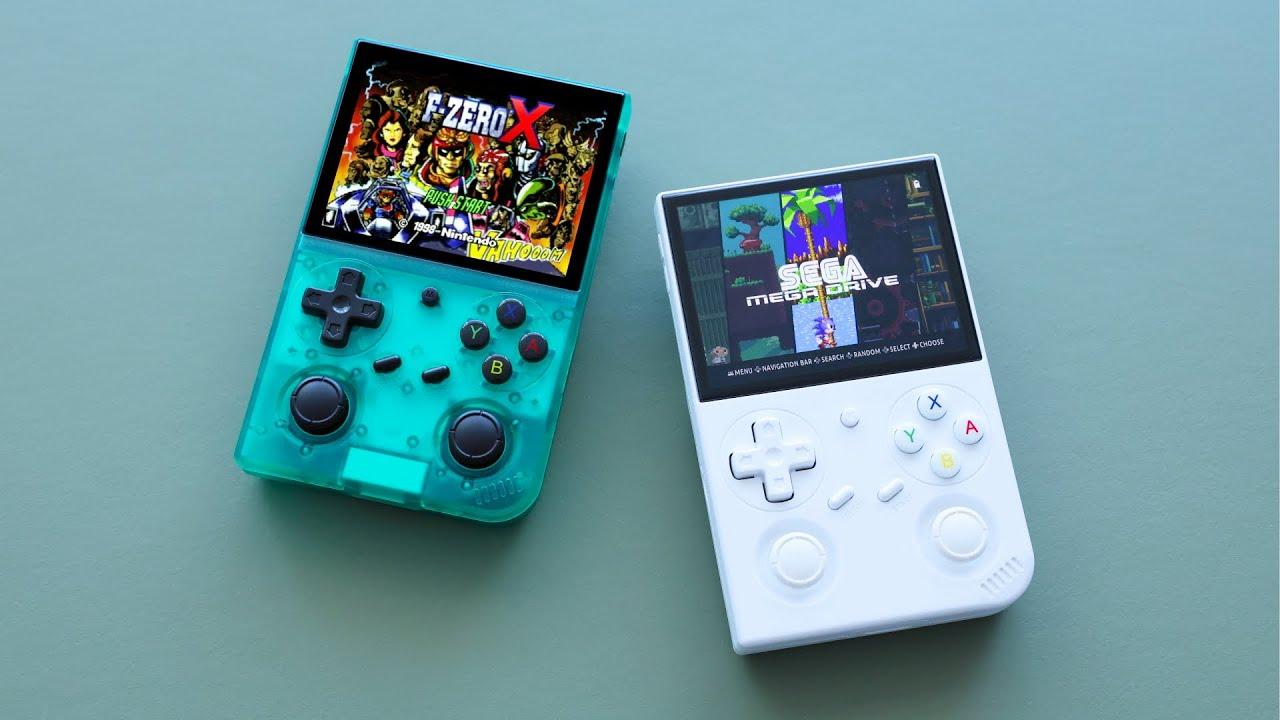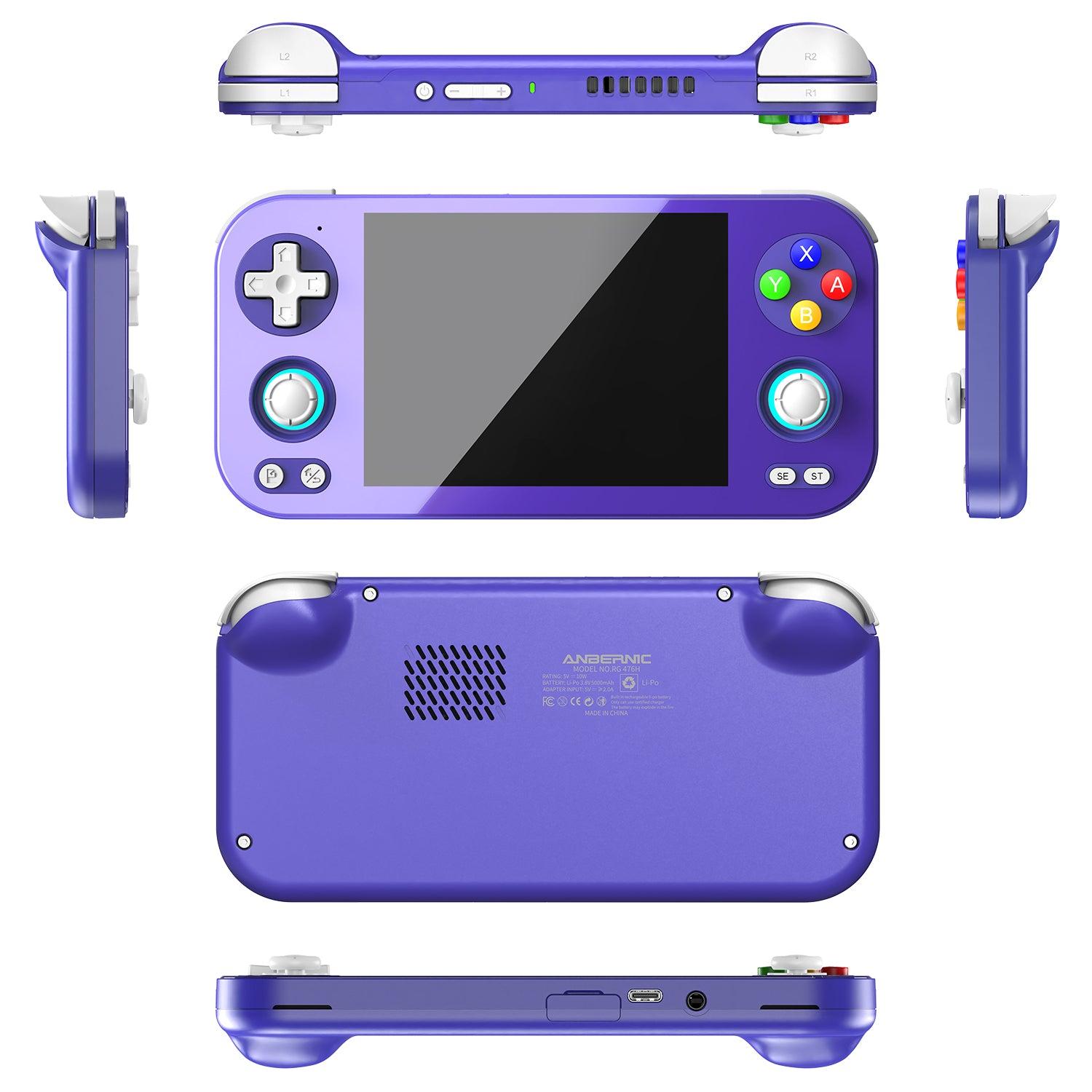
The Game Boy Advance (GBA) has an extensive library filled with beloved classics, but it also houses a treasure trove of hidden gems waiting to be discovered. Here are five titles that every retro gaming enthusiast should check out, especially on devices like the Powkiddy RGB30 for a portable gaming experience.
A straight word on the list before you start: three of the five below, Golden Sun, Metroid Fusion and Fire Emblem, sold and reviewed like headline releases and are not obscure by any measure. They stay because they are the GBA games newer players most often skip on the way to its Pokémon and Mario titles. The genuinely overlooked picks are #2 and #3, and the three deeper cuts further down.
1. Golden Sun
"Golden Sun" is Camelot's GBA RPG, released in North America in November 2001, and it was a hit rather than an overlooked one: it sold more than 1.6 million copies, scored 91 on Metacritic and was Nintendo Power's best GBA game of 2001. What newer players miss is how much it still does. Its "Psynergy" system lets you cast spells both in combat and out in the field to solve environmental puzzles, and the Djinn you collect shape each character's stats and spell list, or can be spent as one-shot elemental attacks. The beautifully animated battles and rich world make it a must-play for any RPG fan; our Golden Sun feature goes deeper.
2. Summon Night: Swordcraft Story
Released in Japan in April 2003 and brought to North America by Atlus in July 2006, well into the DS era, Summon Night: Swordcraft Story is the GBA action RPG most people never saw. Developed by Flight-Plan, it has you pick one of two protagonists, Cleru or Pratty, children of the late Craftlord Shintetsu training to earn his title. The hook is the forge: you craft your own weapons from techniques and materials split across four elements, then enchant them with ores, and battles are fought in real time. A short personality quiz at the start assigns one of four Guardian Beasts that supports you in combat. Metacritic has it at 77. IGN praised its focus on entertaining battles and its replay value while calling the story simple, which is a fair summary. A sequel followed in North America in October 2006.
3. Astro Boy: Omega Factor
Co-developed by Treasure and Hitmaker and published by Sega, "Astro Boy: Omega Factor" is a side-scrolling beat 'em up that reached North America in August 2004. It plays in two episodes. In Birth, events run until the villain Sharaku takes over the Earth; in Rebirth, Astro is revived with the power to travel back through the story and replay its stages to prevent that catastrophe. The "Omega Factor" itself is an in-game encyclopedia of 47 characters drawn from across Osamu Tezuka's work: meeting each one adds to Astro's abilities, from health and strength to flight speed, and some open hidden areas. Critics singled out the detail and animation of its sprites, and it scored 85 on Metacritic, yet it is still far less known than that reputation suggests.
4. Metroid Fusion
"Metroid Fusion" is not a lost game. It scored 92 on Metacritic, sold more than 1.6 million copies, and won Handheld Game of the Year from the Academy of Interactive Arts & Sciences. It is here because it is the Metroid that players raised on Super Metroid most often skip. Samus Aran investigates a parasite outbreak aboard the BSL research station, and the tension comes from the SA-X, an X parasite copying Samus at full power, which stalks her through the station. The game combines exploration and combat in a way that keeps players on their toes, and it is a must-play for series fans and newcomers alike. Read our full Metroid Fusion review.
5. Fire Emblem
"Fire Emblem" (known in Japan as The Blazing Blade) is a tactical RPG set on the continent of Elibe, twenty years before the Japan-only Binding Blade. Players control a group of heroes through a story of political intrigue and personal conflict, and permadeath means a unit that falls in battle is gone for good, which makes every decision count. Its significance is not that it influenced tactical RPGs: the series had been doing that in Japan since 1990. It is that this was the first Fire Emblem released outside Japan, in North America in November 2003. It scored 88 on Metacritic and sold well enough overseas that nearly every later entry was localised. See our Blazing Blade review.
The five at a glance
| Game | North American release | Developer | Genre | Metacritic |
|---|---|---|---|---|
| Golden Sun | November 2001 | Camelot Software Planning | Turn-based RPG | 91 |
| Summon Night: Swordcraft Story | 25 July 2006 | Flight-Plan | Action RPG, weapon crafting | 77 |
| Astro Boy: Omega Factor | 17 August 2004 | Treasure / Hitmaker | Side-scrolling beat 'em up | 85 |
| Metroid Fusion | 18 November 2002 | Nintendo R&D1 | Action-adventure | 92 |
| Fire Emblem | 3 November 2003 | Intelligent Systems | Tactical RPG | 88 |
Deeper cuts: three GBA games that really did slip past
If the top five leans too heavily on games you already know, these three sold poorly enough that "hidden gem" is simply accurate.
Gunstar Super Heroes
Treasure's 2005 sequel to its 1993 Mega Drive run-and-gun Gunstar Heroes, released in North America in October 2005. It is not a straight remake: the original's weapon-combination system and throw are gone, replaced by three selectable weapon types, directional melee attacks and a super meter that builds as you fight. IGN gave it 9.0 and an Editors' Choice award, and its aggregate score sits at 83. It still did not sell well, to the point that Nintendo Power urged readers to go and buy it.
Ninja Five-O
Hudson's action platformer was published by Konami in April 2003 in Europe and North America and never released in Japan at all. You play Joe Osugi, a ninja cop clearing five missions of terrorists, and most stages are a search for coloured keys to reach locked doors and free hostages, with a grappling hook for the hard-to-reach spots, per Nintendo World Report's review. It scored 82 on Metacritic and IGN later called it the best game no one played. Poor sales made cartridges scarce enough that used copies were fetching £70 to £200 by 2013. A February 2025 re-release on Switch, PS4, PS5 and PC made it easy to play legitimately for the first time in two decades. It also appears on our hidden gem GBA platformers list, alongside Drill Dozer and Klonoa: Empire of Dreams.
Sigma Star Saga
The odd one here, and a recommendation with a caveat. WayForward's 2005 game alternates top-down RPG exploration with side-scrolling shoot 'em up battles: its random encounters are shmup stages, fought in a bio-ship you arm through its "Gun Data" system. Reviews were mixed (68 on Metacritic), with praise for the genre blend and complaints about repetitive encounters. Nothing else on the GBA plays quite like it, and a remastered DX edition arrived in April 2026.
Four more from our older GBA hidden-gem lists
This site used to run three separate GBA hidden-gem lists. On 8 October 2026 we folded the other two into this page. Their picks that are genuinely overlooked, and that checked out against the published record, are below. Two of them needed corrections on the way in, listed in the table further down.
Drill Dozer
Game Freak's platformer, released in Japan in September 2005 and in North America in February 2006, never had a European retail release at all. Jill, daughter of a bandit gang leader, pilots a drilling mech to get back a Red Diamond stolen by the rival Skullkers gang. Sprockets collected in each level let her shift into higher gears and drill through tougher blocks, and the cartridge has its own rumble motor built in. It scored 81 on Metacritic but sold only about 22,000 copies in Japan, launching as attention moved to the DS. Our hidden gem GBA platformers list ranks it first and covers it in full.
Boktai: The Sun Is in Your Hand
Konami Computer Entertainment Japan's action game, released in North America in September 2003, puts a light sensor on the cartridge. You play Django, a vampire hunter, and the sunlight the sensor reads charges his Gun Del Sol. In boss fights it also powers the Pile Driver that finishes the Immortals off, so the game was meant to be played outdoors in daytime. It scored 83 on Metacritic. No handheld has that sensor, so on an emulator you need sensor emulation or a patched ROM. Our classic GBA adventure games guide explains both.
Riviera: The Promised Land
Sting's RPG first appeared on the WonderSwan Color in Japan in 2002. Its GBA version reached North America through Atlus in June 2005. You play Ein, a Grim Angel. Exploration runs on a "Trigger" system: you examine points on each screen, and many cost Trigger Points earned in battle. Combat is turn-based, with three of your five party members fighting. Before each fight you choose four items from the sixteen you carry. Each item gives each character a different skill and breaks after a set number of uses, much like weapons in Fire Emblem. It scored 76 on Metacritic. A PSP version followed in 2007, and an HD remaster reached PC in 2024.
Sonic Battle
The caveat entry. Sonic Team's arena fighter came to North America in January 2004 (THQ published it there). Up to four players fight in 3D arenas built from 2D sprites. Its hook is Emerl, an original robot character. In Story Mode, wins earn skill cards that let you build Emerl's moveset out of other characters' moves. It has ten playable characters, including Shadow, Rouge, E-102 Gamma and Chaos. Reviews were split, at 69 on Metacritic: IGN gave it 8/10, while GamePro called earning skill points "a grueling ordeal". It is here because nothing else in the Sonic catalogue plays like it, not because it is a great game.
What this page got wrong
This list was fact-checked on 26 September 2026 against each game's published release and sales record. We corrected it rather than quietly rewriting it:
| Claim on the earlier page | What the record says |
|---|---|
| Jade Cocoon: Story of the Tamamayu listed as a GBA hidden gem | It is a PlayStation game (Genki, 1998 in Japan, 1999 in North America) and never came to the GBA. Replaced with Summon Night: Swordcraft Story |
| Golden Sun is "often overshadowed by more mainstream RPGs" | It sold more than 1.6 million copies and won Nintendo Power's best GBA game of 2001 |
| Metroid Fusion "often gets lost in the shuffle" | More than 1.6 million sold, 92 on Metacritic, AIAS Handheld Game of the Year |
| Fire Emblem "has influenced countless tactical RPGs since its release" | The series' influence dates from the 1990 Famicom original. This entry's milestone is being the first released outside Japan |
| Astro Boy: Omega Factor has a "branching storyline" about "the secrets of his past" | The story does not branch. The second episode, Rebirth, sends Astro back in time to replay stages and prevent Sharaku's takeover |
The two lists merged into this page on 8 October 2026 were checked the same way. These are their claims that did not hold up:
| Claim on a merged page | What the record says |
|---|---|
| Riviera: The Promised Land "mixes traditional gameplay with card-based mechanics" and has players "use cards to perform actions" | There are no cards. Battles use items that grant skills and break after limited uses |
| Sonic Battle is "a straightforward 2D fighter" | It is a four-player arena fighter with 3D arenas and 2D sprites, built around customising Emerl |
| Wario Land 4 and The Legend of Zelda: The Minish Cap listed as hidden gems | Wario Land 4 sold 2.2 million copies worldwide and scored 88 on Metacritic. The Minish Cap is a mainline Zelda. Neither is hidden, so neither moved across |
Playing these on a handheld
The GBA's screen is 240×160 pixels, a 3:2 shape. That is the number to compare, because it decides whether a handheld can scale the picture by a whole number and keep every pixel square.
Prices and stock below were read from each store's own product data on 26 September 2026. We have not tested these handhelds ourselves.
| Handheld | Screen | GBA scaling | Price at our link | Stock on 26 Sep 2026 |
|---|---|---|---|---|
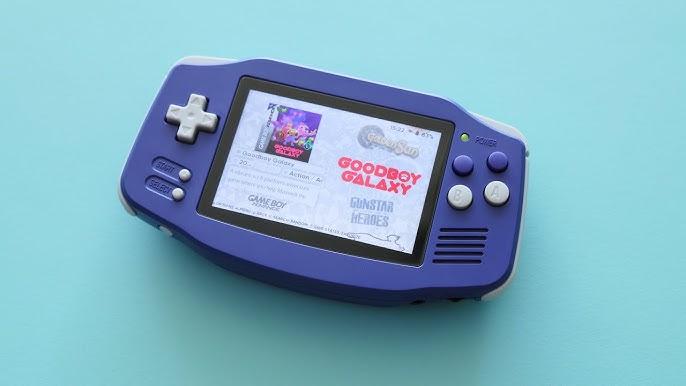
| Anbernic RG34XX | 3.4" IPS, 720×480 | Exactly 3×, fills the screen | $57.11 (64GB) | 6 of 36 variants, China warehouse, Black and Glacier only |
| Anbernic RG34XXSP | 3.4" IPS, 720×480, clamshell | Exactly 3×, fills the screen | $99.99 (64GB) | In stock, all 15 variants |
| Miyoo Mini Plus | 3.5" IPS, 640×480, 4:3 | 2× (480×320) with borders, or 2.67× unevenly | $69.99 console-only | In stock, all 28 variants |
| TrimUI Brick | 3.2" IPS, 1024×768, 4:3 | 4× (960×640), borders top and bottom | $85.99 console-only | In stock, all 28 variants |
For GBA specifically, a 720×480 panel is the ideal: 240×160 times three is exactly 720×480, so the ANBERNIC RG 34XX and the clamshell RG34XXSP show the whole image at a perfect integer scale with no borders. The RG34XX is the cheaper route, but on 26 September only six of its 36 variants were orderable. Our Miyoo Mini Plus vs RG34XX comparison covers the trade-offs between the two most popular budget picks.
Frequently asked questions
Where is Jade Cocoon?
It was removed because it is not a Game Boy Advance game. Jade Cocoon: Story of the Tamamayu is a 1998 PlayStation monster-raising RPG by Genki. It belongs on a PS1 list, alongside our PS1 hidden gems.
Why are Golden Sun and Metroid Fusion on a hidden gems list?
Because this page has always had them, and pulling well-loved games from a list people already use would help nobody. They are not hidden, though: both sold more than 1.6 million copies. The genuinely overlooked games on this page are Summon Night: Swordcraft Story, Astro Boy: Omega Factor and the three deeper cuts.
Was Fire Emblem on the GBA the first Fire Emblem game?
No. The series began on the Famicom in 1990 and had six Japanese entries before this one. The GBA game was the first to be released in English.
Where are Wario Land 4 and The Minish Cap?
Both were on older GBA hidden-gem lists that have now been merged into this page. Neither moved across, because neither is overlooked: Wario Land 4 sold 2.2 million copies, and The Minish Cap is a mainline Zelda. Both are still worth playing. See our Minish Cap feature and the broader best GBA games list.
Does Boktai work on an emulator or a retro handheld?
Yes, with a workaround. Boktai's sunlight sensor is in the cartridge itself, so no handheld or emulator has a real one. You need an emulator that simulates the sensor, or a patched ROM. Our GBA adventure games guide covers both options.
Can you still buy these games today?
Ninja Five-O was re-released on modern consoles and PC in February 2025 and Sigma Star Saga DX arrived in April 2026. Original cartridges of Ninja Five-O are expensive because so few were sold.
More GBA reading
- Best GBA games, the broader list
- Top 5 essential GBA RPGs
- Hidden gem GBA platformers
These games from the Game Boy Advance showcase the creativity and depth that the console has to offer. Whether you're using a device like the Powkiddy RGB30 or revisiting an old handheld, they are worth your time. Happy gaming!