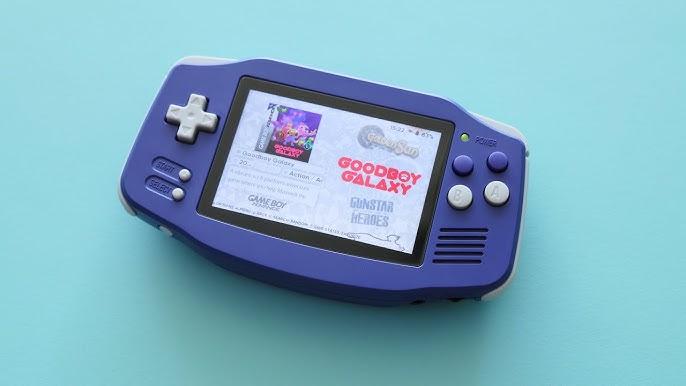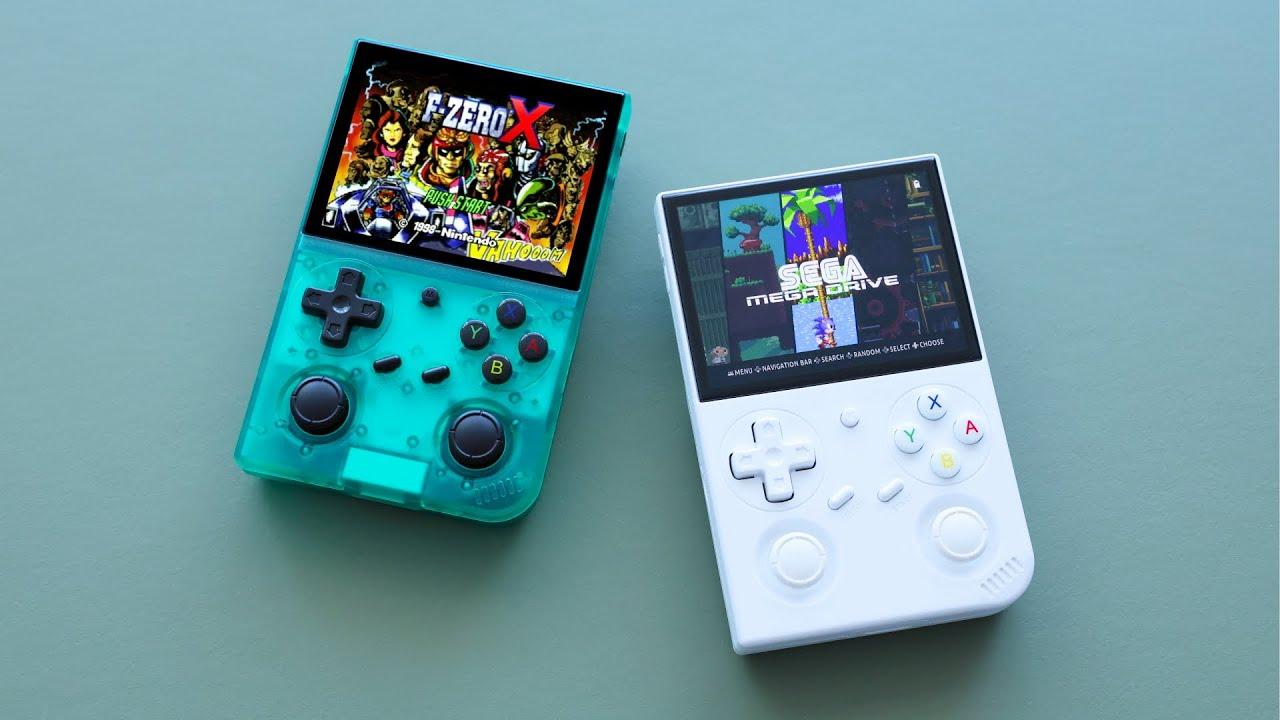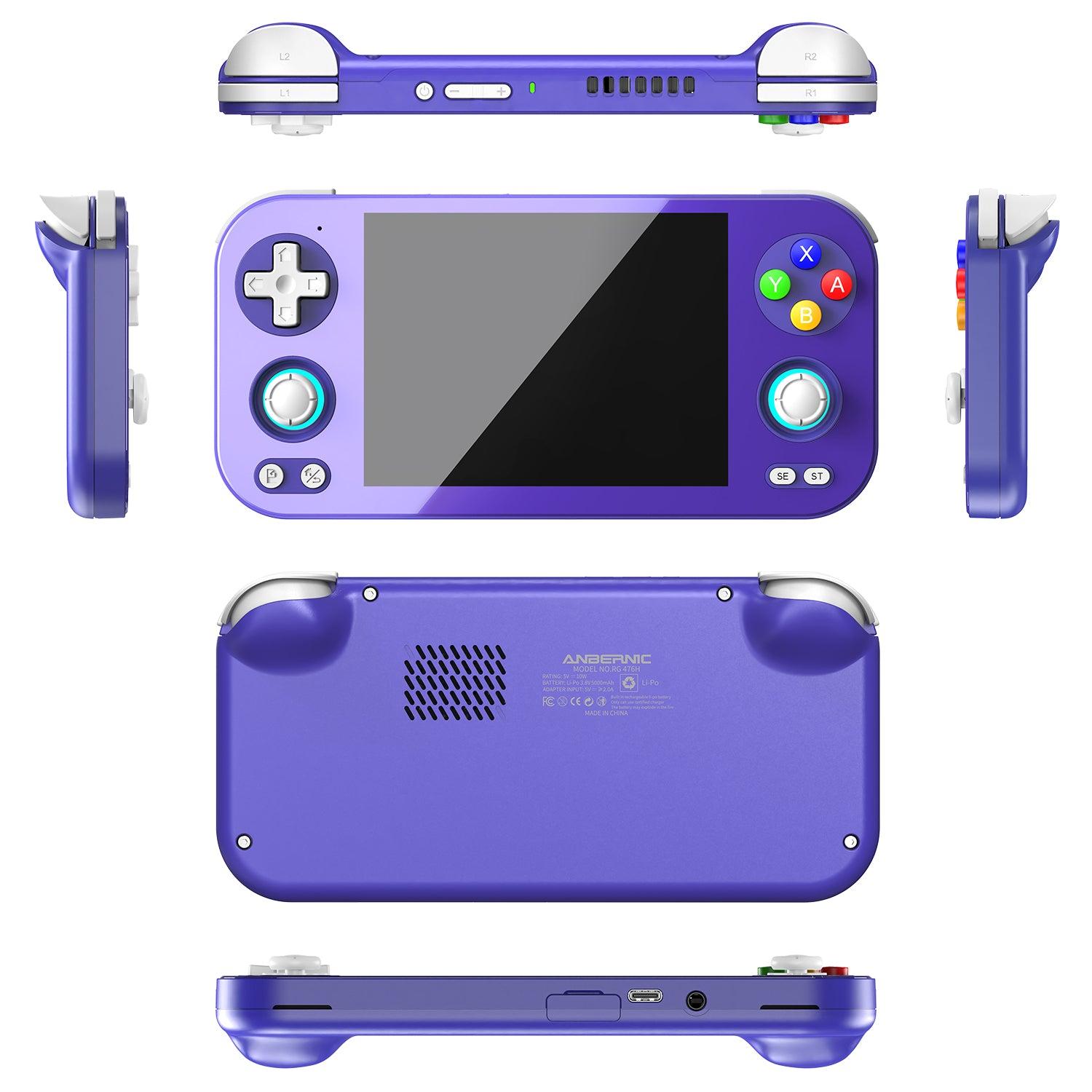
The Game Boy Advance holds one of the deepest 2D platformer libraries ever assembled on a single machine, and a good deal of it never sold. Some of the best games on the system launched into the shadow of the Nintendo DS, or against Pokémon, or with no marketing at all — and then quietly became the cartridges people pay real money for two decades later. These five are worth your time on a modern handheld like the ANBERNIC RG 34XX, which has the 3:2 screen shape the GBA library was drawn for.
Every game below is a genuine Game Boy Advance release. Release details and review scores are taken from each game's documented release history and the contemporary reviews named in each section, checked 2026-09-10.
The five at a glance
| # | Game | Year | Developer / Publisher | Metacritic | Why it is overlooked |
|---|---|---|---|---|---|
| 1 | Drill Dozer | 2005 JP / 2006 NA | Game Freak / Nintendo | 81 | Launched into the DS transition; no European GBA release at all |
| 2 | Klonoa: Empire of Dreams | 2001 | Now Production / Namco | 85 | The series has always reviewed well and sold badly |
| 3 | Yoshi's Island: Super Mario Advance 3 | 2002 | Nintendo R&D2 / Nintendo | 91 | Not obscure — but its six exclusive levels are |
| 4 | Ninja Five-O | 2003 | Hudson Soft / Konami | 82 | Sold so poorly it became one of the rarest GBA carts |
| 5 | Lemony Snicket's A Series of Unfortunate Events | 2004 | Griptonite Games | 72 | Written off as a film tie-in; the GBA build is a different game |
1. Drill Dozer
Game Freak — yes, the Pokémon studio — spent part of the mid-2000s building a platformer about a girl in a drilling mech, and almost nobody bought it. You play Jill, piloting the Drill Dozer, and the entire game hangs off one idea: the shoulder buttons spin the drill clockwise or counter-clockwise. That single verb does everything. You drill through blocks, fight enemies, and turn screws to rotate whole sections of the level, with coloured objects telling you which direction the drill needs to be spinning. Collect sprockets and you can shift gears to chew through harder material; after the second sprocket you can drill indefinitely.
The cartridge is the other half of the story. Nintendo suggested adding rumble, which required a custom cartridge with a rumble pack built into it — the cart buzzes in your hands whenever the drill bites, and it passes that rumble through to a GameCube controller if you play it via the Game Boy Player.
IGN's Mark Bozon gave it 8/10, calling the drill-centric design original while warning that a game built on one mechanic can feel thin to some players. GameSpot's Bob Colayco scored it 8.2/10 and singled out level design that keeps introducing new platforming ideas rather than repeating itself. Nintendo Power named it GBA Game of the Year and later filed it under hidden gems in its own retrospectives.
It never got a European GBA release. If the only version you have ever seen listed is the 2016 Wii U Virtual Console re-release, that is why.
2. Klonoa: Empire of Dreams
Klonoa is the standing example of a series that reviews brilliantly and sells terribly, and Empire of Dreams is the handheld entry most people skipped. It is a 2D puzzle-platformer built around the Wind Ring: Klonoa inflates enemies, picks them up, and throws them — at other enemies, at switches, or downward to double-jump off them. Blocks get manipulated the same way, so most rooms are a small physical puzzle rather than a jump you time correctly.
It reviewed at 85 on Metacritic. IGN scored it 9/10 and named it Best Platformer on GBA in its 2001 awards, praising the bright, kaleidoscopic level art; the recurring criticism is that it is less ambitious than the PlayStation entries, which is fair and does not stop it being the best pure puzzle-platformer on the system.
Namco published it in July 2001 in Japan and August 2001 in North America, with Europe and Australia waiting until March 2002. It has since appeared on Wii U Virtual Console and, in September 2025, on Nintendo Classics for Switch — but the cartridge is still the version most GBA owners never touched.
3. Yoshi's Island: Super Mario Advance 3
This is the famous one on the list, and pretending otherwise would be dishonest. It holds a 91 on Metacritic, IGN's Craig Harris called it the best platformer ever developed, and it won GameSpot's Best Graphics on Game Boy Advance award for 2002. Nobody needs to be told Yoshi's Island is good.
What is genuinely overlooked is that the GBA version is not simply the SNES game shrunk down. Nintendo R&D2 added six new levels that exist nowhere else, along with Kazumi Totaka's voice work for Yoshi and four-player link-cable support for the bundled Mario Bros. minigame. If you played the 1995 original to death, there is still content here you have not seen.
The trade-off is real and worth knowing before you load it: the visible play area was reduced to fit the GBA's lower resolution, so you see less of each level than you did on SNES. On a modern handheld with a larger panel that stings less than it did in 2002, but it is still a narrower window on the same stages.
4. Ninja Five-O
Hudson Soft developed it, Konami published it, and it arrived in April 2003 — as Ninja Cop in Europe — to almost no sales whatsoever. You play Joe Osugi across five missions of three levels and a boss apiece, rescuing hostages and fighting terrorists empowered by the Mad Masks. It balances tight platforming against fast melee and shuriken combat, and it does not pad: the whole thing is a compact, difficult, extremely well-tuned action platformer.
It sits at 82 on Metacritic. IGN handed it a Best Game No One Played award, and GameSpy ranked it the third-best GBA game of 2003. Then rarity took over — by 2013 used copies were fetching £70 to £200 on eBay, which is how a game with those reviews stayed unplayed.
That has finally changed. A re-release landed on 25 February 2025 for Windows, Switch, PS4 and PS5, so you no longer have to choose between a collector's price and emulation.
5. Lemony Snicket's A Series of Unfortunate Events
Film tie-ins from 2004 have earned their reputation, which is exactly why this one gets skipped. The console versions are a middling action-adventure. The Game Boy Advance version, built by Griptonite Games, is a different game — a platform-focused build with its own structure, extra locations including Briny Beach that the console releases do not contain, and free switching between all three Baudelaire children at any time rather than the restricted swapping on consoles. It is also noticeably harder than the console releases.
Be clear-eyed about it: 72 on Metacritic and 69.55% on GameRankings, with Nintendo Power giving it 3.3/5. Reviewers liked the storybook presentation and the inventing system — you gather items characters mention and craft them into inventions — and criticised it for being short, easy in places and light on replay value. It is not on the level of the four games above it. It is a genuinely creative licensed platformer nobody looked at twice, and it is cheap.
Frequently asked questions
Do all five of these run well on a GBA-capable handheld? Yes. All five are standard GBA cartridges with no unusual hardware requirements — with one caveat. Drill Dozer's rumble comes from a motor built into the physical cartridge, so on any emulation-based handheld you get the game without the rumble. Nothing else on this list depends on cartridge hardware.
Which one should I start with? Klonoa: Empire of Dreams, if you want the best-reviewed pure platformer of the five and something that works in short sessions. Drill Dozer, if you want the one that feels least like anything else on the system.
Why is Yoshi's Island on a hidden gems list? Because the six GBA-exclusive levels are the hidden part, not the game. If you would rather read a list with no famous entries on it at all, our Top 5 hidden game gems for the Game Boy Advance sticks to genuinely obscure picks across every genre.
Is Ninja Five-O still expensive? The original cartridge is. The February 2025 re-release on Switch, PS4, PS5 and Windows is not, and it is the same game.
Where to go next
If you want more of the GBA's overlooked library, our wider GBA hidden gems round-up covers the same ground across every genre, and Kirby: Nightmare in Dream Land is the friendliest platformer on the system if the difficulty in Ninja Five-O puts you off. For a different genre entirely, the GBA racing round-up covers what the system did with speed.
Played on a handheld with a proper 3:2 screen like the ANBERNIC RG 34XX, all five of these look the way they were drawn to look. None of them sold. All five deserved better.