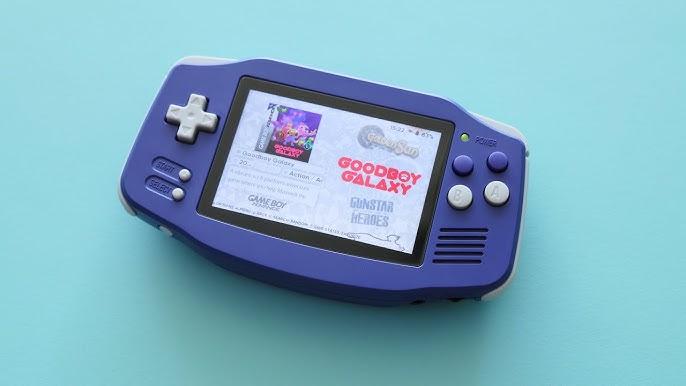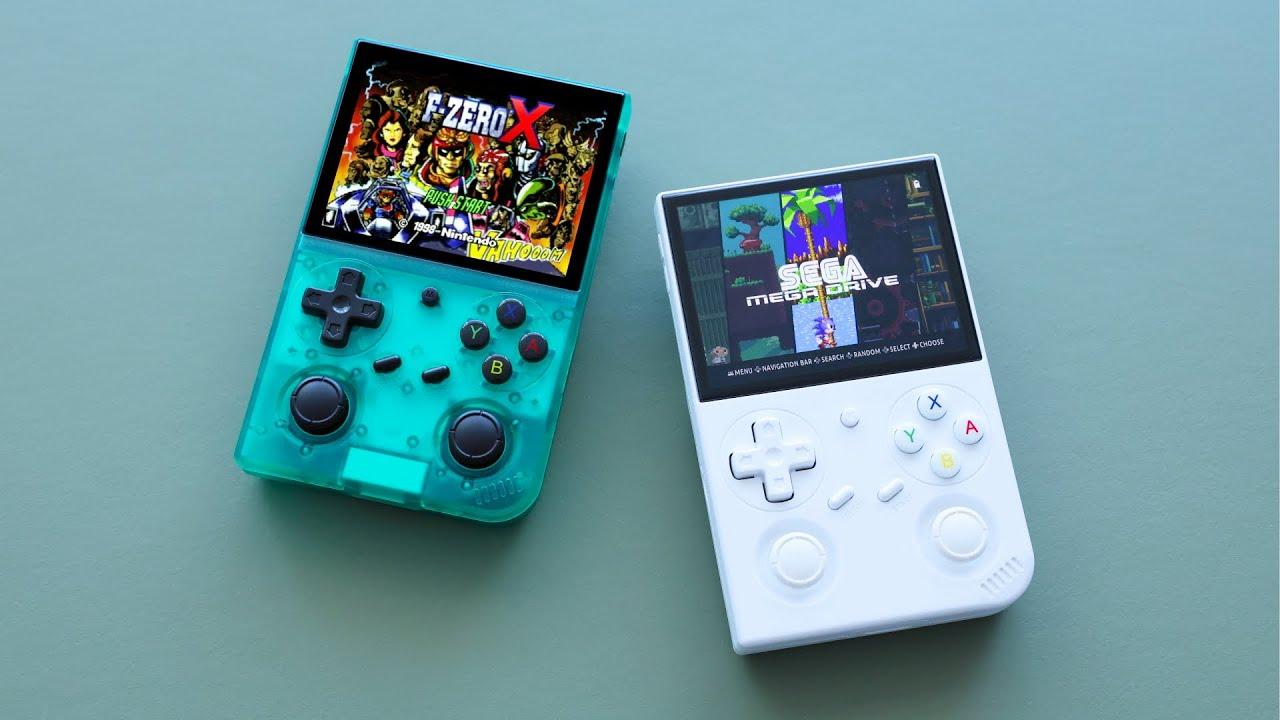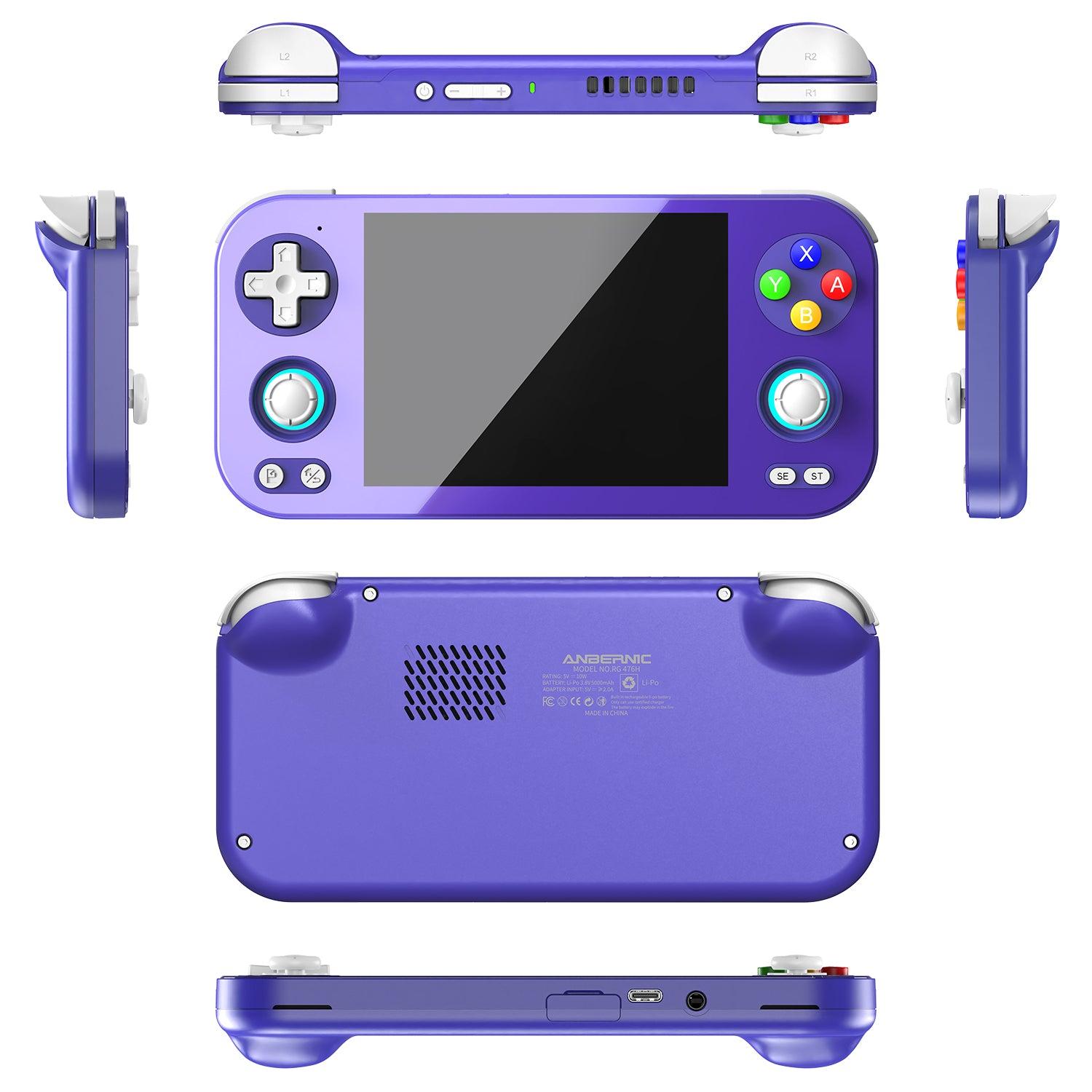
The Game Boy Advance (GBA) has an extensive library of games, many of which are well-known classics. However, nestled within this vast collection are hidden gems, particularly in the puzzle genre. These games may not have received the recognition they deserve, but they offer unique challenges, clever mechanics, and hours of brain-teasing fun. With the help of modern retro devices like the ANBERNIC RG 34XX, you can easily access these titles and rediscover the magic of GBA puzzle gaming. Here are five hidden gem puzzle games that you absolutely need to play.
This list was rebuilt in September 2026. Four of the five games previously named here did not belong: two were never released on the Game Boy Advance at all, one was not a real game, and one was a famous title with poor reviews rather than a hidden gem. Every entry below is a genuine GBA release, with its developer and release date stated so you can check it. What came off the page, and why, is set out in full further down.
1. Kuru Kuru Kururin
If you want the definition of a Game Boy Advance hidden gem, this is it: a launch-window Nintendo-published puzzler that North America never got on GBA hardware at all.
You steer the Helirin, a slowly and continuously rotating stick, through narrow mazes without letting either end touch a wall. That is the whole game, and it is brilliant — because you are not solving a static puzzle, you are solving a timing puzzle. The rotation never stops, so every gap has a window, and the route that looks shortest is often the one whose window closes before you reach it. Clipping a wall costs health; checkpoints restore it.
Eighting developed it and Nintendo published it, on 21 March 2001 in Japan and 22 June 2001 in Europe and Australia. It was never released on the Game Boy Advance in North America. The first official North American release of any kind came on the Wii U Virtual Console on 11 February 2016, fifteen years late, and it arrived on the Game Boy Advance app for Nintendo Switch Online on 8 February 2023. Eurogamer scored it 9/10; its GameRankings aggregate settled at 74%, with the dissent coming from reviewers who found it punishing rather than from anyone who thought it was dull.
Play it with a good D-pad. It is the least forgiving game on this list and the one most worth the frustration.
2. ChuChu Rocket!
Originally a Dreamcast title, ChuChu Rocket! found a new home on the GBA and is a must-try for puzzle enthusiasts. Sonic Team developed it and Sega published it, reaching North America on 11 June 2001 after a 21 March Japanese release.
The board is a grid. Mice called ChuChus wander it, cats called KapuKapus hunt them, and you win by placing directional arrows on the floor so that every mouse reaches the rocket and no cat does. You have a limited supply of arrows, which is what turns it from a reflex game into a puzzle: you are not reacting to the mice, you are building a machine that routes them correctly before you press start.
The detail that makes the GBA version the one to own is the puzzle count. The Dreamcast release let players upload their own levels to Sega's servers, and Sonic Team went through the roughly 17,000 community puzzles that were uploaded and selected 2,500 of them for the cartridge. That is a hand-picked best-of a community's entire output, on a handheld, and it is why this cartridge outlasts almost anything else in the genre.
Multiplayer is the other reason. Up to four Game Boy Advances can play from a single cartridge over Game Link Cables. There is no online mode — that was a Dreamcast-only feature — but four-player local from one cart was, and still is, unusually generous.
3. Denki Blocks!
Denki Blocks! is the cleverest thing on this page and almost nobody in North America saw it. Denki developed it, Rage Games published it in Europe, and Majesco brought it to the United States in 2002.
The mechanic is deceptively simple and genuinely unlike anything else here. You have coloured blocks called Gumblocks on a grid dotted with fixed blockers. You do not move one block. A move is a single step in one cardinal direction, applied simultaneously to every Gumblock that is not blocked. Same-coloured blocks that collide merge into one larger shape, and that shape then moves as a unit forever after. So each move changes the geometry of every subsequent move, and the puzzle is working out the order of presses that merges what you need without gluing together something you needed to keep apart.
The GBA version's tournament mode is structured as eight escalating sets of 25 puzzles, each set curated by a strong Denki Blocks! player. IGN gave it 8/10 and called it "a lot of fun and one hell of a mind twister" — a game that has quietly stayed in print across Game Boy Color, GBA, PSP, iOS and Android since, which for a puzzle original with no licence behind it is its own kind of verdict.
4. Polarium Advance
Polarium Advance is the rare case of a handheld sequel that is better than the stylus-driven original, and it landed so late in the GBA's life that it was easy to miss entirely.
Mitchell Corporation developed it and Nintendo published it, with Atlus handling North American distribution. It reached Japan on 13 October 2005, Europe on 31 March 2006 and North America on 13 November 2006 — more than a year and a half after the Nintendo DS had taken over.
You draw a single continuous line across a grid of black and white tiles, flipping each tile you cross. Any horizontal row that ends up entirely black or entirely white is erased, and the puzzle is solved when the grid is clear. One stroke, no undo, and the order in which you cross tiles is everything.
Two things make the GBA version the better one. It has 365 puzzles, nearly four times as many as the DS Polarium, and it includes a puzzle editor that lets you build and save up to 100 of your own, with extra tile types unlocked as you play. The controls moved from the DS stylus to the D-pad, which sounds like a downgrade and is not — a D-pad path is exact, and this is a game where a half-millimetre of stylus drift ruins a solution. Eurogamer gave it 8/10; its Metacritic average is 73.
5. Super Puzzle Fighter II Turbo
The arcade and PlayStation versions of Super Puzzle Fighter II Turbo are well known. The Game Boy Advance port is not, and it is the best competitive puzzle game on the system.
Atomic Planet Entertainment handled the conversion for Capcom. It reached Europe on 28 March 2003 and North America on 31 March 2003. A Japanese release was planned and cancelled, which is part of why this version has stayed obscure.
Pairs of coloured gems drop into a 12×6 field. Ordinary gems do nothing on their own — they are only destroyed when a Crash Gem of the same colour touches them, which clears every connected gem of that colour at once. In between, you are quietly building Power Gems: same-coloured rectangles, minimum 2×2, that count for far more when they finally go. Clearing gems drops Counter Gems onto your opponent, which tick down and turn into ordinary gems unless they are cleared first.
That structure is why it beats Tetris-style games as a versus title. You are not racing. You are spending thirty seconds building a large rectangle while your opponent buries you, and then cashing it in all at once. Eurogamer scored it 9/10, IGN 8/10, GameSpot 7.7/10 and GameSpy 82%. The one real compromise is technical: the GBA struggles to animate the largest chains and slows down noticeably when they land.
At a glance
Every game on this page, with the facts you would want to check before loading one.
| Game | North American GBA release | Developer | What kind of puzzle it is | Versus play |
|---|---|---|---|---|
| Kuru Kuru Kururin | Never released (Japan Mar 2001, Europe Jun 2001) | Eighting | Real-time rotation and timing | No |
| ChuChu Rocket! | 11 June 2001 | Sonic Team | Route-planning with limited arrows | Up to 4, one cartridge |
| Denki Blocks! | 2002 | Denki | Everything moves at once; merge by colour | Link-cable tournament |
| Polarium Advance | 13 November 2006 | Mitchell Corporation | Single-stroke line drawing | No |
| Super Puzzle Fighter II Turbo | 31 March 2003 | Atomic Planet Entertainment | Competitive falling gems | Yes, link cable |
| Klonoa: Empire of Dreams | 30 August 2001 | Now Production | Puzzle-platformer, not a pure puzzler | No |
| Mr. Driller 2 | 12 April 2005 | Namco | Dig downward against an air meter | Yes |
Two more worth loading
Neither of these makes the top five, for reasons worth being plain about.
Klonoa: Empire of Dreams
The best-reviewed game named anywhere on this page — Metacritic 85, and IGN's Best Platformer of 2001 for the GBA — but it is a puzzle-platformer, not a puzzle game, and putting it in the top five would be smuggling a platformer onto a puzzle list.
It earns a mention anyway because it is the entry in the Klonoa series where progress is gated by puzzle rooms rather than by jumping skill. Klonoa's Wind Ring pulls an enemy in and lifts it overhead; from there he either throws it as a projectile or jumps off it in mid-air to reach somewhere he otherwise cannot. Every room is a question about which enemy you need, where, and in what order. Now Production developed it, Namco published it, and it reached North America on 30 August 2001.
Mr. Driller 2
You drill downward through coloured blocks toward a target depth. Blocks dissolve when four or more of the same colour connect, which means the ground is constantly collapsing underneath and on top of you. Two things kill you: being crushed by falling blocks, and running out of air, which drains continuously and is only restored by air capsules worth 20% each. It is a puzzle game that never lets you stop to think, which is the whole appeal.
The honest caveat: the GBA port arrived very late — Japan 21 March 2001, Europe 30 January 2004, North America 12 April 2005 — and reviewers at that point found it thin next to the DS entries that followed. It holds a Metacritic score of 62. Load it for the mechanic, not for the package.
What came off this page, and why
Four of the five games this page used to recommend were wrong. All four are named here rather than quietly deleted.
| Previous entry | What the record says |
|---|---|
| Mister Mosquito | Not a Game Boy Advance game. It is a PlayStation 2 game developed by Zoom and published by Sony, released in Japan on 21 June 2001 and in North America on 13 March 2002 by Fresh Games, with a PS4/PS5 re-release on 17 September 2024. The description on this page — a mosquito drinking blood from a family while avoiding being swatted — was an accurate description of a game on the wrong console entirely |
| Puzz Loop | Never released on the Game Boy Advance. Mitchell's 1998 arcade game was ported to the Game Boy Color (North America, 2 November 1999), PlayStation and the Samsung Nuon, the last two as Ballistic, and much later to iOS. The series' handheld sequel is Magnetica on Nintendo DS (2006). A GBC game presented as a GBA game is an easy mistake to make and still leaves readers hunting for a cartridge that does not exist |
| "GBA Puzzle" | No game has ever been released under this title. There is no such GBA cartridge. The closest real title, Ultimate Puzzle Games (Telegames, North America, 14 November 2005), is a compilation of crosswords, word searches and number puzzles — nothing like the falling blocks and power-ups this page described |
| Tetris Worlds | A real GBA game — 3d6 Games for THQ, North America 24 September 2001 — but neither hidden nor a gem, and the page had its central feature backwards. This page praised "the ability to rotate pieces in different directions" as added depth. The actual change is Easy Spin: pieces never lock until you force them to, so you can rotate and slide indefinitely. Critics treated it as the thing that ruined the game — GameSpot scored it 2.1/10 and said it broke Tetris, IGN gave 5.5/10, and its Metacritic average is 65 |
Which handheld for GBA puzzle games
The Game Boy Advance outputs 240×160 pixels, a 3:2 shape that most handhelds do not match. That matters more for puzzle games than for anything else, because you read a whole board at a glance and a stretched or letterboxed grid is a grid you misread.
Prices and stock below were read from each store's own product data on 22 September 2026. We have not tested these handhelds ourselves.
| Handheld | Screen | Price at our link | Stock on 22 Sep 2026 |
|---|---|---|---|
| Anbernic RG34XX | 3.4" IPS, 720×480, 3:2 | $59.99 (64G) | Only 6 of 36 variants orderable — China warehouse, Black and Glacier only |
| Anbernic RG34XXSP | 3.4" IPS, 720×480, 3:2, clamshell | $99.99 (64GB) | In stock, all 15 variants |
| TrimUI Brick | 3.2" IPS, 1024×768, 4:3 | $85.99 console-only | In stock, all 28 variants |
The reason to want a 3.4-inch 720×480 panel for this specific library is arithmetic: 720 ÷ 240 = 3 and 480 ÷ 160 = 3, so the Game Boy Advance image lands on it at an exact 3× integer scale with no interpolation and no blurred edges. On a grid of coloured gems that is the difference between reading the board and squinting at it. Anbernic's own product data lists the screen as 3.4-inch IPS with OCA full lamination at 720×480. (Our device catalogue currently lists it as 3.5-inch; the 3.4-inch figure above is the manufacturer's.)
On 22 September the Anbernic RG34XX was the awkward pick: the price is unchanged at $59.99 for the 64G model, but only six of its thirty-six variants could be ordered, all from the China warehouse and only in Black and Glacier. Every US-warehouse and EU-warehouse variant was out of stock. That is the same condition our 19 and 20 September checks found, now narrowed further.
Check Anbernic RG34XX stock at Anbernic → — our full Anbernic RG34XX review has more.
The Anbernic RG34XXSP is the one to buy today if you want that exact screen. LitNXT lists the same 3.4-inch 720×480 OCA-laminated panel in a clamshell body, and all fifteen variants were in stock at $99.99 for the 64GB Stock OS model. You are paying $40 for the hinge and for availability.
Buy Anbernic RG34XXSP at LitNXT →
The TrimUI Brick is the cheaper in-stock alternative at $85.99 console-only, all twenty-eight variants available. Its 1024×768 panel is 4:3 rather than 3:2, so GBA output is letterboxed — but 240 × 4 = 960 and 160 × 4 = 640, both of which fit inside 1024×768, so you still get a clean 4× integer scale with black bars rather than a stretched image. Read our TrimUI Brick review for the rest.
FAQ
Where is Mister Mosquito? Removed, because it is not a Game Boy Advance game. It is a PlayStation 2 game from 2001, published by Sony in Japan and by Fresh Games in North America in March 2002. If the premise appealed to you, it is on PS4 and PS5 as of September 2024 — but there is no GBA version to find.
Is Puzz Loop on the Game Boy Advance? No. It was on the Game Boy Color in North America from November 1999, and on PlayStation and the Nuon as Ballistic. The Nintendo handheld sequel is Magnetica on the DS. If you want that marble-shooting loop on a GBA-shaped handheld, you will be running a Game Boy Color ROM, not a GBA one.
Is Tetris Worlds worth playing? Not really, and that is why it is no longer on this list. Its Easy Spin rule lets pieces rotate indefinitely without locking, which removes most of the pressure that makes Tetris work. GameSpot scored the GBA version 2.1/10 and IGN 5.5/10. If you want falling blocks on the GBA, Super Puzzle Fighter II Turbo above is the better cartridge by a wide margin.
Can I play Kuru Kuru Kururin legitimately? Yes. It was never sold on GBA cartridge in North America, but Nintendo released it on the Wii U Virtual Console in February 2016 and added it to the Game Boy Advance library on Nintendo Switch Online in February 2023.
Which of these has the best multiplayer? ChuChu Rocket! for a group and Super Puzzle Fighter II Turbo for two people who want to actually compete. ChuChu Rocket! is the more remarkable technically — four Game Boy Advances, four players, one cartridge — but its versus mode is chaos. Super Puzzle Fighter is the one with a skill ceiling.
Which should I start with? ChuChu Rocket!. It has the gentlest opening, 2,500 puzzles behind it, and it is the only game here that works equally well in ten-second bursts and hour-long sessions. If you want the thing you will still be getting better at in a year, start with Super Puzzle Fighter II Turbo instead.
What else to read
More from the Game Boy Advance library, and from the genre:
- Best GBA games
- Top 5 hidden gems for the Game Boy Advance — beyond the puzzle shelf
- Best NES puzzle games — where the genre started on Nintendo hardware
- Best SNES puzzle games — the generation in between
Or browse every retro handheld we've reviewed on the devices page.