"Adventure" on the Game Boy Advance is a wide tent. It covers top-down dungeon crawling, side-on exploration where the map itself is the puzzle, and action-RPGs that hand you a sword and a world map and get out of the way. The five games below were picked so that each one does something the other four do not — there is no point recommending five variations on the same idea when the GBA library is this deep.
All five emulate well on a modern handheld, with one workaround needed for Boktai (covered below). That matters more than it used to: an original cartridge that keeps its saves on a battery loses them when the battery dies, and a handheld's saves live on an SD card you can back up.
Release dates, developers, publishers and the mechanics described on this page were checked against each game's documented release history on 2026-09-19.
The five at a glance
| Game | Released | Shape of it | The thing that sets it apart |
|---|---|---|---|
| The Legend of Zelda: The Minish Cap | 2004 (JP/EU), 2005 (NA) | Top-down Zelda | Shrinking to insect size changes what the map even is |
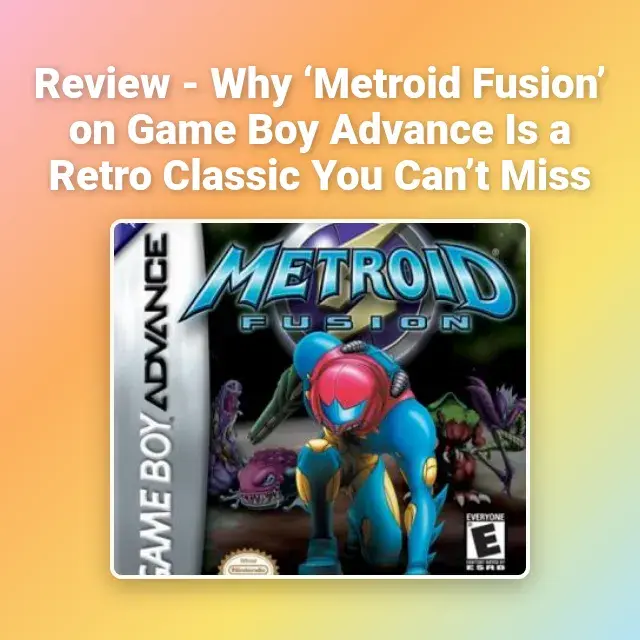
| Metroid Fusion | 2002 | Side-on exploration | A stalker enemy that hunts you through your own map |
| Castlevania: Aria of Sorrow | 2003 | Side-on exploration RPG | Enemies drop their own abilities as collectible souls |
| Boktai: The Sun Is in Your Hand | 2003 | Stealth action-adventure | Real sunlight was the ammunition |
| Sword of Mana | 2003 | Action-RPG | An enhanced remake of a Game Boy original |
1. The Legend of Zelda: The Minish Cap
Developed by Capcom and Flagship rather than Nintendo's internal teams, and published by Nintendo, The Minish Cap arrived in Japan on 4 November 2004, Europe on 12 November 2004, and North America on 10 January 2005.
The hook is Ezlo, a talking cap who shrinks Link to the size of the Minish — a tiny race living unnoticed in the corners of Hyrule. Shrinking is not a gimmick bolted onto one dungeon; it re-reads the entire map. A gap in a wall that meant nothing at full size becomes a doorway, while a puddle you walked through a minute ago becomes an impassable lake. The other system worth knowing about is Kinstone fusion: you collect artifacts broken into two halves, and matching your piece with a townsperson's opens up progress or rewards elsewhere in the world.
The common criticism is length. Critics at the time noted that a typical player can get through the game's six relatively short dungeons in around ten hours. Whether that is a flaw depends on what you want from a handheld game — ten dense hours is a good fit for a device you play in twenty-minute stretches. If you want the longer argument, we went deeper on it in our Minish Cap retrospective.
It has stayed in circulation, too: a Wii U Virtual Console re-release in 2014, and availability on Nintendo Classics from February 2023.
2. Metroid Fusion
Nintendo R&D1's Metroid Fusion reached North America on 18 November 2002, Europe on 22 November, and Japan on 14 February 2003. Samus is infected by an X parasite, and the parasites in turn absorb DNA and mimic whatever they consume. That premise produces the SA-X: an X parasite mimicking Samus at full power, wandering the station while you are still rebuilding your own abilities. You cannot fight it on equal terms for most of the game, so it functions as a moving hazard that turns familiar corridors hostile.
Fusion is also the most guided game in the series to that point, and this is the honest caveat. Navigation Rooms tell you where to go next, which makes it more linear than earlier Metroid games because the story is doing more of the driving. If open-ended map-reading is the whole reason you play Metroid, know that going in. If you have bounced off the series for being obtuse, this is the entry that will not lose you.
One piece of trivia that dates it beautifully: Fusion launched on the same day as Metroid Prime on GameCube in North America, and the two talked to each other over a GameCube–Game Boy Advance link cable. Each reward had its own condition. After completing Prime, linking unlocked Samus's Fusion Suit in Prime. After completing Fusion, it unlocked an emulated copy of the original Metroid. Our full Metroid Fusion review covers how it plays today.
3. Castlevania: Aria of Sorrow
Konami Computer Entertainment Tokyo developed Aria of Sorrow, which was released in North America on 6 May 2003, Japan on 8 May 2003 and Europe on 9 May 2003. It is 2035, and a solar eclipse pulls Soma Cruz, a transfer student in Japan, into a mysterious castle. The game then does something the series had not tried before. Under the Tactical Soul system, almost every type of enemy in the castle can eventually yield a soul of its own (a few yield none), and those souls are your abilities.
Souls come in four kinds. Bullet souls are projectiles that cost magic. Guardian souls are transformations and familiars that drain magic while active. Enchant souls give stat boosts and passive effects. Ability souls are permanent powers, such as new ways to move. You can equip one Bullet, one Guardian and one Enchant soul at a time.
The practical effect is that your build is assembled out of the bestiary rather than picked from a menu. Two players who cleared the same castle can finish with completely different toolkits, and the temptation to grind one more time for a soul you saw a hint of is what keeps the map worth re-walking. It is the most replayable game on this list for that reason, and its Metacritic score of 91 is second only to Fusion's 92 among the five. We have a dedicated Aria of Sorrow review if you want the detail.
4. Boktai: The Sun Is in Your Hand
This is the one that needs a warning label, and it is also the most interesting game on the list. Developed by Konami Computer Entertainment Japan, directed by Ikuya Nakamura and produced by Hideo Kojima, Boktai landed in Japan on 17 July 2003, North America on 16 September 2003, and Europe on 14 May 2004.
The retail cartridge contains a photometric light sensor that measures actual light exposure, and you charge your solar gun by taking the console outside in daylight. Before you start, the game asks for your time and time zone. It uses them to estimate sunrise and sunset, and moves the sun inside the game to match. If the gun runs dry and there is no sunlight, the game's answer is to avoid fights or find an in-game Solar Station to recharge.
The boss fights are where the sensor becomes compulsory. Each of the four Immortals is fought in its lair and then faced again outside, in the sunlight. There, the Pile Driver that purifies it has to be charged by exposing the cartridge to real light, so the fight is partly a negotiation with the weather. Nothing else on the GBA committed to a physical gimmick this hard.
Playing Boktai without a sensor
Emulating it on a handheld means there is no sensor to read, and this trips people up constantly. Two workarounds exist:
- Use an emulator that models the sensor. mGBA implements solar sensor emulation with ten light levels — a count chosen to match the number of bars in the sun gauge in Boktai 2 and 3 (mGBA issue #523).
- Patch the ROM. Prof9's Boktai solar sensor patches exist specifically so the games run on flash carts and emulators without sensor support. For the first Boktai, the patch maps the sunlight level to a button chord: R + A + Right raises it and R + A + Left lowers it. The patches for Boktai 2 and 3 use Select + Right and Select + Left instead. A three-button chord is easier on a handheld's physical buttons than on some keyboards.
Without one of those, the emulator reports no light at all. You can still top up at Solar Stations, but every Immortal's Pile Driver fight depends on sunlight the emulator cannot supply, so you cannot finish the game. That is not a difficulty spike, it is a missing input device.
5. Sword of Mana
Sword of Mana was developed by Brownie Brown with Square Enix. Square Enix published it in Japan, and Nintendo in North America and Europe. It was released in Japan on 29 August 2003, North America on 1 December 2003, and Europe on 18 March 2004. It is an enhanced remake of the first Mana game, the Game Boy's Seiken Densetsu: Final Fantasy Gaiden, which was sold in North America as Final Fantasy Adventure. Its Japanese title, Shin'yaku Seiken Densetsu, translates roughly as a "new testament" of the Seiken Densetsu line, which is a fair description of the ambition.
Much of what it adds comes from the later games rather than the Game Boy source. The Ring Command menu was not in the original, but was in Secret of Mana and Trials of Mana. The day-and-night cycle comes from Trials of Mana. The Hot House, where you forge weapons and grow produce in an orchard, echoes Legend of Mana. You also choose whether to follow the hero's story or the heroine's. So this is not a spruced-up port: it is a different game wearing the same story.
It is also the weakest-reviewed game here, at 72 on Metacritic. It rounds out the list as the one straightforward action-RPG among four games built around a single strong mechanical idea, and it is the easiest of the five to play in short sessions.
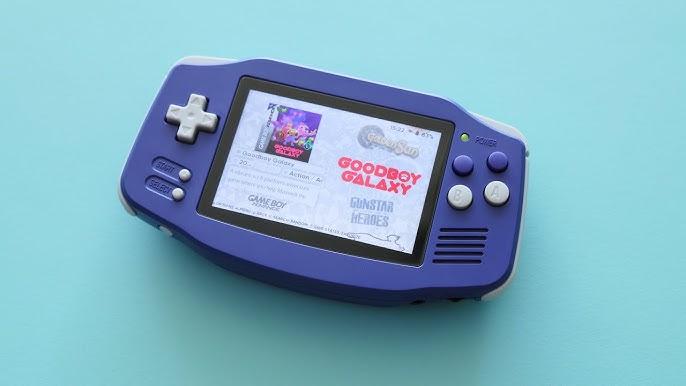
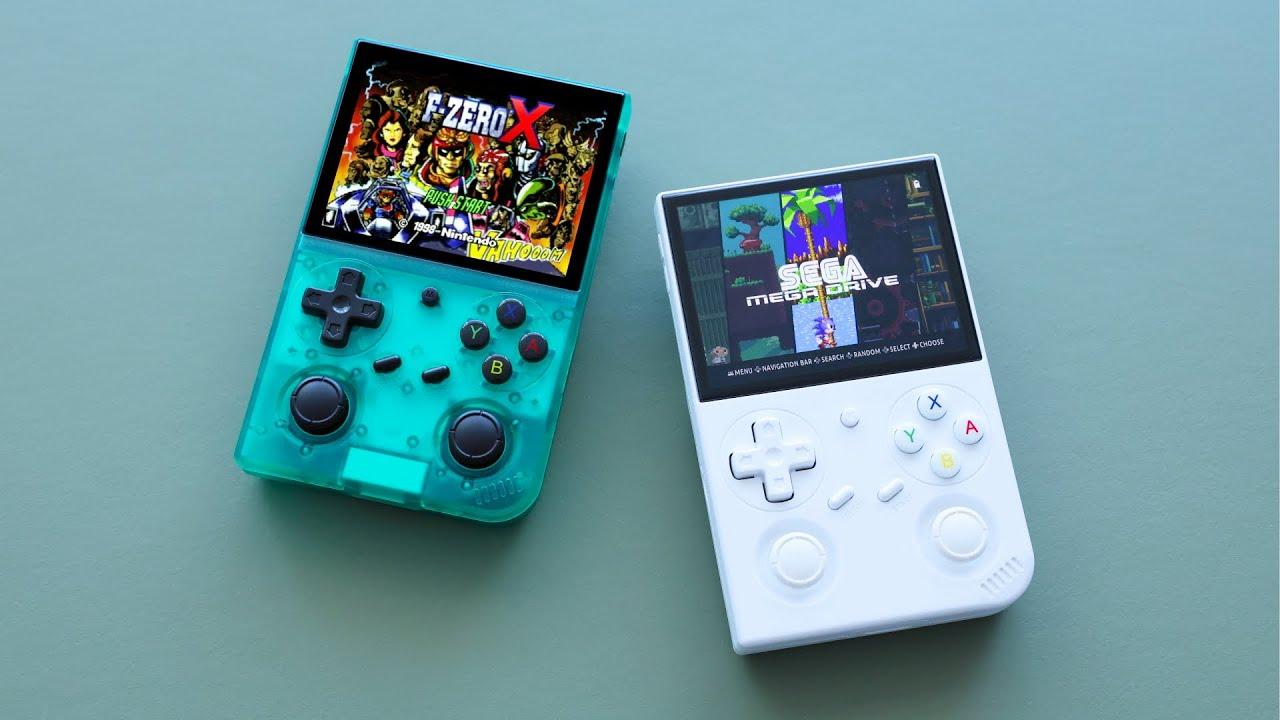
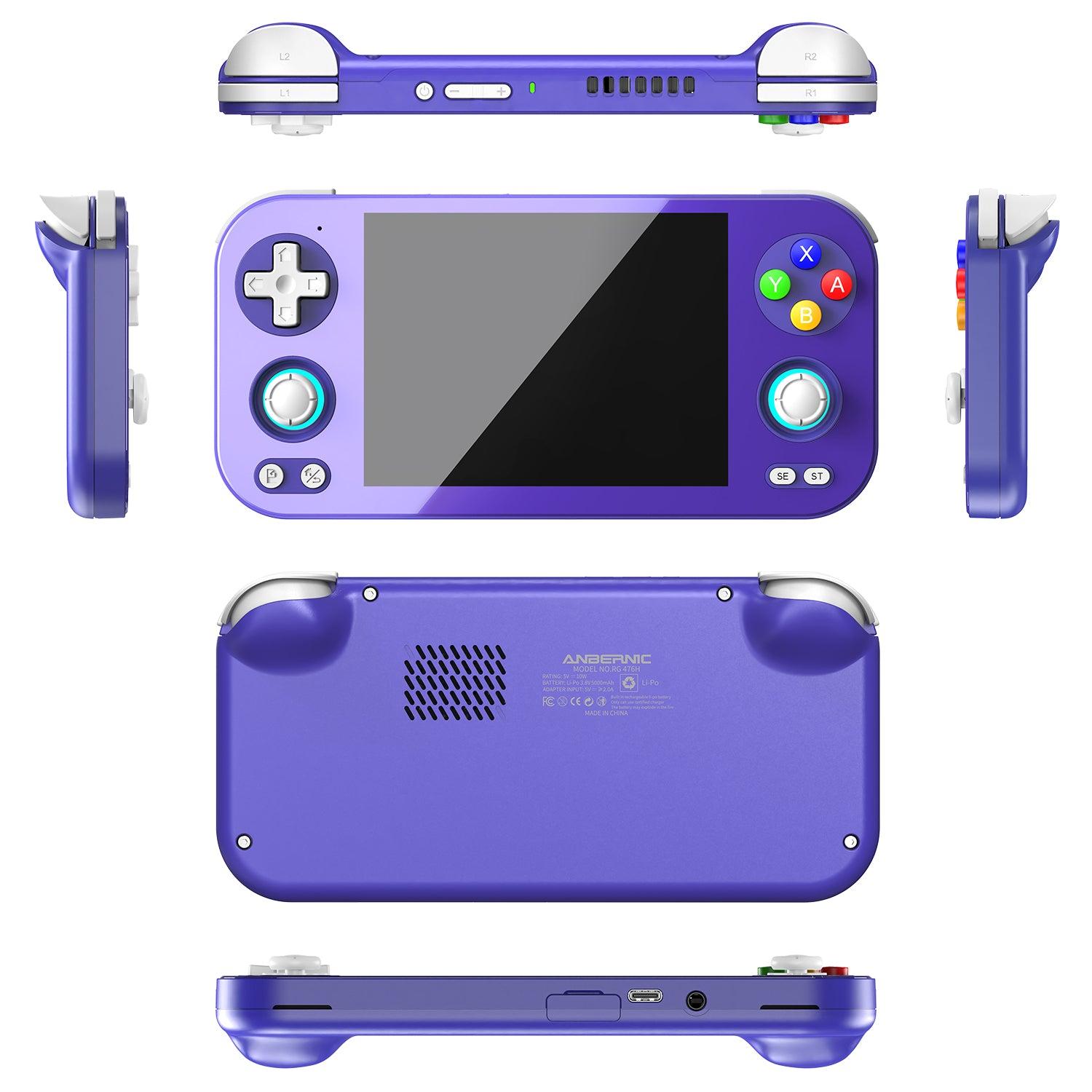
Which handheld suits these games
GBA is undemanding by modern standards, so the real question is how the GBA's picture fits the screen. The GBA's display is 240×160 pixels in a 3:2 aspect ratio. A panel that is an exact multiple of that shows the game with no border and no uneven pixels. Most budget handhelds use 640×480 panels, which are 4:3. The screen specs below come from each device's store listing, checked on 2026-09-19.
| Device | Screen | How a 240×160 GBA image fits |
|---|---|---|
| Anbernic RG34XX | 3.4" IPS, 720×480 | Exactly 3× in both directions: the game fills the panel with every pixel the same size |
| Miyoo Mini Plus | 3.5" IPS, 640×480 | A clean 2× image (480×320) with a border, or a full-width image at a non-integer 2.67× |
| Anbernic RG40XX V | 4" IPS, 640×480 | The same trade-off as the Mini Plus, on a larger panel |
On paper, the RG34XX is the natural GBA screen: its 720×480 panel is three times the GBA's resolution in both directions, in the same shape. One caveat from its listing on Anbernic's own store: on 2026-09-19 every US-warehouse variant was out of stock, and only a China-warehouse variant could be ordered. The Miyoo Mini Plus trades that exact fit for its compact size and the OnionOS ecosystem. For Boktai, make sure the R + A + Left/Right chord is comfortable on whichever device you pick.
Whichever you pick, sort your saves out before you get eighty souls deep into a castle — our guide to backing up GBA game saves covers doing it properly. And if you want to go wider than adventure games, our best GBA games roundup and the GBA hidden gems list are the next stops.
FAQ
Do I need the original Boktai cartridge for the sunlight mechanic to work? No, but you need a substitute. Either run it in an emulator that models the solar sensor, such as mGBA, or apply one of the solar sensor patches that maps the gauge to buttons. On an unpatched ROM in an emulator with no sensor support, you cannot charge the Pile Driver, so you cannot purify the Immortals that are the game's bosses.
Which of the five should I start with? Metroid Fusion, if you want to be carried along by a story, or The Minish Cap if you want the gentlest on-ramp. Aria of Sorrow rewards you most on a second run, so it is better once you already trust the GBA library.
Is The Minish Cap too short to be worth it? It is short — around ten hours through six compact dungeons by contemporary accounts. On a handheld that is arguably the correct length. It is a poor choice if you specifically want a long game to sink a month into.
Why is Metroid Fusion on an adventure list rather than an action one? Because the map is the puzzle. Fusion's structure is exploration with combat attached rather than the other way round, which is the same reason Aria of Sorrow sits here too.
Do these need an expensive handheld? No. GBA is one of the lighter systems these devices are sold for: Anbernic's RG34XX listing names it alongside far heavier systems such as PSP and Dreamcast. The better use of the money is a decent SD card, and a screen whose resolution suits the GBA's picture (see the table above).
The short version
Minish Cap for the cleverest use of a single idea, Fusion for the best-paced one, Aria of Sorrow for the one you will replay, Boktai for the one nothing else is like, and Sword of Mana for the evening you just want a good action-RPG. Between them they cover most of what the GBA was quietly very good at.