Every list of essential Super Nintendo RPGs is dominated by Square, and most of them are right to be. But the console's most interesting RPG design idea of 1995 did not come from Square at all. Lufia II: Rise of the Sinistrals was built by Neverland, published by Taito in Japan and Natsume in North America, and it did something none of its famous contemporaries attempted: it treated the dungeon, not the battle, as the part of an RPG worth designing carefully.
That single decision is why it still holds up on a modern retro handheld thirty years later, and why it reads so differently from the games it usually gets shelved next to.
Lufia II at a glance
| Released | Japan, 24 February 1995 as Estpolis Denki II; North America, September 1996; PAL regions, 1997 |
| Developer | Neverland |
| Publishers | Taito (Japan), Natsume (North America), Nintendo (PAL) |
| Platform | Super Nintendo / Super Famicom |
| Series position | A prequel to Lufia & the Fortress of Doom (1993) |
| Music | Yasunori Shiono |
| Protagonist | Maxim, a swordsman from the town of Elcid |
The prequel structure matters more than it sounds. Lufia II tells the story of Maxim — the character players of the first game met in its opening prologue. You can play it cold with no knowledge of the original, and most people do, but it means the game is working toward a destination that already existed in 1993.
The dungeons are puzzles, and that is the whole point
In most 16-bit RPGs a dungeon is a maze with fights in it. In Lufia II very nearly every room is a discrete puzzle: push a block onto a switch, clear the enemies in a specific order, get an object across a gap you cannot cross. Wikipedia's entry counts "hundreds of puzzles of varying difficulty" across the game.
What makes them work is a small toolkit you collect as you go, used on the field map rather than in battle:
- Arrow — hits switches from a distance.
- Bomb — found in the Alunze Basement, blows open cracked walls and clears bushes. It detonates six steps after you set it down, which turns a lot of rooms into a timing problem rather than a placement one.
- Hook — found in Gordovan West Tower, pulls you across gaps toward a pole or pillar on the far side, and otherwise behaves like an arrow.
- Hammer — found in Flower Mountain, shifts pillars out of reach, smashes weakened walls and stuns dungeon enemies.
- Fire Arrow — found in Phantom Tree Mountain, an arrow that burns, so it can clear a whole row of bushes at once.
Every tool is a verb, and every new one retroactively opens up rooms you walked past hours earlier. The Reset spell exists to undo a room you have made unsolvable — an admission from the designers that they expected you to lock yourself out, and a mercy that a lot of later puzzle games forgot to include.
Reviewing it for Infinity Retro, reviewer jeremy1456 scored it 9.1/10 and compared the dungeon design directly to the 2D Zelda games — the comparison almost everyone reaches for. Nintendo Life's Corbie Dillard, scoring it 9/10 in April 2009, called the puzzles "a very unique twist to the traditional RPG game play system", ranging from simple to genuinely hard.
You see every enemy before it touches you
There are no random encounters. Enemies are drawn on the dungeon map as sprites, and as SNES Central puts it, that "allow[s] you to take action against them before fighting."
This is worth dwelling on because of what it does to the pacing. You choose your fights. You can route around a monster guarding a corridor, or deliberately walk into one because you want the experience. Combined with the puzzle rooms, it means dungeon time is decision time rather than a tax you pay between story beats — and it is the single biggest reason the game suits handheld play. A game that interrupts you every eight steps is a poor fit for a fifteen-minute session on a bus. This one is not.
The IP gauge makes getting hit useful
Combat is turn-based and conventional at first glance. The wrinkle is IP. Weapons, armour and accessories carry IP Skills, and each character's IP bar fills when they take damage — spending a skill drains a varying amount of the charge.
That inverts the usual incentive. A character who is being hit is a character who is charging, so soaking damage on the wrong turn is not simply a loss. It also gives equipment a second axis: a piece of armour is not just a defence number, it is an ability you are choosing to carry.
The clearest illustration is how experienced players approach the endgame. Community strategy guides for the Ancient Cave on GameFAQs advise arriving at the bottom floor with every gauge completely full, and even suggest having the party defend for several turns at the start of the final fight specifically to top them up. A system where "do nothing for three turns" is a legitimate opening move is a system with real texture to it.
Capsule monsters are a fifth party member you feed
Seven capsule monsters exist, one for each element the game recognises: Neutral, Light, Wind, Water, Dark, Fire and Soil. One accompanies your party as a computer-controlled fifth member, acting on its own rather than under your direct orders, and each evolves through five forms as you feed it items and equipment.
Dillard admitted in his Nintendo Life review that he had initially downplayed the system and, after reader pushback, came round to calling it "pretty cool". That is a fair arc. It is not a Pokémon-depth collection mechanic, but it gives you somewhere to spend the equipment you have outgrown, which is otherwise dead weight in a 16-bit RPG.
The Ancient Cave is a roguelike hiding inside a 1995 JRPG
The optional Ancient Cave is 99 randomly generated floors with a boss waiting at the bottom, and SNES Central describes it as the feature the game is "probably the most notorious" for. Ten years before roguelikes became a genre anyone outside a niche discussed, Lufia II shipped one as a side quest.
The chest system is what makes it a campaign rather than a single dungeon:
| Chest | What you get | Does it survive the run? |
|---|---|---|
| Red | Items usable inside the cave for that run only | No — lost when the run ends |
| Blue | Permanent items you keep | Yes — and you can bring them back in on later attempts |
So a failed run is not wasted, provided you found a blue chest. You grind the cave to equip yourself for the cave. Guides consistently frame reaching the deeper floors, roughly 60 to 99, as something you do only once your party is kitted out with blue chest gear from earlier attempts.
The story, and the honest counterpoint
The narrative is not the reason to be sceptical of this game or the reason to play it, depending on who you ask, and the split among reviewers is real enough to report both sides.
Dillard's Nintendo Life review calls it "one of the all-time great RPG storylines of the 16-bit era — or any other era for that matter". Retrospectives commonly note that the writing is more willing to be bleak than its reputation suggests: villages are destroyed, characters die, and the heroes do not always win the encounter they are in.
Infinity Retro's review disagrees on exactly this point, describing the story as "a bit boring" and the dialogue as "robotic", while still scoring the game 9.1 on the strength of its dungeons. The same review flags one genuine flaw worth knowing about in advance: a mid-game difficulty spike that demands more grinding than the otherwise gentle curve prepares you for.
If you want the SNES RPGs where the writing is the main event, our top five SNES RPGs and the Chrono Trigger retrospective are the better starting points. Lufia II's case is built on its systems.
What reviewers actually scored it
| Source | Score | Note |
|---|---|---|
| Nintendo Life (Corbie Dillard, April 2009) | 9/10 | Retrospective review; praises the IP system and puzzles |
| Infinity Retro (jeremy1456) | 9.1/10 | Dungeon design compared to 2D Zelda; flags a mid-game grind wall |
| GameFan | 90/100 | Contemporary review |
| Nintendo Power, October 1996 (vol. 89) | Graphics & sound 3.5/5, play control 3.0/5, challenge 3.7/5, theme & fun 4/5 | Category scores, as recorded by SNES Central |
| GameRankings aggregate | 80% |
Commercially it was a modest release — 60,254 cartridges sold in Japan, according to Wikipedia's entry, which also notes it was consistently voted among the top five Super Famicom games in Japanese polls across 1995 and 1996. That gap between critical standing and sales is roughly why a game this well regarded is still a discovery for most people.
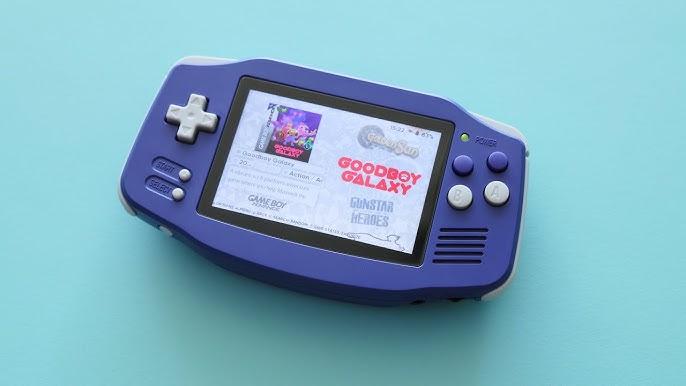
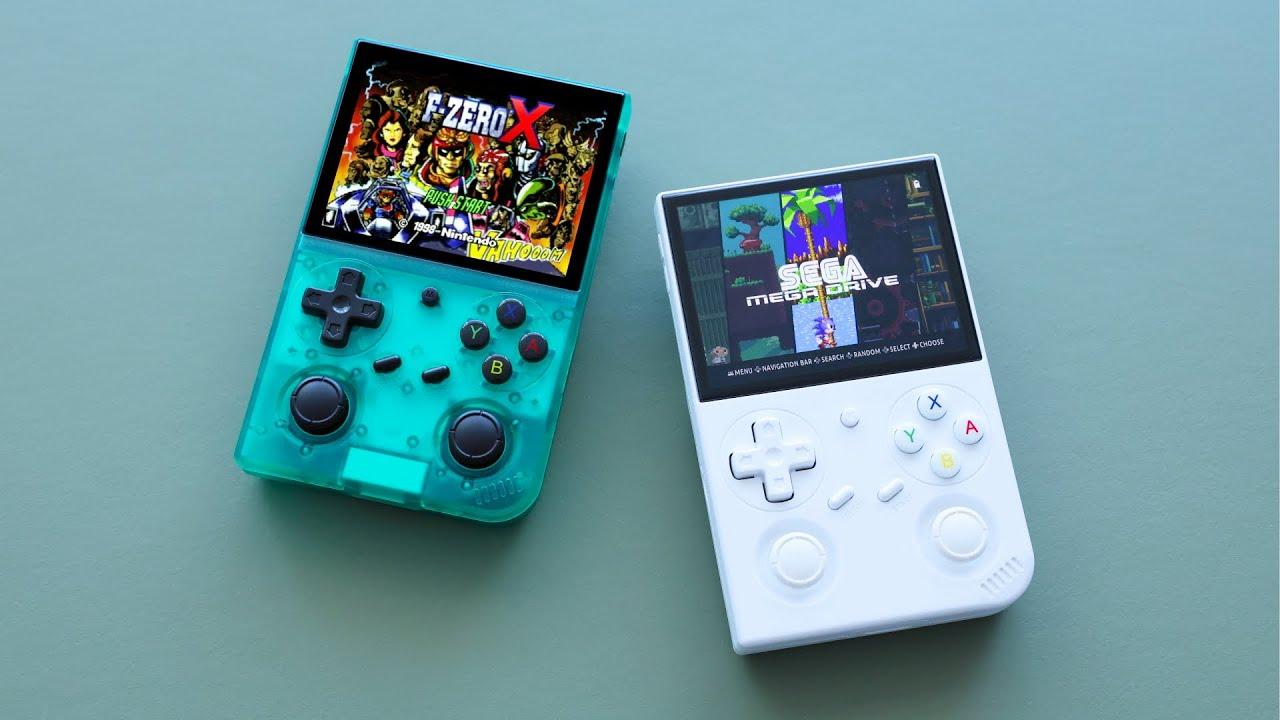
How it runs on a modern retro handheld
Lufia II is one of the easiest SNES games to run, and the reason is on the cartridge. The North American release is a plain LoROM board — FastROM, 20 Mb of ROM, 64 Kb of battery-backed SRAM, and no enhancement chip. It asks nothing of an emulator beyond baseline SNES support.
That is not a small distinction. The SNES titles that stutter on entry-level handhelds are the ones with extra silicon inside the cart — the Super FX and SA-1 games — because those chips have to be emulated on top of the console itself. Lufia II has none of that, so if a device runs SNES at all, it runs this.
What actually matters is screen shape and how long you can sit with it. The SNES outputs 4:3, so a 4:3 panel fills edge to edge with no letterboxing. Specs below were taken from the store's own product listings.
| Device | Screen | Why it fits this game |
|---|---|---|
| Anbernic RG40XX V | 4" IPS, 640x480 | The largest 4:3 panel of the three, which suits menu-heavy RPGs and dense dungeon rooms |
| TrimUI Brick | 3.2" IPS, 1024x768, fully laminated | The sharpest panel here; a high-resolution 4:3 screen scales SNES cleanly |
| Anbernic RG35XX H | 3.5" IPS, 640x480 | Horizontal shell with proper shoulder buttons, comfortable for long sessions |
One practical note: an Ancient Cave run can be very long, and the game's own saving is battery SRAM, not a save-anywhere system. Sleep mode and save states are the features that make a 99-floor descent survivable across several evenings, so the front-end your handheld ships with is arguably more relevant here than its processor.
For more SNES worth loading once this is installed, our SNES hidden gems list and the Terranigma retrospective cover the rest of the console's underexposed shelf.
FAQ
Do I need to play Lufia & the Fortress of Doom first? No. Lufia II is a prequel and stands entirely on its own. Playing the 1993 original first will change what its ending means to you, but the game is designed to be someone's first Lufia.
Is the Ancient Cave required to finish the game? No, it is an optional side quest. It is also the single most distinctive thing in the package, so skipping it means skipping the reason a lot of people still talk about this game.
Is it harder than the Square RPGs of the same era? Different, mostly. Nintendo Power's 1996 scores rated challenge 3.7/5, and Infinity Retro found the curve generally well balanced apart from one mid-game spike that needs grinding. The puzzles will stop you more often than the combat will.
Is the Nintendo DS remake a substitute? Not really. Lufia: Curse of the Sinistrals (2010) reimagines the story as a real-time action RPG. It is a different game that shares a plot — the turn-based combat and the puzzle dungeons described here are the SNES version's.
Does it need an expensive handheld? No. With no enhancement chip on the cartridge, it is about as undemanding as SNES gets. Any device that handles the system will handle this one, so pick on screen shape and comfort rather than raw performance.
The short version
Play it for the dungeons. Lufia II is the SNES RPG that asked what the space between the story beats could be if someone actually designed it, answered with tools, switches, visible enemies and 99 procedurally generated floors, and then wrapped the whole thing in a combat system where taking a hit charges your best move. The story divides reviewers and the mid-game has a grind wall. The design does not have a real competitor on the console.