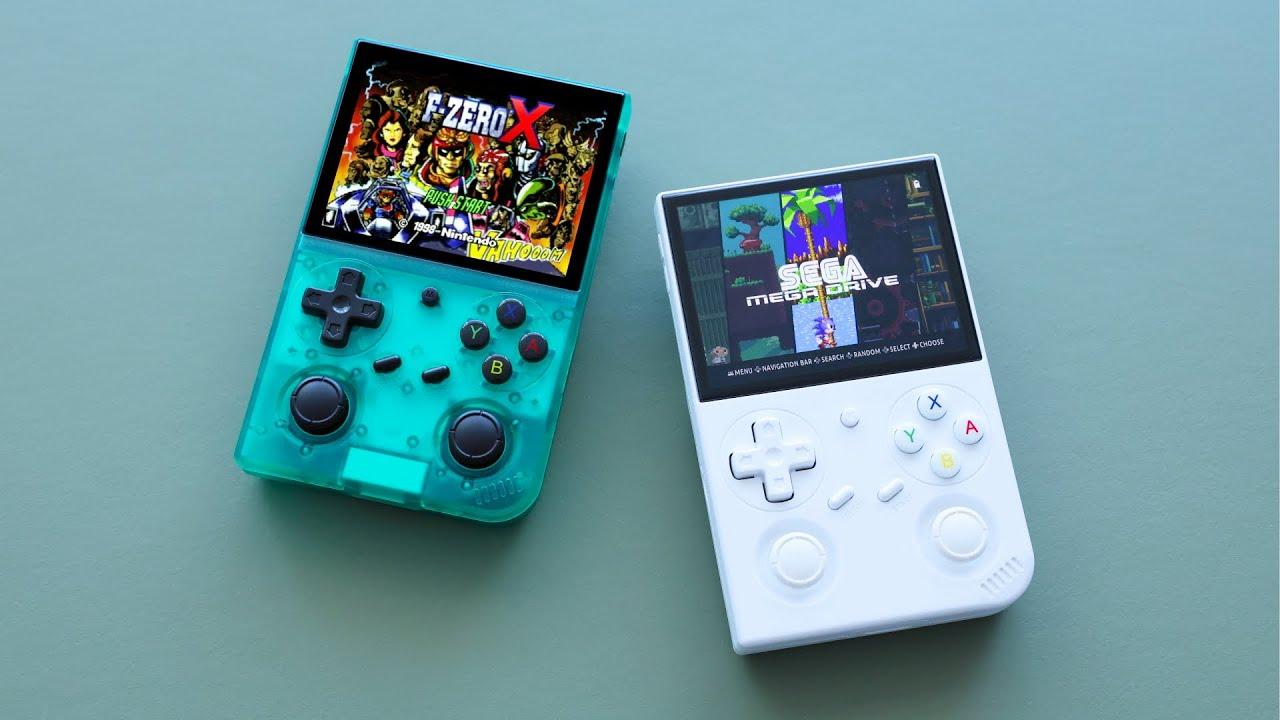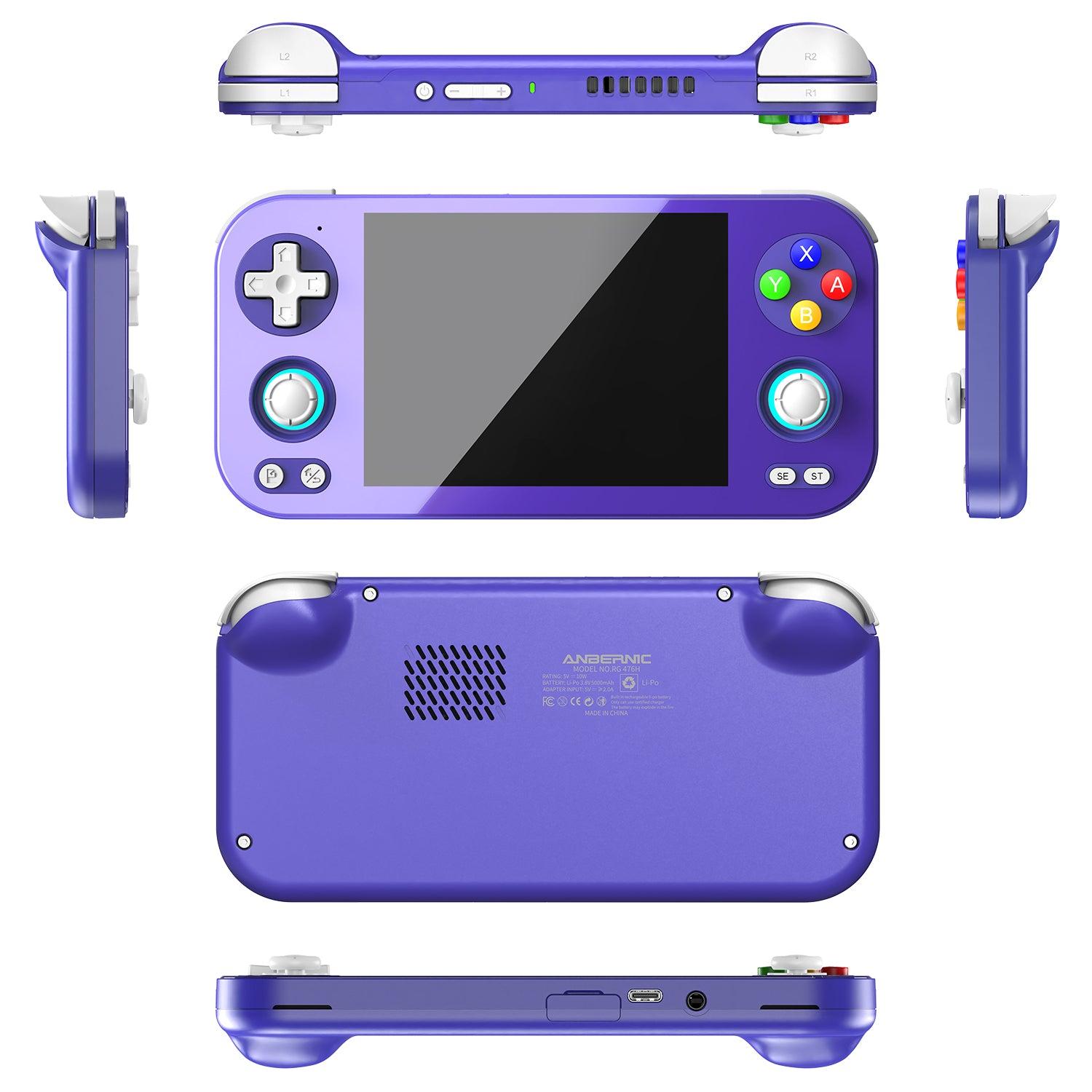
The Super Nintendo did not have the fastest hardware of its generation, but it had Mode 7 and a run of developers who understood that a racing game lives or dies on the twenty seconds after you lose. These five are the SNES racers that keep pulling you back for one more attempt, and all five play well on a modern handheld like the ANBERNIC RG 34XX.
Every game here is a genuine Super Nintendo release. Release details and review scores below come from each game's documented release history and the contemporary reviews named in each section, checked 2026-09-10.
The five at a glance
| # | Game | Year | Developer / Publisher | Aggregate score | The hook |
|---|---|---|---|---|---|
| 1 | F-Zero | 1990 JP / 1991 NA | Nintendo EAD | 83% (GameRankings) | Mode 7 speed, single-player only |
| 2 | Super Mario Kart | 1992 | Nintendo EAD | 94% (GameRankings) | Split-screen and Battle Mode |
| 3 | Uniracers | 1994 | DMA Design / Nintendo | 79% (GameRankings) | Trick-chaining unicycles; pulled from shelves |
| 4 | Rock n' Roll Racing | 1993 | Silicon & Synapse / Interplay | 82.67% (GameRankings) | Licensed rock and weapons |
| 5 | Top Gear | 1992 | Gremlin Graphics / Kemco | 78% (GameRankings) | Fuel management and three nitros |
1. F-Zero
F-Zero was a SNES launch title in Japan in November 1990, reaching North America in August 1991, and it existed to show what Mode 7 could do. Four hovercars with genuinely different handling, fifteen tracks split across the Knight, Queen and King leagues, and a sense of speed no home console had produced before — one contemporary assessment called them the fastest, most convincing racetracks yet seen on a home machine. It aggregated 83% on GameRankings.
Here is the thing modern players get caught out by: F-Zero has no multiplayer at all. It is single-player only, and retrospective reviews consistently flag that as its one significant limitation. The addictiveness is entirely in beating your own ghost — holding the racing line on Death Wind while your machine's energy bar drains from wall contact.
Its handheld follow-up, Maximum Velocity, opens our list of GBA racing games worth playing if you want the same formula on a smaller screen.
2. Super Mario Kart
Nintendo EAD released it in August 1992 in Japan and September 1992 in North America, with Shigeru Miyamoto producing and Tadashi Sugiyama and Hideki Konno directing. Eight characters, twenty tracks across four cups, plus four dedicated Battle Mode arenas. It sold 8.76 million copies, making it the fourth best-selling SNES game ever, aggregated 94% on GameRankings, and entered the World Video Game Hall of Fame in 2019.
What makes it addictive rather than merely good is Battle Mode. Two players, four balloons each, one arena, no laps — it is the mode that turned Mario Kart from a racing game into a thing people argue about thirty years later. Grand Prix and one-on-one Match Race both run split-screen too, so the single cartridge covers everything.
If you only ever played a later entry, be warned that the SNES original steers very differently from modern Mario Kart: there is no drift boost in the form you know, and the rubber-banding AI is far more blatant.
3. Uniracers
This is the one on the list you have almost certainly never played, and there is a specific legal reason for that. DMA Design — the studio that later became Rockstar North — built a racing game about riderless unicycles, and Nintendo published it in North America on 5 December 1994 and in Europe as Unirally in April 1995.
You race a unicycle around a 2D track across nine tours and 45 courses, and the whole game is built on tricks. Aerial rotations and flips both score points and accelerate you, so the fast line and the stylish line are the same line. There is split-screen multiplayer and sixteen unicycle colours.
Be straight about the reception: it aggregated 79% on GameRankings and reviews were genuinely split. Official Nintendo Magazine scored it 92/100; Electronic Gaming Monthly's four-person panel came back 7, 5, 5 and 5, with the criticism being that it lacks variation and charm across a full session. Taken in short bursts, chasing a faster line, it is one of the most compulsive things on the system.
Shortly after release Pixar sued DMA Design, arguing the unicycle design copied its 1987 short Red's Dream. Pixar won, and Nintendo halted cartridge production — the run stopped at roughly 300,000 units. Developer Mike Dailly has since described the financial damage as severe enough to contribute to DMA's eventual sale. That is why a Nintendo-published SNES racer is a game nobody remembers.
4. Rock n' Roll Racing
Silicon & Synapse — soon to rename itself Blizzard Entertainment — released it through Interplay in 1993, with a Mega Drive version following in 1994 and a GBA port in 2003. It is an isometric combat racer: four-lap races where you fire forward and rear weapons at the cars around you, then spend your winnings between events on engines, weapon capacity and turbo boosts.
The soundtrack is the reason people still talk about it. Licensed rock and metal, including George Thorogood's "Bad to the Bone", Deep Purple's "Highway Star" and Black Sabbath's "Paranoid" — one reviewer called it among the best on the SNES. It aggregated 82.67% on GameRankings for the SNES version and took Electronic Gaming Monthly's Best Driving Game of 1993.
The addictive loop is the upgrade economy rather than the racing itself. You finish a race short of the parts you want, decide whether to bank the money or gamble on a better engine, and start again.
5. Top Gear
Gremlin Graphics developed it and Kemco published it in March 1992 in Japan and April 1992 in North America — the first game in the Top Gear series and one of the earliest racers on the system. Four cars with distinct handling, top speeds and fuel consumption, four courses per region, and a requirement to finish in the top five to continue.
Two mechanics do the work. Fuel management: run dry and your race is over, so pit timing is a real decision rather than a formality. Nitro: you get three boosts per race and no more, which turns every straight into a question about whether this is the moment. Split-screen two-player is there as well.
Barry Leitch wrote the soundtrack, reworking his own earlier compositions for Lotus Turbo Challenge under time pressure, and it became one of the more recognisable SNES scores. Mean Machines gave the game 92%; the broader GameRankings aggregate sits at 78%.
Frequently asked questions
Which of these has the best multiplayer? Super Mario Kart, without much argument — Battle Mode alone justifies it. Uniracers, Rock n' Roll Racing and Top Gear all have two-player modes as well. F-Zero has none.
Is Uniracers hard to get hold of? The cartridge is uncommon because production stopped early after the Pixar ruling, and there has never been an official re-release — the legal situation is the reason it does not appear on Nintendo's retro services alongside other first-party SNES titles.
Do these need a fast handheld? No. SNES emulation is comfortable on entry-level hardware, including the sub-$100 tier. Mode 7 games like F-Zero and Super Mario Kart are the ones most worth checking on a given device, since Mode 7 is where weaker SNES emulator cores tend to show their limits.
Where is Diddy Kong Racing? It is a Nintendo 64 game from 1997, later remade for the Nintendo DS in 2007. It was never released on the Super Nintendo, so it does not belong on this list — the aeroplane and hovercraft vehicles people remember are N64 content.
Where to go next
For more of the SNES library beyond racing, our SNES hidden gems round-up covers the rarities, the SNES platformer list covers the genre the system is best known for, and the best SNES games is the wider starting point.
Buckle up, and remember that on four of these five the real opponent is your own previous time.