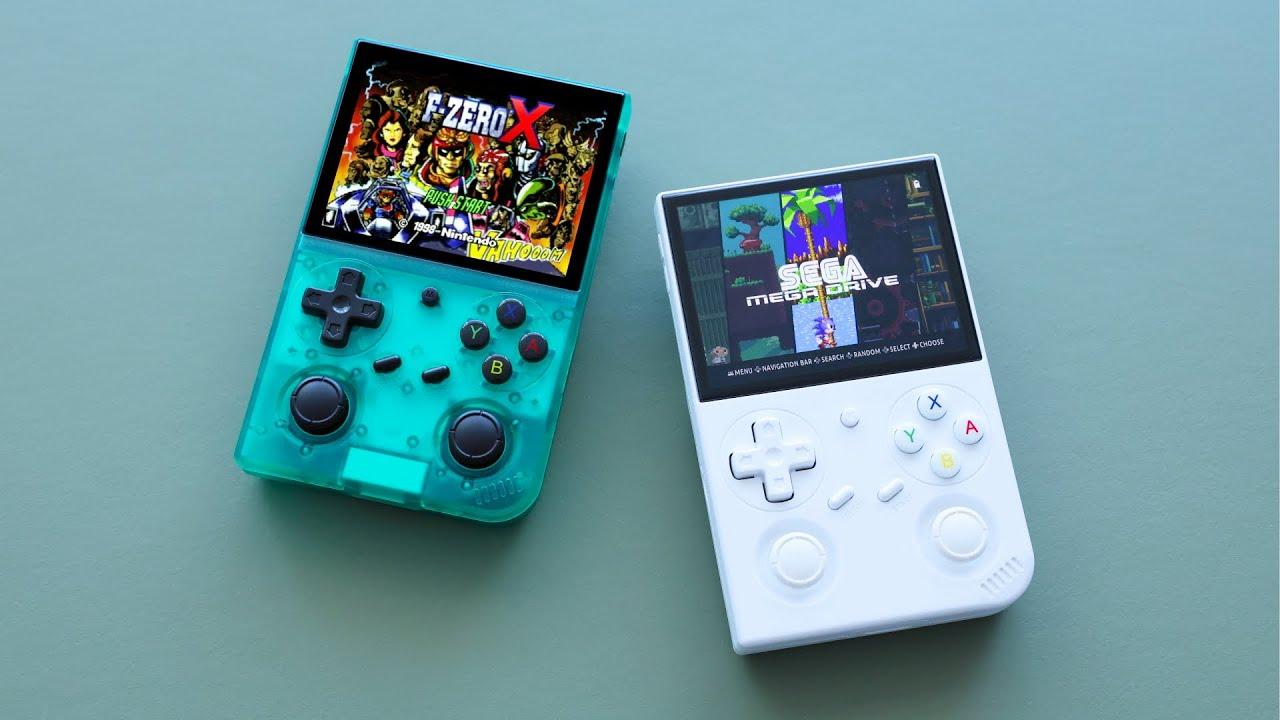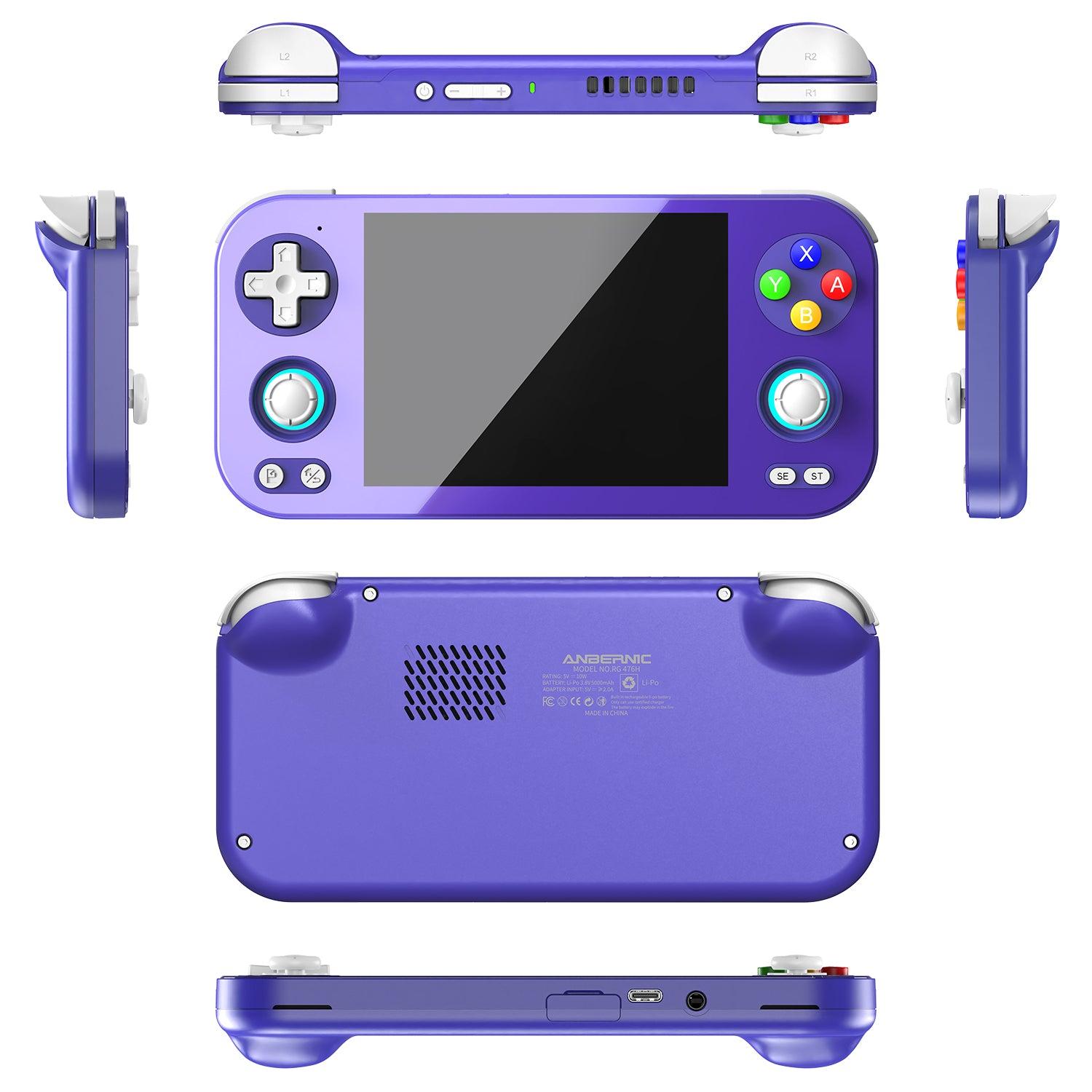
Here is the awkward truth about NES fighting games: Street Fighter II never came to the console. Capcom's arcade hit landed on the SNES in 1992, a year after Nintendo's 8-bit machine had stopped getting major releases, and the NES never got a port. So the console's one-on-one fighting library is small, early, and uneven — and most of the games people actually remember as "NES fighters" are brawlers, boxing sims and wrestling games instead.
That is not a reason to skip the list. It is a reason to be clear about what each game is. Below are the 10 best NES fighting games still worth playing in 2026, with the genre of each one labelled honestly, plus the handhelds that play them best.
The 10 at a glance
| # | Game | NA release | Developer / NA publisher | What it actually is | Players |
|---|---|---|---|---|---|
| 1 | Punch-Out!! | Oct 1987 (Tyson) / Aug 1990 (Mr. Dream) | Nintendo | Boxing, pattern-recognition | 1 |
| 2 | Karate Champ | Dec 1986 | Data East | True one-on-one fighter | 1-2 |
| 3 | River City Ransom | Jan 1990 | Technōs / American Technōs | Beat 'em up with RPG stats | 2 co-op |
| 4 | Double Dragon II: The Revenge | Jan 1990 | Technōs / Acclaim | Beat 'em up | 2 co-op |
| 5 | Street Fighter 2010: The Final Fight | Sep 1990 | Capcom | Action-platformer | 1 |
| 6 | Pro Wrestling | Mar 1987 | Nintendo R&D3 / TRY | Wrestling, one-on-one | 1-2 |
| 7 | Mighty Final Fight | Jul 1993 | Capcom | Beat 'em up with XP | 1 |
| 8 | Battletoads | Jun 1991 | Rare / Tradewest | Beat 'em up + obstacle stages | 2 co-op* |
| 9 | Kung Fu | Oct 1985 | Irem / Nintendo | The first beat 'em up | 1 |
| 10 | Karateka | Dec 1985 (Famicom, Japan only) | Jordan Mechner / Soft Pro | One-on-one fighter | 1 |
* See the FAQ. Two-player Battletoads cannot be finished on original hardware.
1. Punch-Out!!
The defining NES fighter, and not really a fighting game in the Tekken sense — it is a pattern-recognition puzzle dressed as a boxing match. You play Little Mac, a 17-year-old boxer weighing about 107 pounds, working up through the Minor, Major and World circuits of the World Video Boxing Association against opponents with absurd personalities (Glass Joe, Bald Bull, Soda Popinski) and unique tells. Every opponent follows a set pattern, so every fight is a memory test rather than a reflex test.
There are two versions and you only need one. Mike Tyson's Punch-Out!! (October 1987) put the real heavyweight champion in the final Dream Fight. When Nintendo's licence with Tyson expired, the August 1990 reissue replaced his likeness with a fictional boxer called Mr. Dream. The final boss sprite and name change; nothing else about the climb does. If you are emulating, take whichever ROM you find — and if you specifically want the Tyson fight, which knocks you out in the first round if you misread it, that is the only reason to hunt down the earlier cartridge.
2. Karate Champ
If you want an actual one-on-one fighting game on the NES, this is the one, and it is the most important game on this list. Karate Champ (Data East, NES in North America in December 1986) is widely credited with establishing and popularising the one-on-one fighting genre. A great deal of what every later fighter does started here: the best-of-three format, specific control inputs for special moves, and bonus rounds after a set number of wins.
The arcade original used two joysticks to reach 24 distinct moves, which is a genuinely strange control scheme and the thing the home versions had to solve. It has aged harder than Punch-Out!! — there are no health bars, just points awarded by judges for clean strikes — but it is the historical root of the genre, on the console, and it belongs on any honest list of NES fighting games.
3. River City Ransom
River City Ransom (Technōs, Japan April 1989 as Downtown Nekketsu Monogatari, North America January 1990) is a beat 'em up with action-RPG mechanics laid over an open, non-linear map. Defeated gang members drop money. You spend it at shops on food and spa treatments that permanently raise your Punch and Kick attributes, and on technique books that teach named moves like Grand Slam, Stone Hands and Dragon Feet. Two-player simultaneous co-op was unusual on the NES and made this the rare brawler you would actually finish.
One thing it does not do, despite how often you will read otherwise: you cannot recruit defeated enemies as allies. The "posse" of up to three AI-controlled partners, drawn partly from the original game's bosses, was added in River City Ransom EX, the 2004 Game Boy Advance remake — which traded away real two-player co-op to get it. On the NES it is just you and a friend.
4. Double Dragon II: The Revenge
The NES sequel (Technōs, published in North America by Acclaim in January 1990) improved on the weak spots of the first NES game: better hit feedback, more move variety, and simultaneous two-player co-op. That last point is the one people garble. The arcade Double Dragon ended with the two brothers forced to fight each other. The NES Double Dragon had no co-op through the main game at all — the sequel is where it arrived, and the developers dropped the first game's twist ending, in which Jimmy Lee turns out to be the final antagonist, precisely because both brothers now had to be on the same side.
Marian is shot dead by the leader of the Black Warriors in the opening scene this time, and the game is appropriately darker for it. The NES soundtrack is by Kazunaka Yamane, and it is genuinely great.
5. Street Fighter 2010: The Final Fight
Forget what you think a Street Fighter game looks like. In the North American version, Street Fighter 2010 (Capcom, September 1990) stars Ken — presented as the retired Street Fighter martial artist, 25 years on, who has since implanted his body with bionics and an interdimensional transporter. His lab partner Troy is murdered and their Cyboplasm compound stolen, so Ken chases the traces across planets of the Frontier.
It is an action-platformer, not a fighting game, and the connection to Street Fighter is a localisation decision: the Japanese original stars Kevin Straker, a cyborg policeman of the Galaxy Police, hunting criminals implanted with parasitic insects. It made no sense in 1990 and it still doesn't, and it is worth playing anyway — the movement and the wall-jumping are unlike anything else on the console.
6. Pro Wrestling
Before the WWF licence existed on Nintendo hardware, Nintendo made the NES wrestling game everyone copied. Pro Wrestling (Nintendo R&D3 with TRY, North America March 1987) fields six wrestlers with bizarre names — Fighter Hayabusa, Giant Panther, Kin Corn Karn, King Slender, Starman and The Amazon — each with special moves given real pixel-art animation. It is genuinely one-on-one, and two-player matches run best-of-three falls with duplicate character picks blocked.
It is also the source of one of gaming's oldest translation memes. The victory screen in the earliest printings reads "A WINNER IS YOU"; later revisions shortened it to "WINNER IS YOU!". The phrase went properly viral online around 2004, almost two decades after the game shipped.
7. Mighty Final Fight
Capcom's chibi-styled NES take on Final Fight (June 1993 in Japan, July 1993 in North America) is not a port — it is a new game built around the arcade cast, and it gets one thing right that the SNES conversions did not: all three characters are here, Cody, Guy and Haggar, in a single cartridge. The SNES versions split or cut them.
It also adds a levelling system. You earn experience for defeating enemies, climb six skill levels, and unlock stronger finishers as you go, with better finishing moves paying out more points. The cartoon proportions work far better than they have any right to. The one real limitation: unlike the arcade game, Mighty Final Fight is single-player only.
8. Battletoads
Less a fighting game than a brawler bolted to one of the most varied — and cruellest — gauntlets ever shipped on the NES. Battletoads (Rare, published by Tradewest, June 1991) is famous for the third stage, the Turbo Tunnel, where you dodge stone walls on a speed bike and ramp across gaps at a speed the rest of the game never prepares you for. The brawling between those stages is genuinely sharp: chunky animation and "Smash Hit" attacks that turn a toad's limbs into oversized weapons, like the Kiss-My-Fist punch and the ram-horned Battletoad Butt.
Two important warnings if you are planning a co-op run. Friendly fire is on, so you can and will kill your partner by accident. And the original NES release has a bug on level 11, Clinger Winger, that makes the stage unplayable for player two — meaning a two-player game cannot be finished at all on original hardware. Rare only fixed it in the 2015 Rare Replay version. Play it solo, or accept that you are stopping at level 11.
9. Kung Fu
The NES's launch-window brawler, and arguably the ancestor of the whole genre. Kung Fu (Irem's Kung-Fu Master, published by Nintendo in North America on 18 October 1985) is regarded as the first beat 'em up, and its conventions — walk right, punch and kick from standing, crouching and jumping, clear the floor, climb — set the template that Double Dragon and Final Fight built on.
You play Thomas climbing five floors of the Devil's Temple past Grippers that latch on and drain your energy, Knife Throwers and Tom Toms, with even-numbered floors adding falling pots, snakes, moths and dragons. It earns its place on a fighting list for a specific reason: at the end of each floor the game narrows to a single opponent and temporarily becomes a one-on-one fighting game. Punches do more damage, kicks reach further, and against a boss that trade-off is the whole fight.
10. Karateka
The first Jordan Mechner game, five years before Prince of Persia. Karateka is a one-on-one fighter where distance, footwork and switching in and out of stance matter as much as button presses, and the animation is rotoscoped — Mechner drew over film of his own karate instructor, which is why it still reads as human movement today.
One correction worth making, because this game is listed as an NES title almost everywhere: it was never released on the NES in North America. The original is a December 1984 Apple II game published by Broderbund. The 8-bit Nintendo version is a Famicom port by Soft Pro, released in Japan on 5 December 1985, and it stayed there. If you are emulating you can play it exactly as easily as anything else on this list — just know that you are loading a Japanese Famicom ROM, not an American cartridge.
Where to play NES fighting games today
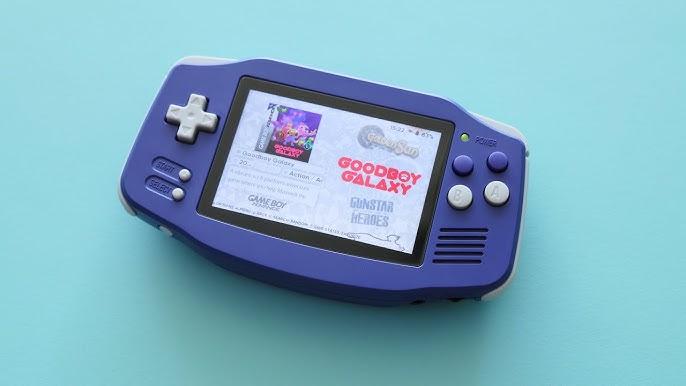
Any half-modern handheld plays NES at full speed, so the decision is about price, screen shape and what else you want from the device. Prices and stock below were read from each store's own product data on 20 September 2026. We have not tested these handhelds ourselves.
| Handheld | Screen | Price at our link | Stock on 20 Sep 2026 |
|---|---|---|---|
| Anbernic RG34XX | 3.4" IPS, 720×480, 3:2 | $57.11 (64G) | China warehouse only — all 11 US and all 5 EU variants out of stock |
| Powkiddy RGB30 | 4" square, 720×720, 1:1 | $99.99 console-only | Out of stock — all 35 variants |
| Miyoo Mini Plus | 3.5" IPS, 640×480, 4:3 | $69.99 console-only | In stock, every colourway |
Best budget pick: Anbernic RG34XX — $57.11
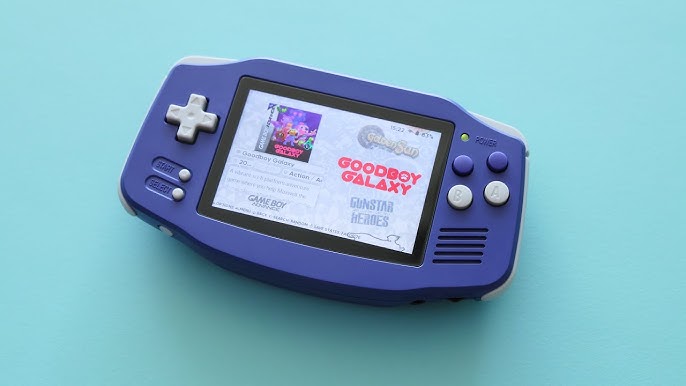
The Anbernic RG34XX has a laminated 3.4-inch 720×480 panel and a Game Boy-style D-pad, which matters more for this list than raw power does — Karate Champ and Pro Wrestling are directional games, and a mushy pad ruins both. The NES output is 256×240, so a 720×480 screen shows it at a clean integer scale vertically with pillarboxing at the sides.
Worth knowing before you order: on 20 September, every US-warehouse and EU-warehouse variant was out of stock on Anbernic's own site. Twelve of the twenty China-warehouse variants could be ordered, starting at $59.99 for the 64G models, which means a longer shipping wait.
Buy Anbernic RG34XX at Anbernic → — read our full Anbernic RG34XX review.
Best square-screen pick: Powkiddy RGB30 — $99.99, currently sold out
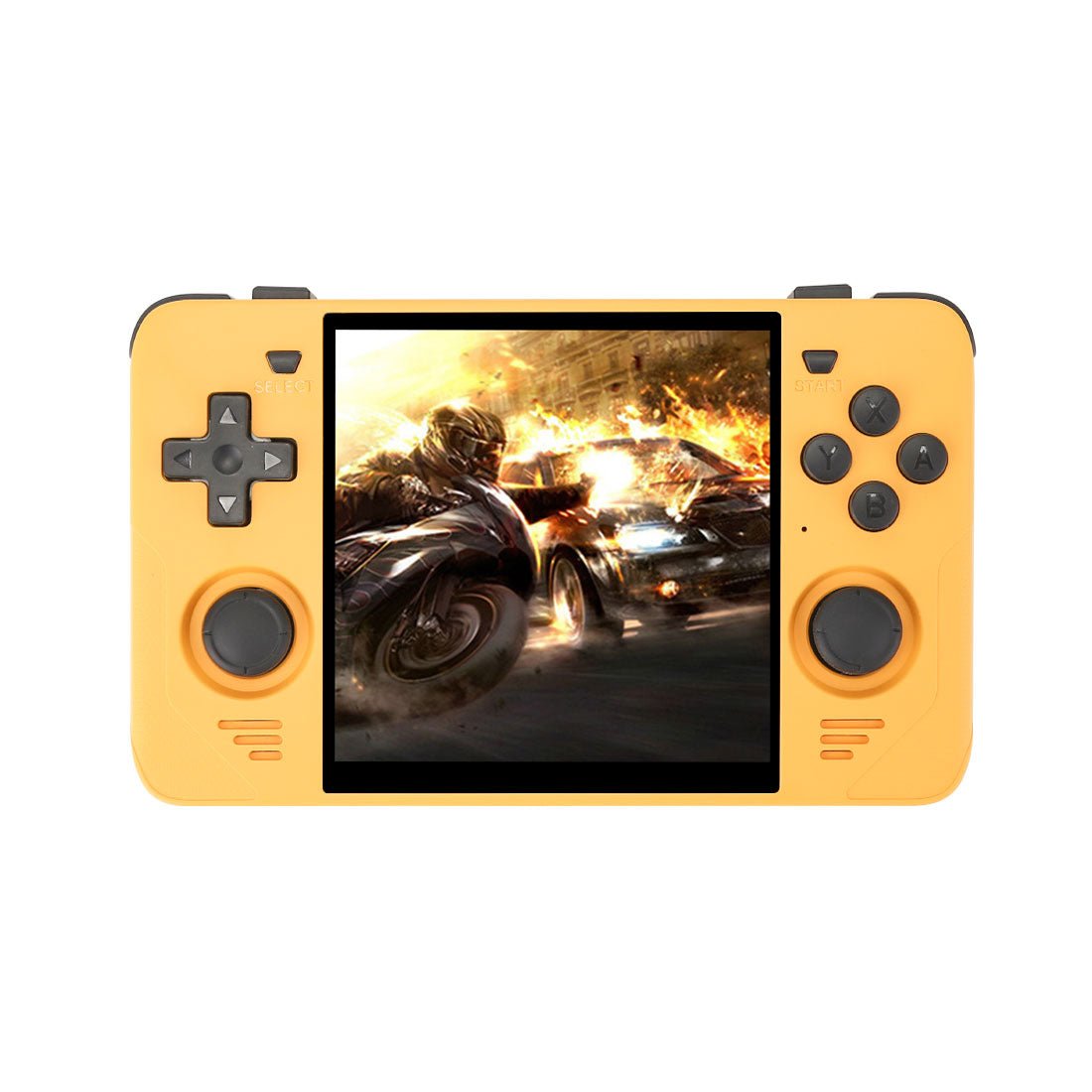
The Powkiddy RGB30's 4-inch 720×720 square panel is the best fit on this page for NES specifically: at 1:1 it wastes far less glass on a 4:3 image than a widescreen handheld does, and NES pixel art stays blocky rather than smeared. It remains the display we would pick in this price range for pixel-art purists.
The catch is that you cannot currently buy one at our link. On 20 September, LitNXT's listing reported every one of its 35 variants out of stock, console-only included. The $99.99 price is unchanged from our last check; treat this as a device to watch rather than one to order today.
Check Powkiddy RGB30 stock at LitNXT → — read our full Powkiddy RGB30 review.
Best ultra-portable pick: Miyoo Mini Plus — $69.99
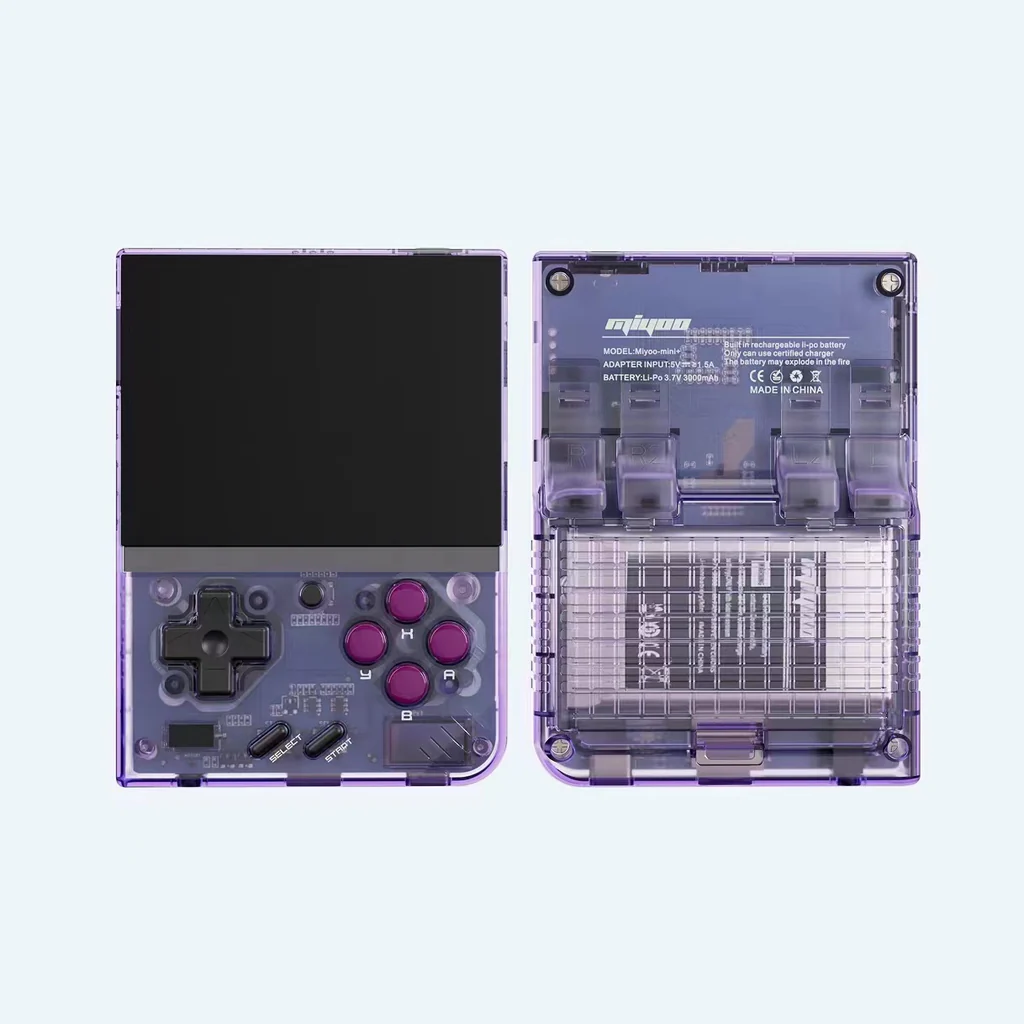
The Miyoo Mini Plus is the smallest credible retro handheld, and with Onion OS installed it plays NES, SNES, Genesis and PS1 cleanly. Its 3.5-inch 640×480 panel is 4:3, which matches the NES's own aspect ratio more closely than the RG34XX's 3:2 does.
Buy Miyoo Mini Plus at LitNXT → — $69.99 console-only, or $109.99 with a 128GB Onion OS card pre-loaded. Both were orderable in every colourway on 23 September 2026, when LitNXT raised the console-only price from $65.99.
FAQ
Is Street Fighter II on the NES? No. Street Fighter II reached home consoles on the SNES in 1992, after the NES had stopped receiving major releases, and no NES port was ever made. If you want Capcom's fighter on 8-bit Nintendo hardware, the closest things are the unrelated Street Fighter 2010 above and a handful of unlicensed bootleg carts we would not recommend.
Where is Rygar? It was on this list until September 2026 and it should not have been. Rygar on NES (1987) is a fine game, but it is not a fighting game by any reading — Tecmo rebuilt the linear arcade platformer into a non-linear action-adventure with a top-down hub area and permanent stat growth through Tone and Lasting points, and it is now recognised as a very early example of the Metroidvania subgenre. That is a different list. Kung Fu took its place.
Why was Punch-Out!! listed twice before? It was, and that was a mistake. Earlier versions of this page gave Mike Tyson's Punch-Out!! and Punch-Out!! separate entries, which is one game counted twice — the 1990 reissue swaps the final boss and leaves the rest alone. They are now one entry, and Karate Champ fills the slot that freed up.
Is Karateka really an NES game? Not in North America. Broderbund published Mechner's original on the Apple II in December 1984; Soft Pro's 8-bit Nintendo port launched on the Famicom on 5 December 1985 and never came west. Most "NES games" lists, including ours until now, quietly present it as a US NES title. On an emulator the distinction costs you nothing, but it is worth knowing which machine you are pretending to be.
Can you finish Battletoads in two-player? Not on the original NES release. Level 11, Clinger Winger, contains a bug that makes the stage unplayable for player two, so a co-op run stops there. Rare shipped a fix in the 2015 Rare Replay compilation. On original hardware or a plain NES ROM, plan on a solo run for the ending.
Which one should I start with? Punch-Out!! if you want the best game here, Karate Champ if you specifically want a one-on-one fighter and are willing to meet a 1986 design halfway, and River City Ransom if you have a friend on the couch.
What else to read
The NES fighting library is a small slice of one of the deepest retro catalogues ever made. For more from this era:
- Best NES games of all time
- Best SNES fighting games — where the genre actually arrived
- Hidden RPGs on the NES
- Challenging NES platformers
- Castlevania III: Dracula's Curse
Or browse every retro handheld we've reviewed on the devices page to pick the right one for your NES marathon.