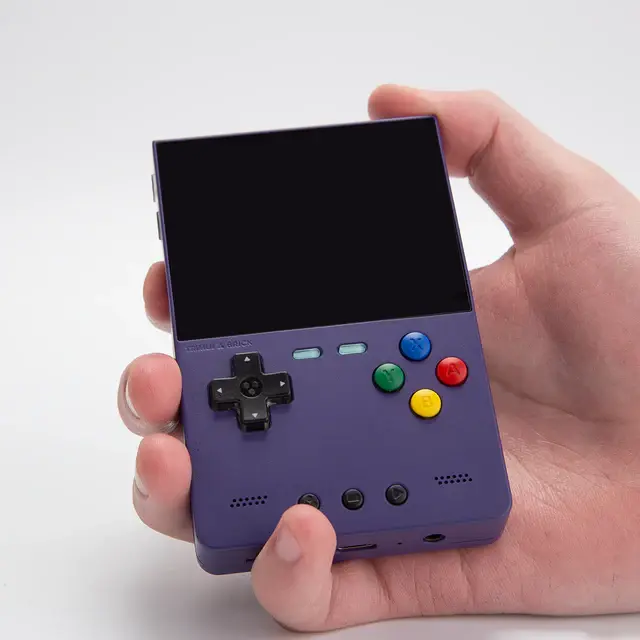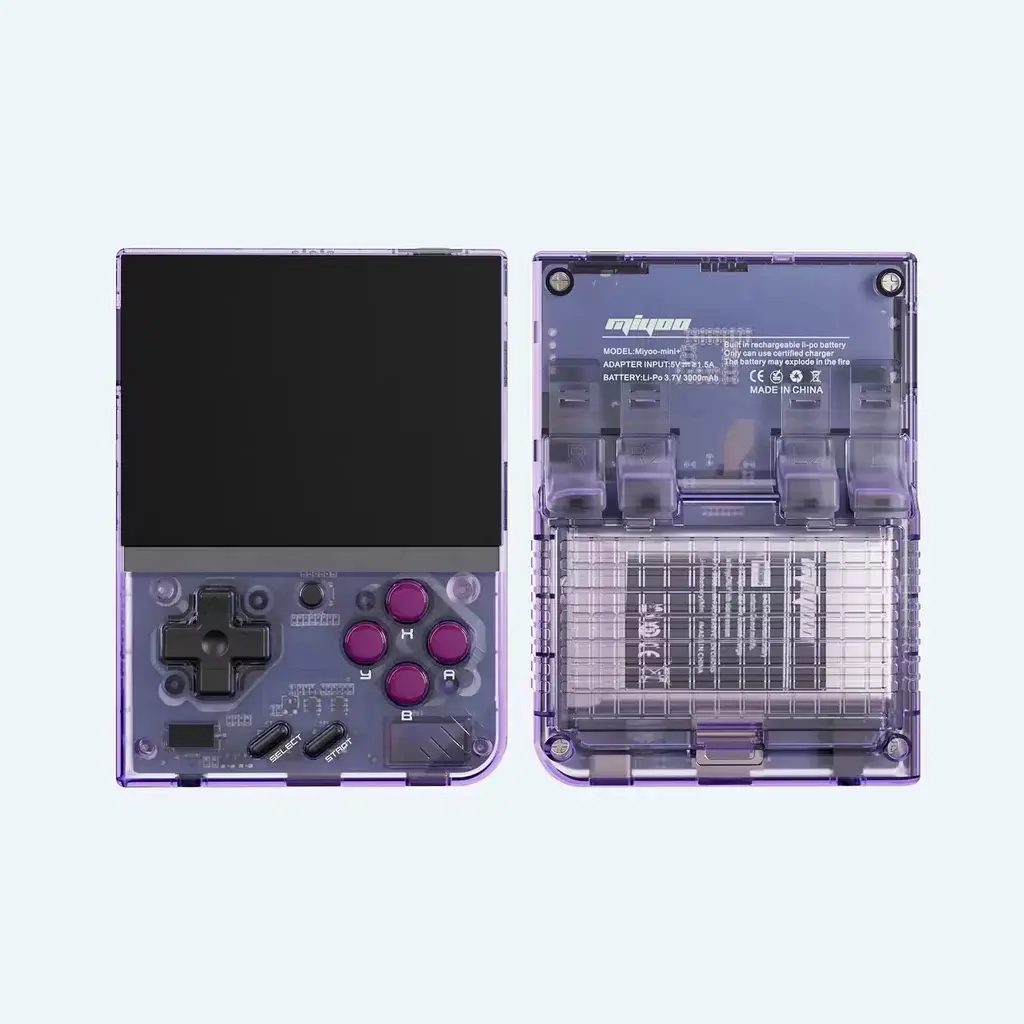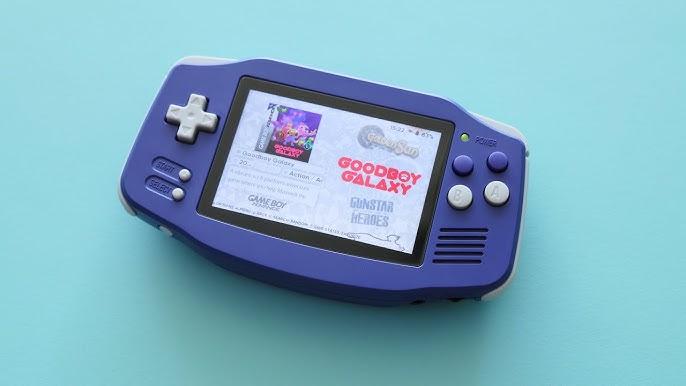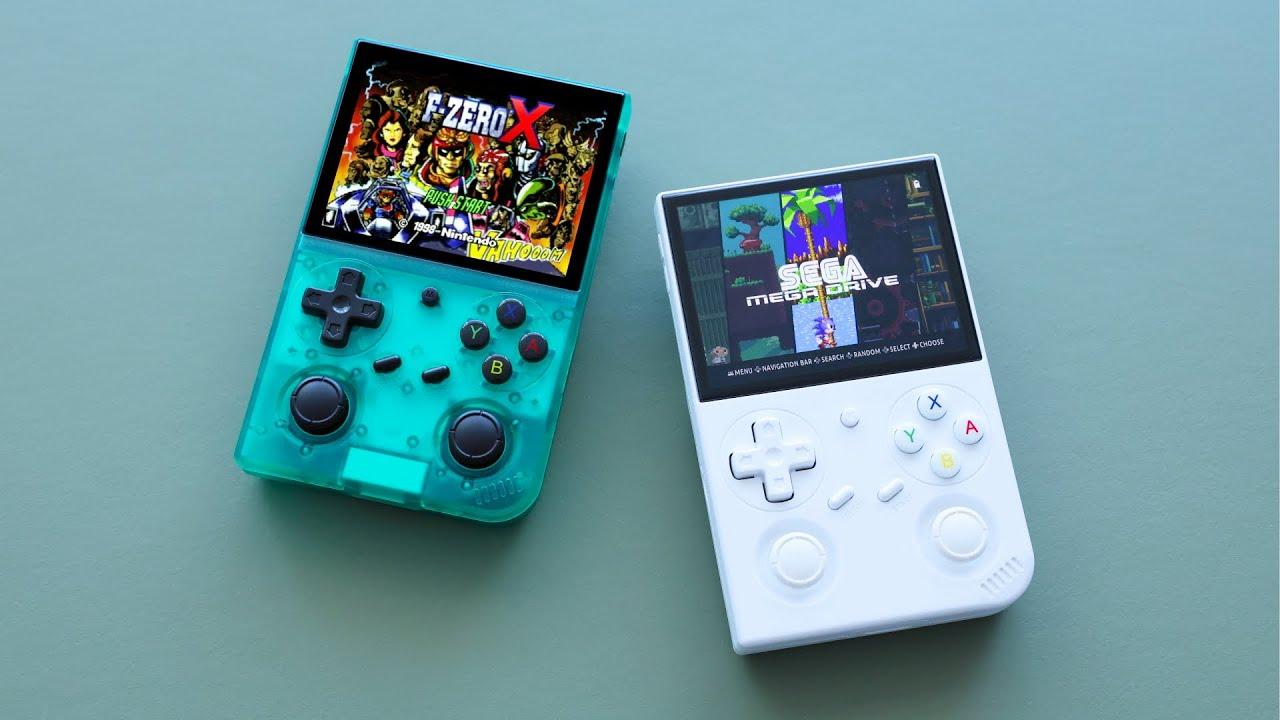
Onion OS is the custom firmware that turns the Miyoo Mini Plus from "good handheld" into "great one." This guide covers what Onion OS is, how it differs from the stock Miyoo operating system, which devices actually run it, which version you should install in 2026, what the Mini Plus gets that the original Mini does not, and the six benefits you'll feel within the first hour.
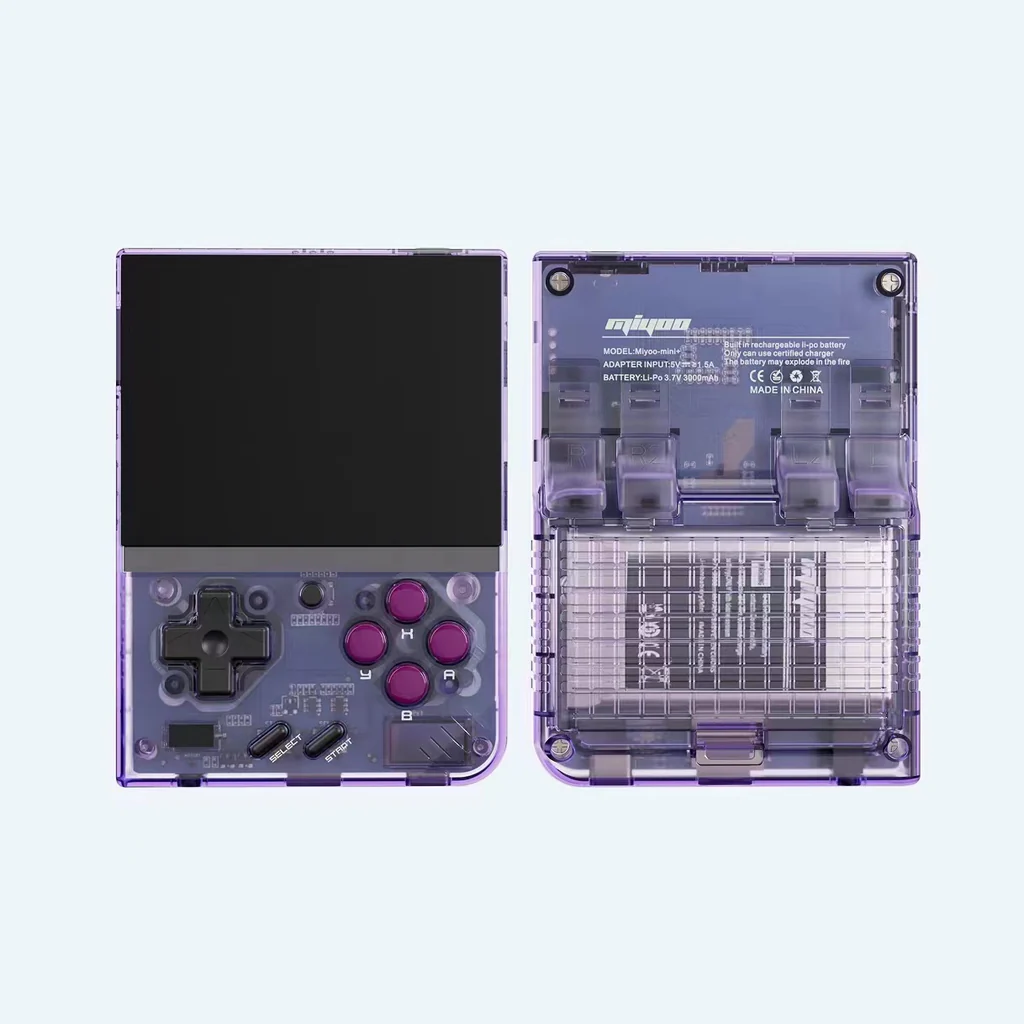
Don't own one yet? The Miyoo Mini Plus runs Onion OS better than any other handheld. Get it at LitNXT for $69.99 → (console-only variant, in stock as of 3 September 2026).
What is Onion OS?
Onion OS — often written OnionOS — is an open-source custom firmware built by the community specifically for the Miyoo Mini and Miyoo Mini Plus. It replaces the stock OS on your microSD card; your device's internal firmware stays untouched, so it's completely reversible. Pull the SD card and you're back to stock.
It exists because the stock Miyoo OS, while functional, is missing nearly every modern feature retro gamers expect: save states, rewind, organized game libraries, box-art scraping, themes, and consistent emulator settings. Onion OS adds all of that and more.
Onion OS vs the stock Miyoo OS
If you are deciding whether the swap is worth an afternoon, this is the honest comparison. Nothing here requires opening the device — the entire difference lives on the microSD card.
| Stock Miyoo OS | Onion OS | |
|---|---|---|
| Game library | One flat list of everything on the card | Sorted by console, favourites, search, recently-played carousel |
| Save states | Single slot, easy to overwrite | Multiple named slots per game, optional auto-save on exit |
| Rewind | No | Yes, in supported cores |
| Box art | No | Scraper plus community art packs |
| Themes | Fixed appearance | Full theming — backgrounds, icons, fonts, boot music |
| Emulator settings | Fixed per system | Per-system and per-game overrides through RetroArch |
| Extras | None | 60+ game ports, ScummVM, screen recorder, activity tracker, package manager |
| Updates | Whatever your unit shipped with | Community releases you install yourself |
| Risk | — | Card-only, fully reversible |
The one thing stock does better is that it is already there. Everything else on this table is a reason people install Onion within a week of unboxing.
Which devices run Onion OS?
Official Onion supports exactly two devices:
- Miyoo Mini (the original)
- Miyoo Mini Plus
One release covers both — there is no separate Mini-only or Plus-only download.
Anything else advertised as "Onion" is a community or vendor adaptation rather than the official build. The common case is the Miyoo Mini Flip, which ships from some sellers with a modified build; that has its own breakdown in Onion OS on the Miyoo Mini Flip. Other handhelds have their own firmware scenes entirely — Anbernic devices run GarlicOS, muOS or stock, and TrimUI devices have their own community builds.
Firmware requirements
Onion needs a recent enough device firmware underneath it:
| Device | Minimum firmware |
|---|---|
| Miyoo Mini | 20220419**** |
| Miyoo Mini Plus | 20230505**** |
Most units produced after July 2022 already qualify, so in practice most people never touch this. If yours is older, note that flashing device firmware — unlike installing Onion — carries a genuine bricking risk.
Why use Onion OS on your Miyoo Mini Plus — 6 reasons
1. Better emulator performance
The first thing you'll notice is how much smoother everything feels. The firmware is tuned to reduce input lag and bump emulator performance across NES, SNES, Game Boy Advance, and PlayStation 1. PS1 in particular goes from "playable" on stock to "fluid" on Onion OS.
If you've ever had Castlevania: Symphony of the Night freeze or Pokémon Emerald crash mid-battle on stock, Onion OS is the fix.
2. Clean, organized UI
The stock OS surfaces every game in one flat menu. Onion OS sorts your library by console, lets you favorite titles, supports themes, and gives you a "recently played" view via GameSwitcher — press MENU and you get a carousel of screenshots from recent sessions, each resuming exactly where you left off. Browsing 500+ ROMs becomes pleasant instead of a chore.
3. Real save states (and rewind)
Onion OS gives you multiple named save states per game, optional auto-save on exit, and rewind support in compatible emulators. This single feature changes how you play — you can experiment with tough boss fights without losing 40 minutes of progress.
4. Box art and metadata
Onion OS supports artwork scraping, so your library shows cover images, console logos, and release info next to each title. The handheld stops feeling like a file browser and starts feeling like a curated shelf.
5. Themes and deep customization
Themes change the background, category entries, console icons, fonts and background music, and they apply globally across every Onion app. There's a large community repository and an on-device Themes app for switching between them — see the best Onion OS themes and how to install them for the tour.
6. Everything else that ships with it
A full RetroArch build tuned for the Mini's screen, standalone emulators like PCSX and ScummVM where they perform better, more than 60 pre-configured game ports, an activity tracker, a screen recorder, a package manager, search that makes a 10,000-ROM card usable, and a guest mode.
What the hardware can actually emulate
Onion doesn't change the silicon, but it does squeeze more out of it than stock does. Realistic expectations:
| System | How it runs |
|---|---|
| NES, SNES, Game Boy / Color / Advance | Full speed, no fuss. The device's core competency. |
| Sega Master System, Genesis, Game Gear | Full speed. |
| PlayStation 1 | Very good with the right BIOS and per-game settings; the heaviest 3D titles need tweaking. |
| Neo Geo, CPS1/2 | Mostly fine, arcade dependent. |
| Nintendo 64, Dreamcast, PSP | Not realistically. This is not the device for it. |
If your library is 8-bit and 16-bit with some PS1, a Mini Plus running Onion is close to ideal. If you want GameCube or PSP, you're shopping in a different price bracket — see our best handhelds for GameCube emulation guide.
Mini Plus vs the original Mini under Onion
One Onion release covers both devices, which makes it easy to assume the experience is identical. It is not, and the gap has widened as the firmware has matured.
The Mini Plus has Wi-Fi and the original Mini does not. That single hardware difference gates a whole class of Onion functionality:
- Clock synchronisation over the network at start-up, rather than setting the time by hand every time the battery runs flat.
- Netplay, including the new gpSP GBA netplay and link-cable features in the beta.
- On-device network diagnostics, added in the beta line.
- Scraping and transferring files without pulling the card out.
Later Mini Plus units also have a real-time clock, which older units and the original Mini lack. On those units the beta reads the RTC directly, so the clock and the blue-light schedule stay correct across power cycles.
The two devices also want different minimum firmware — 20220419**** on the Mini, 20230505**** on the Mini Plus, per the table above — so a guide written for one is not automatically safe advice for the other.
None of this makes the original Mini a bad Onion device. It is the same interface, the same emulators and the same library management. But if you are choosing between the two because of Onion, the Mini Plus is the one the recent work has been aimed at.
Which Onion OS version should you install in 2026?
This is the question the official download page does not answer clearly, and it is the one that trips up most new Mini Plus owners. There are two live options, and they are further apart than the version numbers suggest.
| v4.3.1-1 | v4.4.0 beta | |
|---|---|---|
| Status | Latest tagged stable release | Rolling pre-release, tagged latest |
| Published | 24 June 2024 | Build 20260120, published 21 January 2026 |
| RetroArch | The 4.3 line's build | 1.22.2 |
| Best for | First-time installs, anyone who wants "set it and forget it" | Mini Plus owners who want the current feature set |
| Download | Releases page | Same page, marked pre-release |
Start on v4.3.1-1 if this is your first install. It is the version every tutorial, theme pack and troubleshooting thread assumes, so when something goes wrong you will find an answer that matches what you are looking at.
Take the beta if you own a Mini Plus and want what has landed since. Two years of work sits between the two, and a meaningful share of it is Mini Plus-specific.
What the v4.4.0 beta adds
Drawn from the release notes for build 20260120. The items that matter most on a Mini Plus:
- Real-time-clock detection on newer Mini Plus units. Later Mini Plus hardware revisions include an actual RTC, and the beta now detects and uses it — which is also what makes the blue-light schedule work against real wall-clock time rather than uptime.
- A Wi-Fi toggle for time synchronisation at start-up, so the clock can set itself without leaving the radio on permanently.
- gpSP is now the default GBA emulator, replacing the previous default, and it brings netplay with it.
- GBA link-cable support for Pokémon trading and battling, which is the single most requested missing feature on these devices.
- CPU overclock hotkeys with an on-screen overlay, so you can push a struggling PS1 title without diving into menus.
- GameSwitcher improvements — faster pause and resume, a save menu on START, and seamless state management.
- More accurate battery reporting, a long-standing annoyance on the Mini line.
- RetroArch updated to 1.22.2, plus core updates and several memory-leak fixes.
One warning worth taking seriously: the beta refactored save-file handling and migration for gpSP and mGBA. GBA saves are exactly the ones affected by the emulator default changing. Copy your saves and save-states folders off the card before you move, and you can always go back.
Is Onion OS still being developed?
Yes — but not on a release schedule, which is why it is widely assumed to be finished.
There has been no new tagged stable release since v4.3.1-1 in June 2024, and if that is all you check, the project looks dead. It is not. The rolling pre-release was rebuilt in January 2026, the repository was last pushed to in February 2026, and the changes between 4.3.1-1 and the current beta credit more than thirty first-time contributors. Development moved into the beta channel; it did not stop.
The practical reading for a Mini Plus owner: Onion is not going to surprise you with a big versioned launch, and you should not wait for one. Pick the stable release or the beta on the trade-off above and install today.
How to install Onion OS: the short version
Installation takes about 15 minutes and only writes to the microSD card, so it's fully reversible.
- Check your device firmware meets the minimum above.
- Download your chosen release — stable or beta, per the section above.
- Format the card as FAT32 (not exFAT or NTFS).
- Copy the Onion release files to the root of the card — or let Onion Desktop Tools do it for you on Windows.
- Insert the card, power on, and let the on-device installer run.
Full walkthrough with both methods, first-boot setup and troubleshooting: How to install Onion OS on the Miyoo Mini Plus.
How Onion compares to other custom firmware
GarlicOS — the Anbernic RG35XX equivalent. Similar philosophy, different hardware; our Miyoo Mini Plus vs Anbernic RG35XX comparison covers both sides.
MinUI — deliberately minimal. No box art, no themes, no activity tracking; just a fast list of games and instant resume. Some people prefer it precisely because Onion does so much.
muOS — the newer Anbernic-focused option, actively developed and more configurable than GarlicOS.
Allium — built for newer Miyoo hardware, and the usual recommendation on the Miyoo Mini Flip where official Onion doesn't reach.
Onion's advantage is polish and breadth on the device it targets. Its disadvantage is that it targets only that device, and its stable release cadence has effectively stopped — v4.3.1-1 has been the newest tagged release since June 2024. As covered above, the work continues in the beta channel rather than in tagged releases, so judge the project by the beta, not by the release page's date.
Want box art on every game?
Once Onion OS is installed, the next upgrade is automatic box art. We have a complete guide for that: How to Add Box Art to OnionOS / GarlicOS.
"Comes with Onion OS" listings: read them carefully
A large share of Miyoo listings advertise Onion OS preloaded on the bundled card, usually at a significant premium. On the LitNXT Mini Plus listing checked on 23 September 2026, the console-only variant is $69.99, while the 128GB and 256GB "Surwish Onion OS" card bundles are $109.99 and $135.99 — a $40 to $66 premium over doing it yourself.
Two things are worth knowing before you pay it.
A vendor build is not necessarily the official build. These listings name a Surwish Onion OS version, which is a reseller-prepared card rather than a download from the OnionUI project. It will typically boot straight into something that looks like Onion and comes with games already on it. What you cannot assume is that it matches an official release, that it will update cleanly against the official channel, or that community troubleshooting written for a tagged release applies to it.
You are mostly paying for the card and its contents, not the firmware. Onion itself is free and takes about fifteen minutes to install. If the bundle price minus the console price is more than a good A1-rated card costs, the difference is buying you convenience and a preloaded library, not better software.
Neither is a reason to avoid the bundles — plenty of people want a device that works out of the box. Just buy them knowing that "Onion OS included" and "the current official Onion OS" are different claims.
Other handhelds worth a look
Onion OS is Miyoo-specific, but if you're shopping around, these are the handhelds we recommend alongside the Mini Plus:
| Device | Why | Price | Buy |
|---|---|---|---|
| Miyoo Mini Plus | Best Onion OS device. The reference. | $69.99 | LitNXT → |
| Miyoo Mini V4 | Smaller form factor, officially supported by Onion | $65.99 — out of stock | LitNXT → |
| Miyoo Mini Flip | Clamshell; ships with a vendor Onion build | $75.99 | LitNXT → |
| Miyoo Flip V2 | Newer clamshell, Surwish OS variant | from $89.99 | LitNXT → |
Console-only prices, checked against the store's own listings on 3 September 2026. Card bundles cost more — see the section above on what that premium actually buys. Browse our full Miyoo device guide to compare every model side-by-side.
Frequently asked questions
Does the Miyoo Mini Plus come with Onion OS installed? Not from Miyoo. Some resellers pre-load it onto the bundled SD card, which is why two seemingly identical listings can behave completely differently out of the box.
Will installing Onion brick my device? Installing Onion only writes to the SD card, so it's low risk and fully reversible. The risky operation is upgrading the device firmware, which is a separate step most people never need.
Do I lose my saves when updating? No, as long as you're upgrading rather than reformatting. Saves and save states live in their own folders on the card. The exception worth care is moving from the 4.3 line to the v4.4.0 beta, which reworked save handling and migration for the two GBA emulators — back up your saves folder before that particular jump.
Which version of Onion OS should I install? v4.3.1-1 if you want the version every guide and theme assumes; the rolling v4.4.0 beta if you own a Mini Plus and want RTC support, the newer RetroArch, gpSP as the GBA default and link-cable Pokémon trading. Both are on the same releases page.
Is Onion OS abandoned? No. There has been no tagged stable release since June 2024, which is where that impression comes from, but the pre-release build was refreshed in January 2026 and the repository was still being updated in February 2026.
Does the Mini Plus Wi-Fi actually do anything under Onion? Yes — clock sync at start-up, netplay including GBA link-cable play in the beta, network diagnostics, and file transfer and scraping without removing the card. This is the main functional gap between the Mini Plus and the original Mini.
Is a preloaded "Onion OS" SD card worth the extra money? Only for the convenience and the games already on it. The firmware is free, the install takes about fifteen minutes, and vendor-prepared cards are not guaranteed to match an official release.
Bottom line
If you own a Miyoo Mini Plus and you're still on stock firmware, you're using maybe 40% of what the device can do. Onion OS is free, takes 15 minutes to install, doesn't risk your hardware, and is reversible. There's almost no reason not to.
Need to grab a Miyoo Mini Plus first? Buy it at LitNXT for $69.99 → — console-only variant, in stock as of 23 September 2026. Not sure it is the right device for you? Read our full Miyoo Mini Plus review first — the reviewers who tested one disagree about PS1.