The PlayStation 1 is where horror stopped being a novelty and became a genre with rules. Capcom's Resident Evil was the first game to be called "survival horror" in 1996, and within four years the machine had produced a psychological horror landmark, a stalker game with no combat at all, and two titles that spliced horror into RPG and action frameworks. That range is the reason these games are still worth loading up.
Release dates, developers, publishers, plot details and review scores on this page were checked against each game's documented release history and aggregate review scores on 2026-09-17.
One entry was removed in that check. Earlier versions of this list included Castlevania: Symphony of the Night, hedged with "though primarily an action-adventure title." That hedge was the problem: Symphony of the Night is classified as an action role-playing game and the template for the Metroidvania, not a horror game. Gothic setting is not the same thing as fear. It has been replaced by Clock Tower, a PS1 game with no combat system whatsoever, which is a far better answer to the question this page is actually asked. There is more on Symphony of the Night in the FAQ below.
The five at a glance
This is not a strict ranking. It runs from the two games that defined PS1 horror, through the one that removed your ability to fight back, to the two that blended horror into another genre.
| Game | Released (NA) | Developer / Publisher | Can you fight back? | Aggregate score |
|---|---|---|---|---|
| Resident Evil | 1 April 1996 | Capcom / Capcom | Yes, but ammunition is scarce | Metacritic 91 |
| Silent Hill | 23 February 1999 | Team Silent, Konami Computer Entertainment Tokyo / Konami | Yes, badly — Harry is a writer | Metacritic 86 |
| Clock Tower | 10 October 1997 | Human Entertainment / ASCII Entertainment | No. You hide or you run | GameRankings 72% |
| Parasite Eve | 1998 | Square / Square Electronic Arts | Yes, in a pausable real-time battle system | Metacritic 81 |
| Fear Effect | 2000 | Kronos Digital Entertainment / Eidos Interactive | Yes, with three mercenaries | GameRankings 85% |
Resident Evil
Resident Evil reached Japan on 22 March 1996, North America on 1 April and Europe on 16 August, directed by Shinji Mikami for Capcom. It was the first game to be dubbed "survival horror," and the label stuck to everything that followed it.
You play Chris Redfield or Jill Valentine, both members of S.T.A.R.S. — Special Tactics and Rescue Service — sent to investigate the Spencer Mansion. The mansion is not in Raccoon City, which is a detail a lot of write-ups get wrong: it sits in the fictional Arklay mountain region, in the forest and hills outside the city. Chris is partnered with Rebecca Chambers, Jill with Barry Burton, and the two campaigns differ enough to be worth playing both.
What makes it frightening thirty years on is a set of restrictions that a modern game would never ship. Fixed camera angles over pre-rendered backgrounds mean the thing making the noise is frequently off-screen. Tank controls make turning around a decision rather than a reflex. Ammunition and healing items are finite, so every zombie you walk past is a bet that you will not need to come back this way.
It was a commercial phenomenon as well as a critical one: roughly four million units sold worldwide by December 1997, grossing over $200 million, against a Metacritic score of 91.
Silent Hill
Konami's Silent Hill arrived on 23 February 1999 in North America, 4 March in Japan and 16 July in Europe, built by the internal group known as Team Silent at Konami Computer Entertainment Tokyo.
Harry Mason crashes his car outside the town of Silent Hill and goes looking for Cheryl, his adopted daughter. He is a writer, not a police officer or a soldier, and the combat reflects that — swinging a length of pipe in this game feels like something you should not be doing, which is the point.
The famous fog has a mundane origin worth knowing. The developers used fog and darkness to work around the PlayStation's limited draw distance, hiding pop-in rather than rendering a full town. Having introduced it as a technical fix, the team then built the game's whole atmosphere around it: the fog is what makes a residential street feel like it has no edges. Akira Yamaoka's score and sound design do the rest, and the game's dread comes from guilt and trauma rather than monsters jumping out.
It scored 86 on Metacritic, sold over two million copies and was reissued in PlayStation's Greatest Hits budget line.
Clock Tower
This is the entry that replaced Symphony of the Night, and the naming needs explaining before anything else, because it is genuinely confusing.
The game released in North America on 10 October 1997 as Clock Tower is titled Clock Tower 2 in Japan, where it came out on 13 December 1996. It is a sequel. The original Clock Tower was a 1995 Super Famicom game that was never officially released outside Japan — not until the Clock Tower: Rewind port in October 2024 — so the sequel arrived in English first and took the untitled name. Human Entertainment developed both; ASCII Entertainment published this one outside Japan.
Jennifer Simpson, the original's protagonist, leads again, with Helen Maxwell available as an alternate playable character depending on what you do in the prologue. The antagonist is Scissorman.
Here is why it belongs on a list about fear rather than a list about quality: there is no combat. You cannot kill Scissorman. The interface is point-and-click, and when he finds you the game enters panic mode — signalled by a red blinking cursor — and your only options are to run, to hide, or to click on the handful of objects in the room that will make him back off. A game where the monster cannot be solved is a fundamentally different experience from one where it can.
It is the least polished game here, and the critical record says so: 72% on GameRankings, with reviewers praising the atmosphere, story and full-motion video while finding the pace slow next to action-led contemporaries like Resident Evil. That slowness is also the source of the dread.
Parasite Eve
Square released Parasite Eve in 1998, developed and published in-house, with Square Electronic Arts handling North America. It is the odd one out in Square's PS1 run — not a JRPG in a fantasy world, but a horror story in a real city.
The setting is frequently misdescribed as post-apocalyptic. It is not. The game takes place over six days in contemporary Manhattan, from Christmas Eve to 29 December 1997, and the ordinary-ness is the horror: Carnegie Hall, the NYPD's 17th precinct, Central Park, the museum, all recognisable and all going wrong. Aya Brea is an NYPD rookie, not a soldier.
Combat is a pausable real-time system built on an Active Time Bar. The gauge sets how long you wait before your next action, and while you wait you can move Aya around the arena to dodge. It is neither pure turn-based nor an action game, and the hybrid still feels distinctive.
It scored 81 on Metacritic. Reviewers praised the graphics, the pre-rendered backdrops and the cinematic presentation, and criticised its short length and thin replay value. It is the least frightening game on this list — closer to a supernatural thriller than to Silent Hill — but it earns its place for the atmosphere of a familiar city coming apart.
Fear Effect
Fear Effect arrived in 2000 from Kronos Digital Entertainment, published by Eidos Interactive, and it is the stylistic outlier.
The plot is often summarised backwards, so to be precise: you are not rescuing a kidnapped girl. Three mercenaries — Hana Tsu-Vachel, Royce Glas and Jacob "Deke" DeCourt — go looking for Wee Ming Lam, a crime boss's missing daughter, intending to abduct her themselves and ransom her back before her father's men find her. What they find is not a girl. The setting is Hong Kong in 2050, and the story turns on Chinese mythology and a sacrifice owed to a demon.
The look is not quite cel-shading, though it is usually described that way. The characters are unshaded models textured to resemble cel-shading, and the environments behind them are streaming or looping full-motion video rather than pre-rendered stills — an unusual approach that gives the game its moving, cinematic backgrounds.
The mechanic worth the price of entry is the health bar: an EKG readout that pulses faster and turns red as you take damage, and which you restore by solving puzzles or landing stealth kills rather than by finding med-kits. Your character's fear is literally the resource you manage.
GameRankings put it at 85%, though the spread was wide — from 6/10 at Edge and Eurogamer to 9/10 at Electronic Gaming Monthly and CNET Gamecenter — with praise for the cinematic presentation and complaints about difficulty and controls.
Playing PS1 horror on a handheld
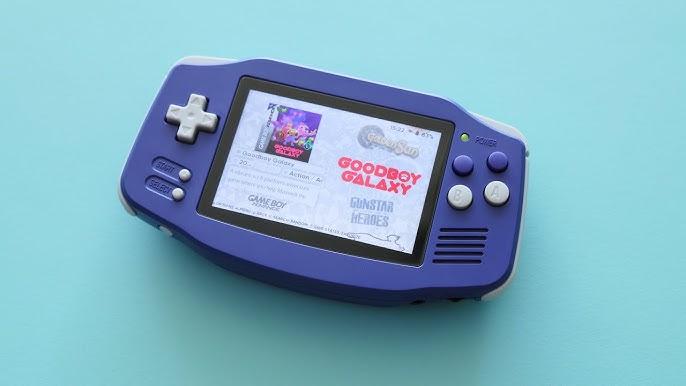
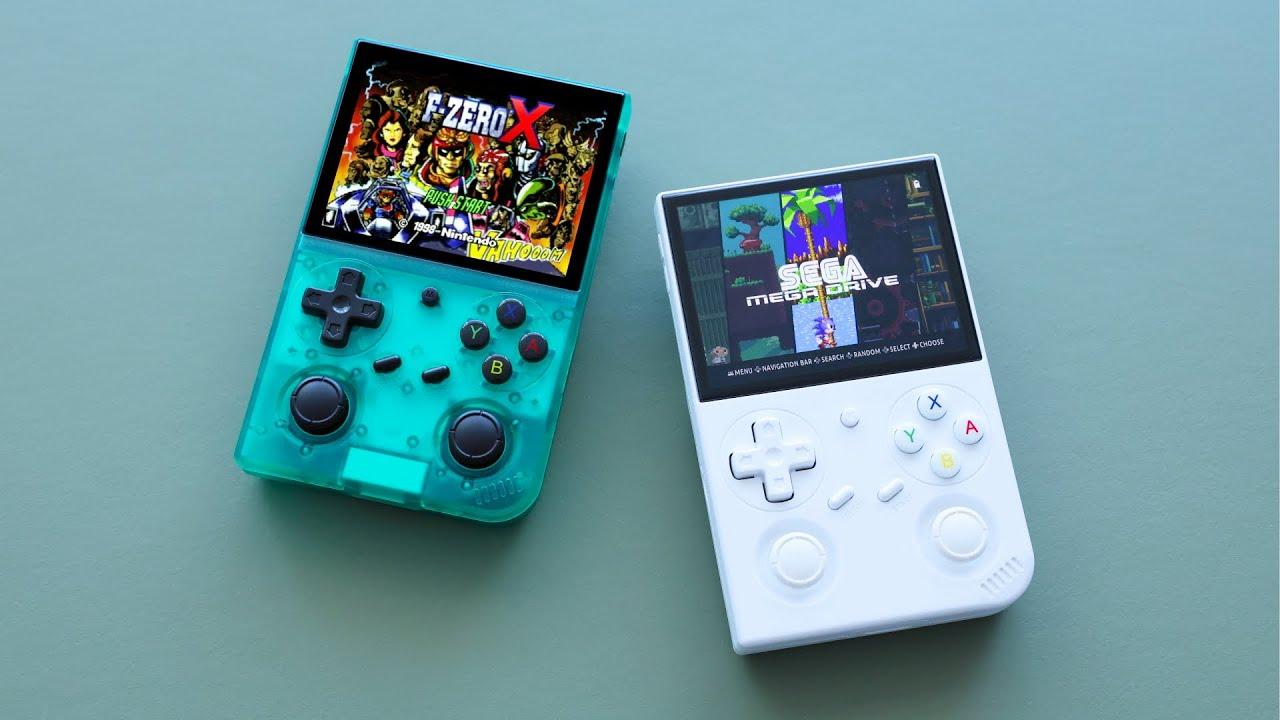
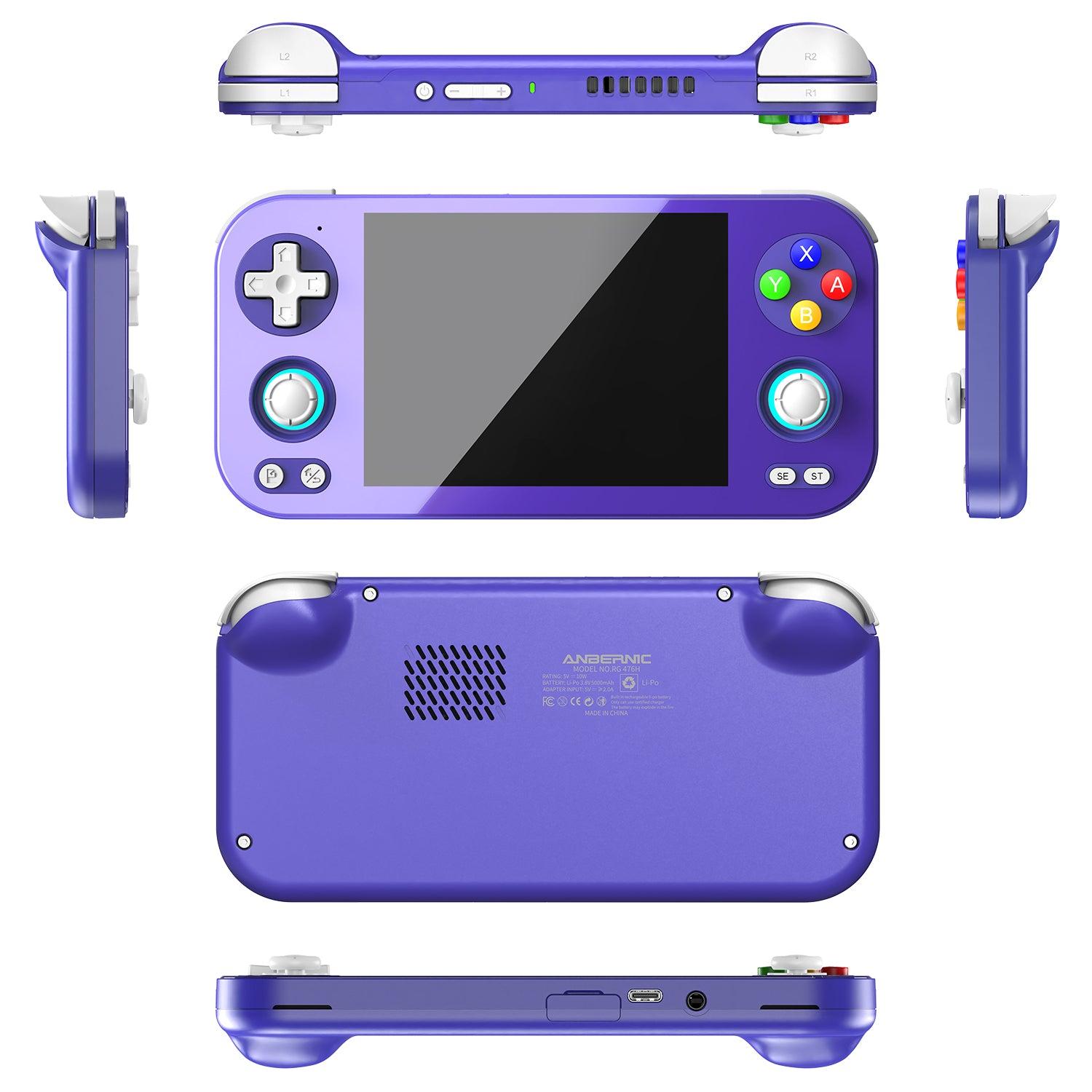
All five run on standard PlayStation emulation, so any handheld with a competent PS1 core will play them, whether that is an ANBERNIC RG 34XX or something more powerful.
Two practical notes specific to this genre. Screen size works against you on the fixed-camera games. Resident Evil and Clock Tower put important detail in the corners of pre-rendered backgrounds, and on a small panel a door you were meant to notice can disappear. Headphones are not optional for Silent Hill. The game's threat information arrives through Akira Yamaoka's sound design and the static of Harry's radio long before anything is visible through the fog, and handheld speakers throw most of it away.
If you want more from the same machine outside the horror shelf, our PS1 hidden gems list covers the underrated end of the library, and the PS1 stealth games list overlaps with this one on tension if not on monsters.
Frequently asked questions
Where is Castlevania: Symphony of the Night? Removed, deliberately. It is a superb game — 93 on Metacritic, and a fixture on greatest-game lists — but it is classified as an action role-playing game and the template for the Metroidvania, not a horror game. Every version of this list that included it had to hedge with a line like "though not a traditional horror game," which is a sign the entry never fitted the question. Gothic atmosphere is not fear. We cover it properly in our Symphony of the Night review instead.
Is Clock Tower on this list the same as the SNES Clock Tower? No, and this trips people up constantly. The PS1 game is the sequel, called Clock Tower 2 in Japan and simply Clock Tower in North America. The Super Famicom original from 1995 stayed in Japan until the Clock Tower: Rewind release in October 2024. Both star Jennifer Simpson and both feature Scissorman, but they are separate games. Our SNES horror list covers the 16-bit side.
Which of these is actually the scariest? Silent Hill for psychological dread and Clock Tower for helplessness. Clock Tower wins on pure fear response for most players, because you have no way to end the threat — the best you can do is delay it. Resident Evil is the more frightening game the first time and the more replayable one afterwards.
Is Resident Evil 2 not better than the first one? Many people think so, and it scored higher. This list is limited to one entry per series so that five slots cover five different kinds of horror rather than three Capcom games. If you finish Resident Evil and want more of exactly that, Resident Evil 2 and 3: Nemesis are the obvious next steps on the same machine.
Do I need the original discs? No — these run through emulation on the retro handhelds most people use today, and they are also sold in various re-release and collection forms on modern platforms. Availability changes often enough that it is worth checking current storefronts rather than trusting a list.