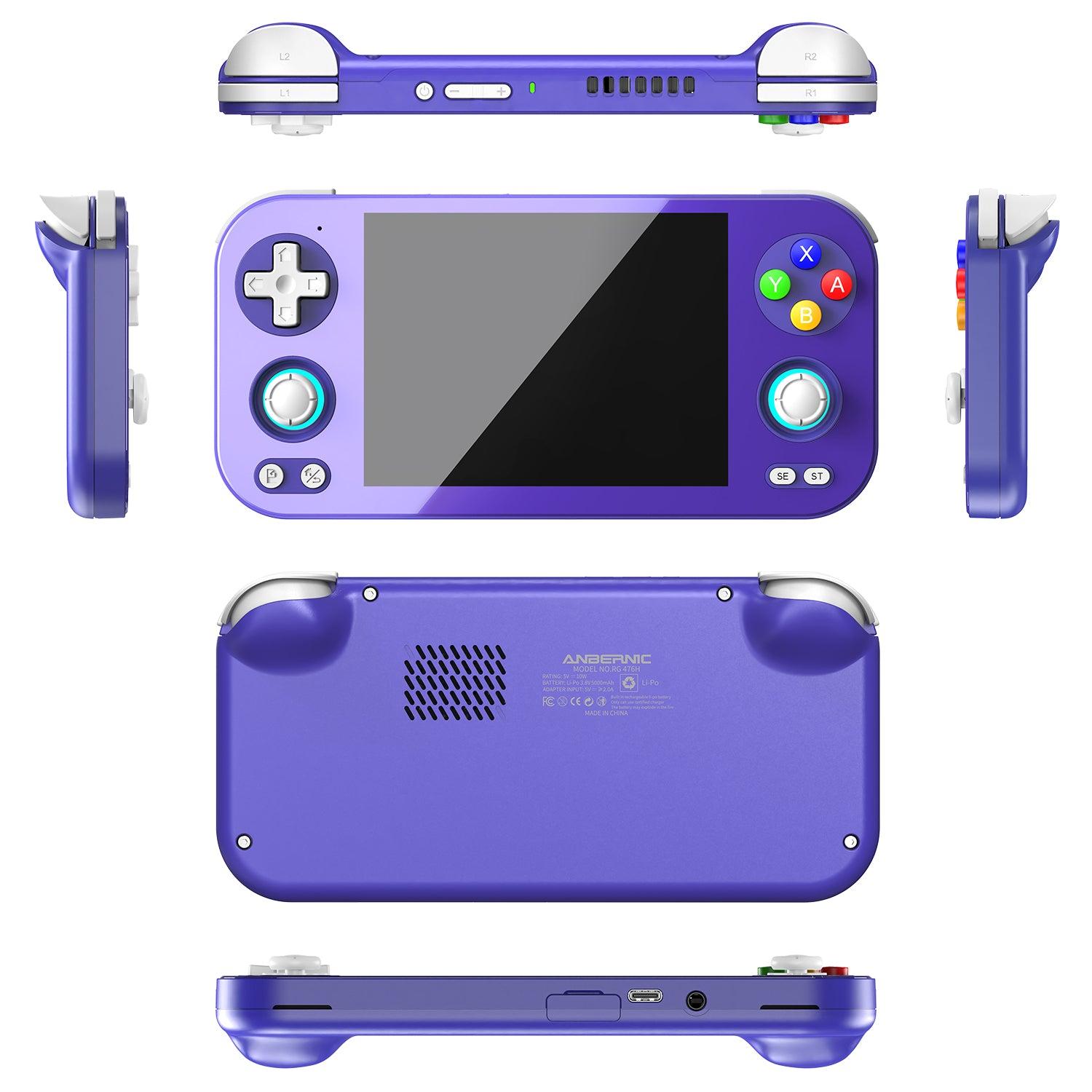
In the world of retro gaming, few genres have captivated players quite like beat 'em ups. The Nintendo Entertainment System (NES) was home to some of the most iconic titles that defined the genre, offering intense action and memorable gameplay. Whether you're revisiting these classics or experiencing them for the first time on a device like the ANBERNIC RG 34XX, these games are must-plays for any fan of vintage gaming. Here’s a look at the top five classic beat 'em up games on the NES.
1. Double Dragon
One of the pioneers of the beat 'em up genre, Double Dragon is a game that every retro gamer should try — with one warning attached. Technōs's NES version came out in Japan on 8 April 1988 and in North America in June 1988, and it is not the arcade game you remember. The arcade original's defining feature, two players fighting side by side, was cut: in the NES main game two players take turns, and the only simultaneous two-player action is the separate head-to-head fighting mode, Mode B. The story changed to fit. Billy Lee fights alone to rescue Marian, and his brother Jimmy Lee is the final boss, revealed as the true leader of the Black Warriors.
What the NES version added instead is a level-up system. Billy starts with only a handful of basic punches and kicks and earns experience for every enemy he beats, unlocking stronger techniques at set thresholds. That changes the feel of the whole game: the first stage is a slog, the later ones are a power trip. Play it for that progression and for Mode B, not for co-op. If co-op is what you want, the NES game you are looking for is its sequel, below.
2. River City Ransom
River City Ransom takes the beat 'em up genre and adds an RPG twist. Technōs released it in Japan as Downtown Nekketsu Monogatari on 25 April 1989, and in North America in January 1990. There are no experience levels. Beaten gang members drop cash, and you spend it in River City's malls: food and spa treatments restore you and can permanently raise stats like Punch and Kick, and new techniques are bought as books from shops around the city. The city itself is an interconnected, non-linear map you can walk back and forth across, which is what gives the game its open-world reputation. Two players can play simultaneously, fighting side by side through the rival gangs. With its humour, its shopping and its co-op, River City Ransom remains the most replayable brawler on the system.
3. Teenage Mutant Ninja Turtles II: The Arcade Game
Teenage Mutant Ninja Turtles II: The Arcade Game is Konami's NES conversion of its four-player 1989 arcade brawler, released in North America in December 1990. The NES version supports two players simultaneously, each picking one of the four turtles, and it is not a cut-down port: it adds two stages the arcade never had — the first part of Scene 3 and all of Scene 6 — with two NES-only bosses, Tora and Shogun. The formula is the arcade's: side-scrolling stages, waves of Foot Clan enemies and the Shredder at the end. Commercially it was a phenomenon, selling over 600,000 units in the two weeks before Christmas 1990 and over a million by 1991.
This slot used to hold the first NES Teenage Mutant Ninja Turtles (June 1989). That game is a single-player action-platformer, not a beat 'em up — see the FAQ below.
4. Double Dragon II: The Revenge
Double Dragon II: The Revenge is the NES Double Dragon with the co-op put back. Technōs developed it and Acclaim published it in North America in January 1990, and unlike the first NES game it can be played by two players simultaneously, in two modes that differ only in whether you can hit each other. It keeps the arcade's direction-based attack controls, which take a stage to learn and then feel natural. From Mission 2 onward the level design is new to the NES rather than copied from the arcade.
One thing to know before you start: difficulty decides how much of the game you see. On the easiest level the game ends after the third stage; the middle setting stops short of the ninth and final stage; only the hardest setting lets you reach the last boss. Pick the top difficulty with a friend and it is the best co-op game on this list.
This slot used to hold Batman: Return of the Joker, which is a run-and-gun platformer, not a beat 'em up — see the FAQ below.
5. Mighty Final Fight
Mighty Final Fight is a charming spin-off of the popular Final Fight series, designed specifically for the NES. Capcom released it in Japan on 11 June 1993 and in North America in July 1993, and it features a colorful art style and a slightly comical tone, with characters that have been transformed into cute, chibi versions of themselves. Players can choose to control one of three characters: Cody, Guy, or Haggar, each with their own fighting styles and special moves. Like the NES Double Dragon, it adds an experience system — and the experience you earn depends on the finishing move you use, so fighting well pays more than fighting safely. One limitation to know: unlike the arcade Final Fight, it is single-player only. It retains the classic beat 'em up gameplay but offers a more light-hearted experience, making it accessible for players of all ages.
At a glance
| Game | North American NES release | Developer | Two-player | How you get stronger |
|---|---|---|---|---|
| Double Dragon | June 1988 | Technōs Japan | Alternating; simultaneous only in versus Mode B | Experience unlocks moves |
| River City Ransom | January 1990 | Technōs Japan | Yes, simultaneous | Buy food, spa visits and technique books |
| TMNT II: The Arcade Game | December 1990 | Konami | Yes, simultaneous | None — pure arcade |
| Double Dragon II: The Revenge | January 1990 | Technōs Japan | Yes, simultaneous, friendly fire optional | None |
| Mighty Final Fight | July 1993 | Capcom | No, single-player only | Experience, more for finishing moves |
| TMNT III: The Manhattan Project | February 1992 | Konami | Yes, simultaneous | None |
| Battletoads | June 1991 | Rare | Yes, simultaneous | None |
| Battletoads & Double Dragon | June 1993 | Rare | Yes, with or without friendly fire | None |
| Kung Fu | 18 October 1985 | Nintendo | No simultaneous play | None |
Four more that belong on this shelf
Five slots leave out games that any NES beat 'em up list should at least mention. These four are the ones most worth your time.
Teenage Mutant Ninja Turtles III: The Manhattan Project
If TMNT II is the arcade game on a cartridge, The Manhattan Project is Konami building the NES its own. It came out in North America in February 1992, it is an original NES title with no arcade version behind it, and it supports two players at once. It also gives each turtle a special attack with a cost: every time you use it, you lose a portion of your health — unless you are already on your last bar, which makes it a desperation move rather than a spam button. Play TMNT II first, then this.
Battletoads
Rare's Battletoads (Tradewest, North America June 1991) is half beat 'em up, half everything else — each stage changes the rules, from brawling to rappelling to the infamous Turbo Tunnel, a speeder-bike stage of walls and ramps that a consumer guide of the time called one of the toughest challenges of any NES game. GameTrailers put it at number one on its list of the hardest games ever made. Two players can play together, but with a catch that ends friendships: if one player loses all their lives, both start the stage over. Brilliant, and not a beginner's game.
Battletoads & Double Dragon
The 1993 crossover (Rare, Tradewest, North America June 1993) is the kinder way into Battletoads. It has five playable characters — Billy and Jimmy Lee plus Zitz, Pimple and Rash, the first time all three toads were playable — and two co-op modes, one with friendly fire and one without. Retrospective reviewers note it is more forgiving than the original Battletoads, though still unfair in places.
Kung Fu
The ancestor. Nintendo brought Irem's arcade Kung-Fu Master to the NES as Kung Fu on 18 October 1985 in North America, a launch-era cartridge with a five-floor temple, a boss on every floor, and an endless stream of grabbers to shake off. It is short and simple next to everything above, but it is where the side-scrolling brawler on consoles starts — and Shigeru Miyamoto's work directing the port fed into his side-scrolling Super Mario Bros. the same year.
What this page got wrong
This list was fact-checked in September 2026. Everything corrected is named here rather than quietly edited away.
| What the page said | What the record says |
|---|---|
| Double Dragon "features a unique cooperative play mode that allows two players to team up" | False for the NES version. The arcade game's simultaneous co-op was removed; two players alternate. The only simultaneous two-player mode is the versus fighting game, Mode B |
| Double Dragon: "Billy and Jimmy Lee, twin brothers fighting to rescue… Marian" | In the NES version Billy fights alone, and Jimmy Lee is the final boss — the story was rewritten because the co-op was cut |
| River City Ransom: "allowing players to level up" | There are no experience levels. Stats rise permanently through food and spa treatments bought with money from beaten enemies, and techniques are bought as books |
| River City Ransom: "Released in 1989" | That is the Japanese release (Downtown Nekketsu Monogatari, 25 April 1989). The North American release was January 1990 |
| Teenage Mutant Ninja Turtles (1989) at #3, with "the cooperative feature allows friends to team up" | Two errors. The 1989 NES game is a single-player action-platformer — no co-op, and not a beat 'em up. You switch between turtles from the information screen. Replaced with TMNT II: The Arcade Game, the NES game that matches the description |
| Batman: Return of the Joker at #4, "classic beat 'em up mechanics" | Sunsoft's game is a single-player run-and-gun platformer. Batman attacks with a wrist projector firing crossbow bolts and Batarangs, plus a sliding kick. A good game on the wrong list. Replaced with Double Dragon II: The Revenge |
Which handheld for NES beat 'em ups
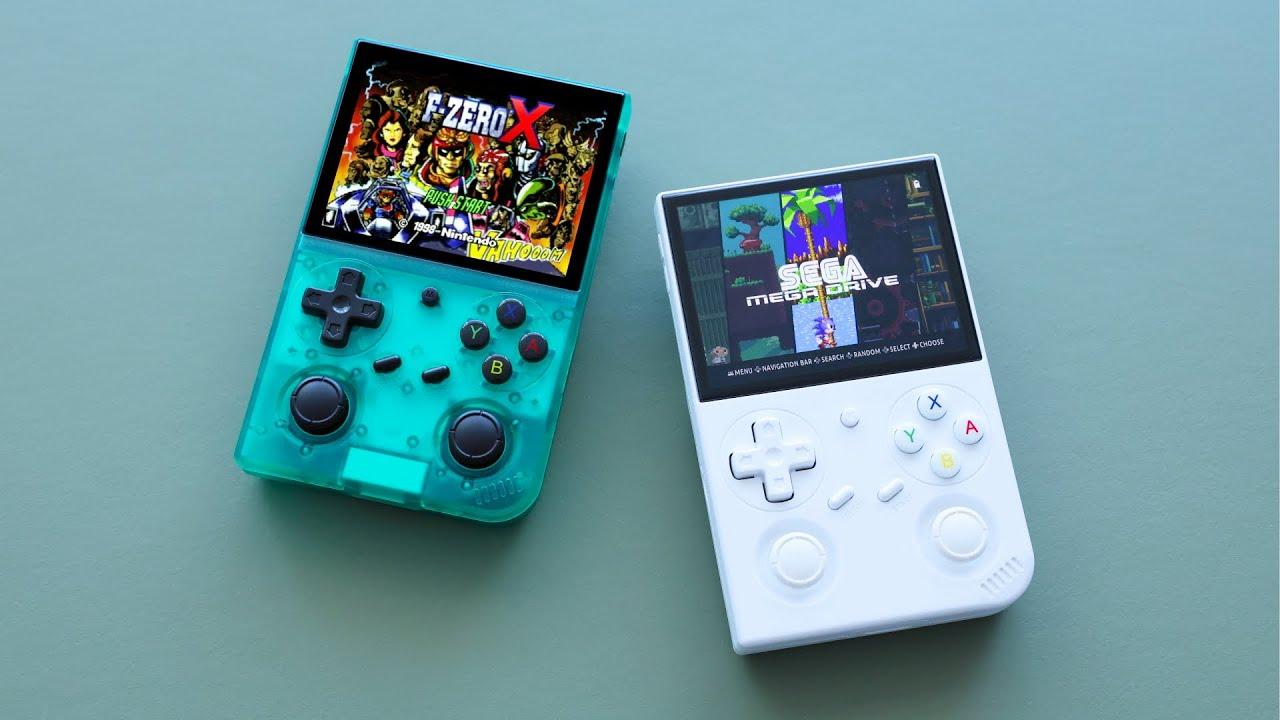
The NES outputs 256×240 pixels, and any handheld sold today emulates it without effort. What matters for brawlers is the screen and the buttons: you want a clean integer scale so the sprites stay sharp, and a D-pad you can hold diagonals on for the length of a stage.
Prices and stock below were read from each store's own product data on 24 September 2026. We have not tested these handhelds ourselves.
| Handheld | Screen | NES scaling | Price at our link | Stock on 24 Sep 2026 |
|---|---|---|---|---|
| Anbernic RG34XX | 3.4" IPS, 720×480 | Exact 2× vertical (512×480) | $57.11 (64GB) | 6 of 36 variants — China warehouse, Black and Glacier only |
| Miyoo Mini Plus | 3.5" IPS, 640×480, 4:3 | Exact 2× vertical (512×480) | $69.99 console-only | In stock, all 28 variants |
| TrimUI Brick | 3.2" IPS, 1024×768, 4:3 | 3× (768×720) with small borders | $85.99 console-only | In stock, all 28 variants |
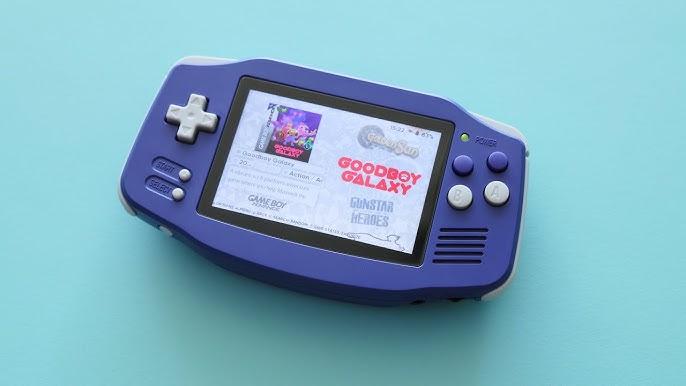
The ANBERNIC RG 34XX is the handheld this page was written around, and at $57.11 (re-checked 7 October) it is still the cheapest way in. Anbernic's own listing gives a 3.4-inch OCA-laminated 720×480 panel, so NES output doubles exactly to fill the height. The catch is stock: on 24 September only 6 of its 36 variants were orderable, all shipping from the China warehouse in Black or Glacier. Our Miyoo Mini Plus vs RG34XX comparison sets the two side by side.
The Miyoo Mini Plus is the easier buy, at $69.99 console-only with all 28 variants orderable. Its 3.5-inch 640×480 panel also doubles the NES's 240 lines exactly, and with Onion OS installed it covers everything from NES to PS1.
Buy Miyoo Mini Plus at LitNXT →
The TrimUI Brick has the sharpest screen of the three — 3.2 inches at 1024×768 — and at a 3× scale the NES image (768×720) fits with a thin border. It was $85.99 console-only with all 28 variants in stock. Our TrimUI Brick review covers it in full.
A note on co-op: three of the five games above are at their best with two players, and a single handheld has one set of controls. Netplay and link features vary by firmware; if two-player is the point, plan on either two devices or a handheld with HDMI out and a pair of controllers.
FAQ
Does Double Dragon on the NES have two-player co-op? No. The NES version replaced the arcade's co-op with alternating play and a separate one-on-one fighting mode. Double Dragon II: The Revenge is the NES game with simultaneous co-op, and Battletoads & Double Dragon has it too.
Where is the original Teenage Mutant Ninja Turtles? Removed from the top five, because it is not a beat 'em up. The 1989 NES game is a single-player action-platformer in which you swap between the four turtles — best known for its underwater dam stage, where you defuse timed bombs. It sold more than four million cartridges and is worth playing on its own terms, but TMNT II and TMNT III are the NES Turtles brawlers.
Where is Batman: Return of the Joker? Also removed on genre grounds. Sunsoft's 1991 game is a run-and-gun platformer — Batman fights with projectile weapons, not his fists — and it is single-player. If you want it, look for it on a list of NES action games.
Which NES beat 'em up is best for two players? Double Dragon II on its hardest difficulty, which is the only setting that shows you the whole game. River City Ransom is the one you will replay longest together, and TMNT II is the one to hand a newcomer.
Which is the hardest? Battletoads, by a distance, and its co-op makes it harder rather than easier because a partner's last life restarts the stage for both of you.
Which should I start with? River City Ransom if you want depth, TMNT II if you want something you understand in ten seconds.
What else to read
- Best NES games
- Top 5 fighting games on the NES — the one-on-one side of the same era
- Top multiplayer games on the NES
- Essential beat 'em ups on the Super Nintendo — where the genre went next
In conclusion, the NES was home to a variety of classic beat 'em up games that continue to inspire new generations of gamers. Whether you're reliving the nostalgia on your ANBERNIC RG 34XX or discovering these titles for the first time, each game offers a unique experience filled with action and excitement. Dive into these timeless classics and enjoy the thrill of retro gaming!