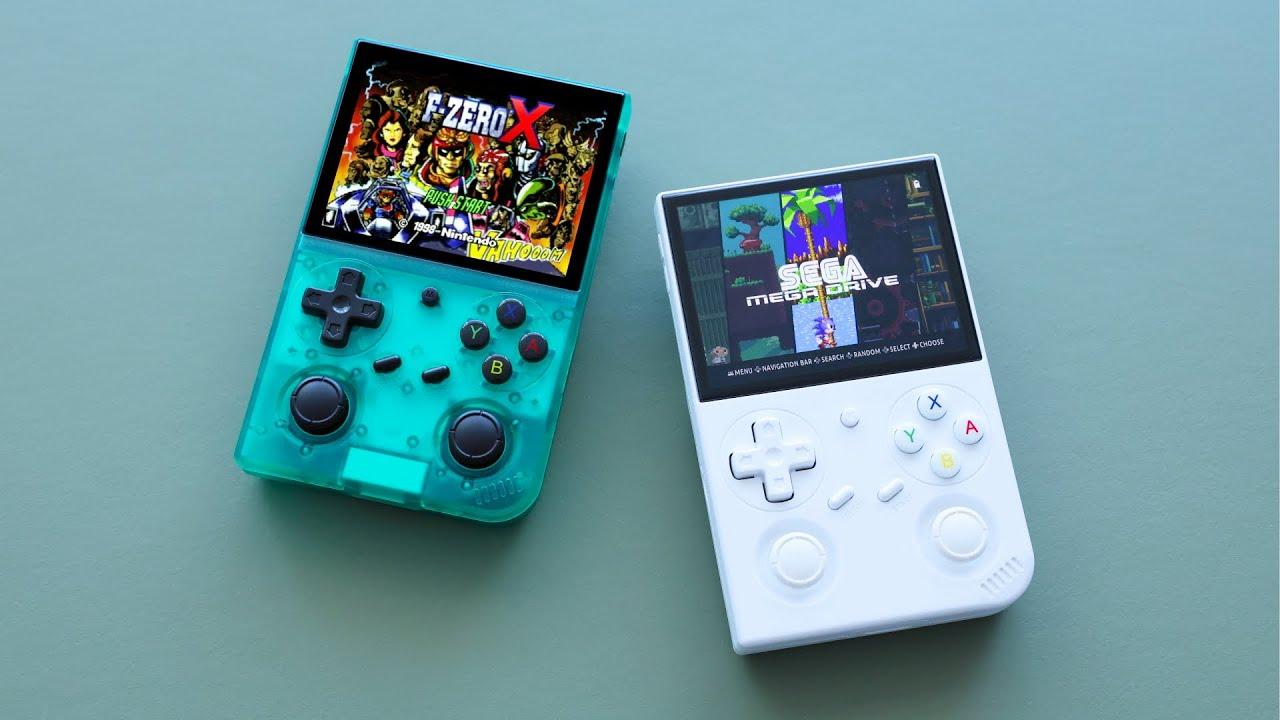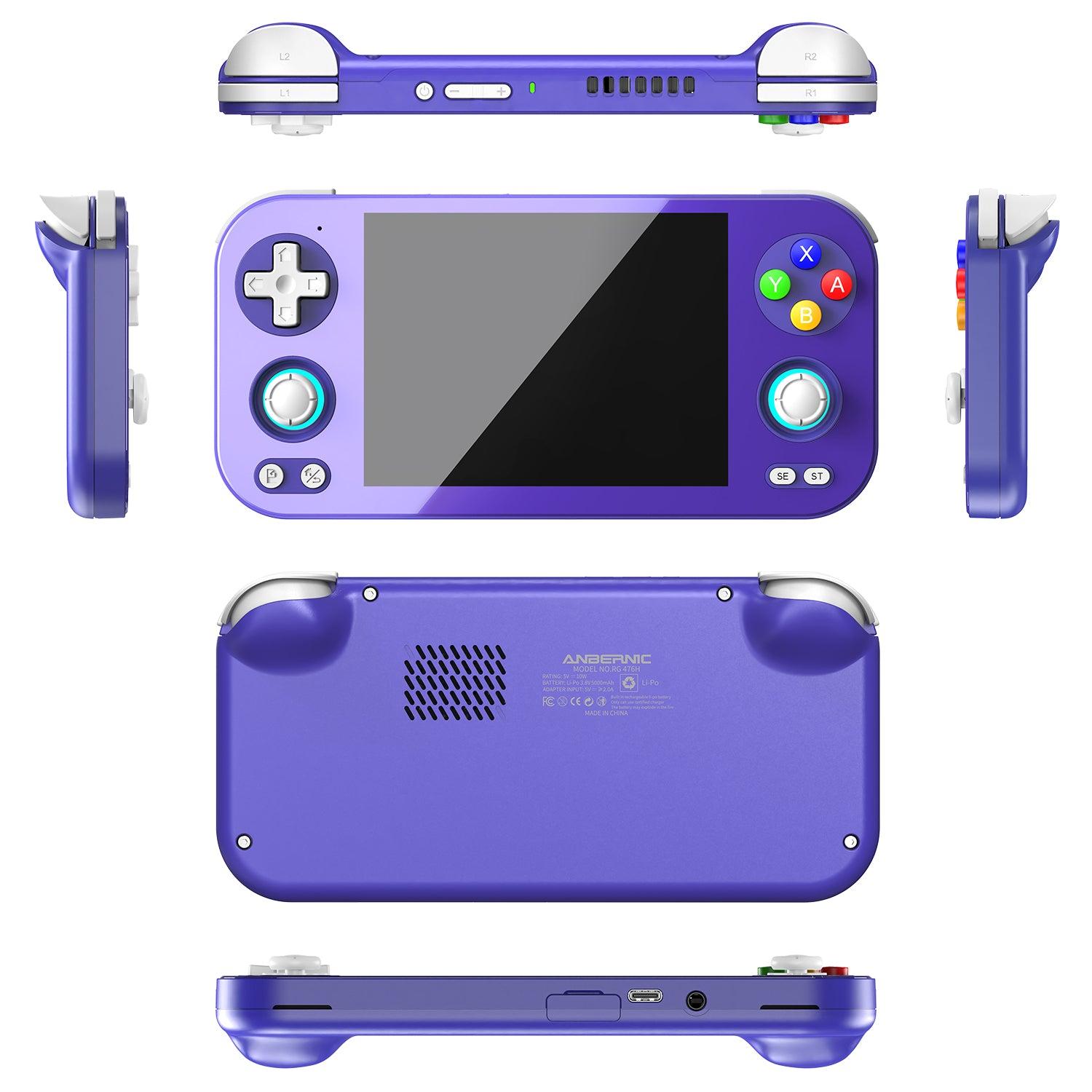
The PlayStation 2 sold about 160 million units and has a library of over 4,000 games. That long tail hides dozens of cult classics that never got the marketing budget of Final Fantasy X or God of War. Here are 10 PS2 hidden gems still worth playing in 2026, followed by a guide to the handhelds that can run them.
Developers, publishers, regional release dates, plot details and review scores on this page were checked against each game's documented release history on 2026-09-19.
One entry was removed in that check. Earlier versions of this list included Singularity, a game that was never released on the PlayStation 2 (more on that in the FAQ). It has been replaced by Klonoa 2: Lunatea's Veil. Five other entries had claims corrected: Suikoden V's graphics, Rule of Rose's composer, Shadow Hearts: Covenant's cast, Okage's premise and GrimGrimoire's place in Vanillaware's history.
The ten at a glance
"Hidden gem" covers two different things here: games critics loved that sold poorly, and games that divided critics at launch and found their audience later. The Metacritic column shows which is which.
| # | Game | Developer | Released (NA) | Genre | Metacritic |
|---|---|---|---|---|---|
| 1 | GrimGrimoire | Vanillaware | 26 June 2007 | Real-time strategy | 79 |
| 2 | Rule of Rose | Punchline | 12 September 2006 | Survival horror | 59 |
| 3 | Klonoa 2: Lunatea's Veil | Namco | 24 July 2001 | 2.5D platformer | 91 |
| 4 | Suikoden V | Konami | 21 March 2006 | JRPG | 76 |
| 5 | The Mark of Kri | San Diego Studio (Sony) | 30 July 2002 | Action-adventure | 80 |
| 6 | Shadow Hearts: Covenant | Nautilus | 27 September 2004 | JRPG | 85 |
| 7 | God Hand | Clover Studio (Capcom) | 10 October 2006 | Beat 'em up | 73 |
| 8 | Okage: Shadow King | Zener Works | 2 October 2001 | JRPG | 70 |
| 9 | Gradius V | Treasure, for Konami | 14 September 2004 | Shoot 'em up | 82 |
| 10 | Haunting Ground | Capcom | 10 May 2005 | Survival horror | 67 |
1. GrimGrimoire
GrimGrimoire is a real-time strategy game from Vanillaware, published by Nippon Ichi Software in Japan (12 April 2007) and North America (26 June 2007), and by Koei in Europe. You play Lillet Blan, a trainee witch at the Tower of Silver Star, a magic school. After the school is attacked, she is thrown into a repeating cycle of five days, and each loop she knows a little more about what went wrong.
The strategy layer is built on four schools of magic: Glamour, Alchemy, Necromancy and Sorcery. Their strengths and weaknesses form a rock-paper-scissors arrangement, so every map is a question of which school answers what the enemy is fielding. The hand-painted 2D art is the obvious draw, but the counter system is what holds your attention. Metacritic 79.
Its place in Vanillaware's history is often told backwards. GrimGrimoire was the studio's second project, after Odin Sphere. It was finished in less time, and in Japan it released a month before Odin Sphere's scheduled date. So it came out first, but Odin Sphere is where the studio started. If you want it on current hardware, GrimGrimoire OnceMore arrived on PS4 and Switch in Japan on 28 July 2022 and worldwide in 2023.
2. Rule of Rose
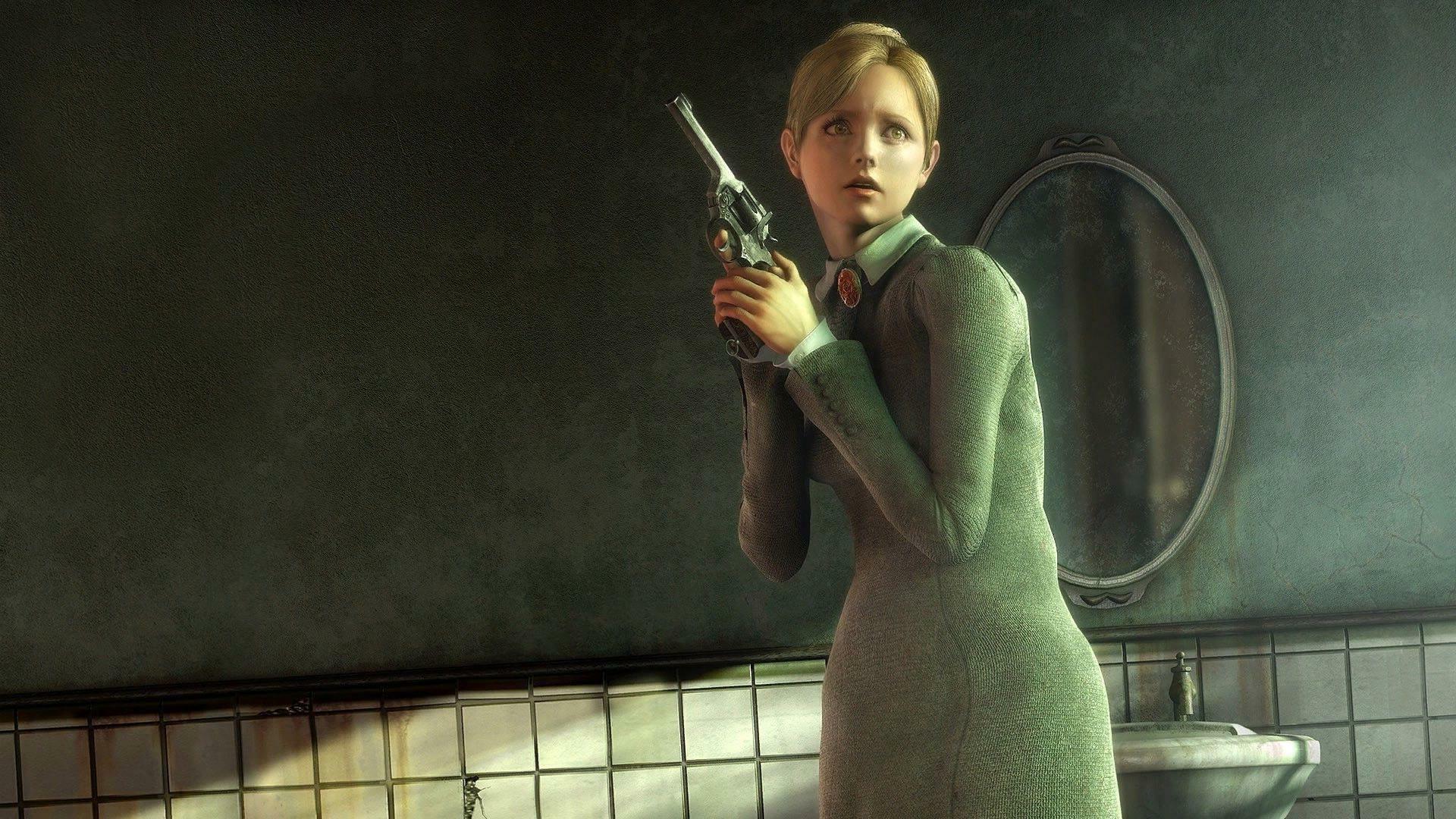
Rule of Rose is a survival horror game developed by Punchline. Sony Computer Entertainment published it in Japan (19 January 2006), Atlus USA in North America (12 September 2006) and 505 Games in Europe (3 November 2006). The game is set in Britain in 1930. It follows Jennifer, a nineteen-year-old woman, through an orphanage and an airship dominated by a children's club, the Red Crayon Aristocrats.
The score is by Yutaka Minobe, with vocals by Kaori Kondo, and it carries much of the atmosphere. The controversy is part of the game's history: its UK release was cancelled, as were the Australian and New Zealand releases, although it came out in the rest of Europe.
Go in clear-eyed. Rule of Rose holds a Metacritic score of 59, and critics widely described its combat as clumsy and archaic. It is on this list for its setting, its story and its willingness to go where most horror games will not, not for how it plays. If you came here from the PS1 side of the genre, our scariest PS1 games list covers where these ideas started.
3. Klonoa 2: Lunatea's Veil
Klonoa 2 is the clearest case on this list of a game critics loved and buyers missed. Namco developed and published it (Japan 21 March 2001, North America 24 July 2001, Europe 9 November 2001). It underperformed commercially despite widespread critical acclaim, and its Metacritic score of 91 is the highest on this page.
It is a platformer in what is usually called 2.5D: you move along a 2D side-scrolling path through a fully 3D-rendered world. Klonoa fires a Wind Bullet from the ring he carries and grabs an enemy with it. You can then throw the enemy, or use it to double jump. That one verb carries the combat, the platforming and most of the puzzles.
It is also one of two games here with a modern remaster (GrimGrimoire is the other): it is part of the Klonoa Phantasy Reverie Series (2022), on Switch, PS4, PS5, Xbox One, Xbox Series X|S and Windows.
4. Suikoden V
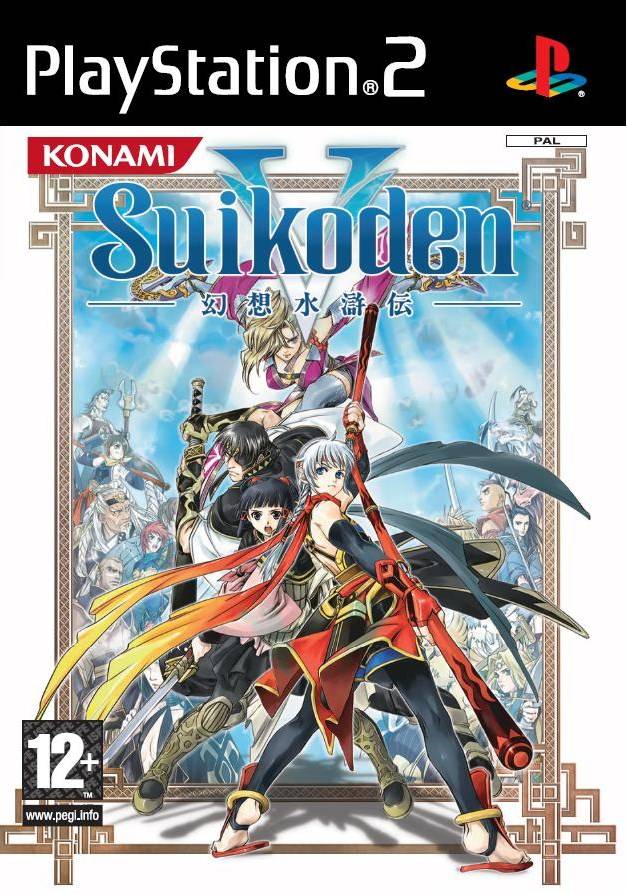
Konami's Suikoden V (Japan 23 February 2006, North America 21 March 2006, Europe 22 September 2006) was the series' answer to the complaints about Suikoden IV. It went back to six-person battle parties instead of IV's four. It brought back the strategic war battles for large army clashes, now in real time and with more freedom of movement than the older grid-based versions. And it keeps the series' 108 Stars of Destiny to recruit.
The game is set in the Queendom of Falena, six years before the first Suikoden. You play the Prince, in a story built around the Sun Rune, Falena's national treasure: a True Rune that can bring either prosperity or calamity.
One correction to how the game is often described: Suikoden V is a 3D game, not a return to 2D sprites. What it restored was a camera closer to the top-down view of the first two games. The main criticism at launch was loading: one review timed seven to ten seconds just to start a battle. Metacritic 76. With 108 characters to recruit, save states on a handheld are a real help. For more PS2 role-playing games, see our PS2 RPG list.
5. The Mark of Kri
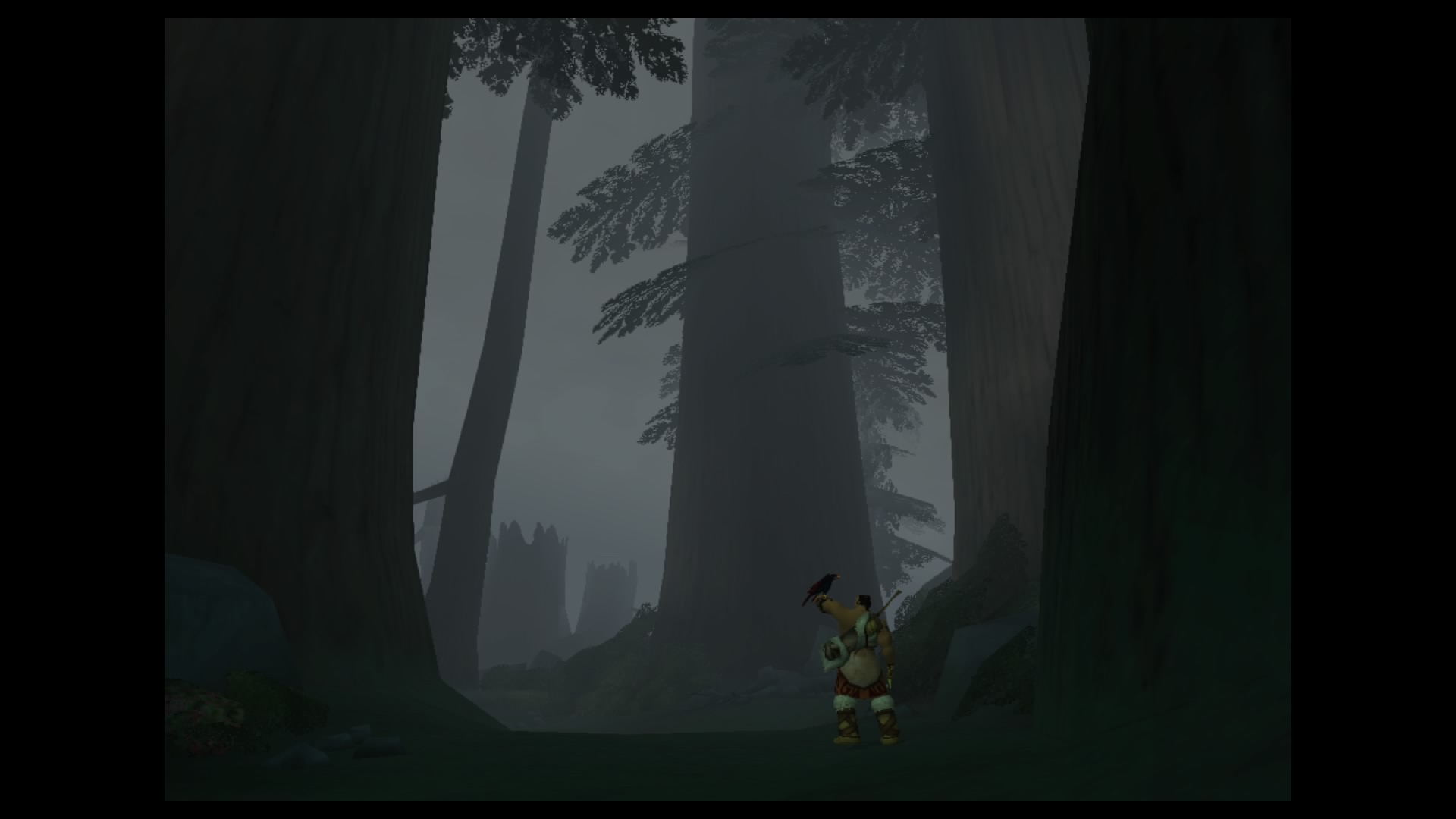
Sony's San Diego Studio made The Mark of Kri (North America 30 July 2002, Europe 14 March 2003). You play Rau Utu, and the look is the first surprise. The art team was made up mostly of former 2D animators, and they paired cartoonish character design with graphic violence in a style drawn from Polynesian cultures and art. That borrowing drew criticism in New Zealand, where some regarded Sony's use of elements of Māori culture as culturally insensitive.
The combat is the reason to play it. As Gamecritics' review describes it, you sweep the right analogue stick to cast a targeting beam around Rau, selecting up to nine opponents depending on the weapon. Each one is tagged with a Circle, X or Square symbol, and pressing that button attacks that enemy. Fighting a crowd becomes a matter of assigning and sequencing targets rather than mashing one button. A sneak mode lets you avoid or assassinate enemies before a fight starts.
Metacritic 80, and Entertainment Weekly gave it an A. A sequel, Rise of the Kasai, followed in 2005.
6. Shadow Hearts: Covenant
Nautilus developed Shadow Hearts: Covenant. Aruze published it in Japan (19 February 2004), and Midway published it in North America (27 September 2004) and Europe (11 March 2005). It is set in 1915, during the First World War, across Europe, Russia, the Near East and Japan.
The battle system is built on the Judgment Ring, which came from the first Shadow Hearts and was redesigned here. It is a disc with coloured areas: you press the button as a pointer passes over each area, and hitting the red end of an area boosts the attack. Combos chain several characters' turns, and each one needs its own successful ring, so every action is a small timing test.
The cast is where the game's reputation comes from. Yuri Hyuga returns from the first game, grieving his lover Alice, whose death ended it. Around him are Karin Koenig, a German Army lieutenant; Joachim Valentine, a vampire obsessed with wrestling; Blanca, an intelligent wolf-like dog; a fictionalised Anastasia Nikolaevna; Kurando Inugami, a swordsman from Japan; and Lucia, a fortune teller. Metacritic 85, the second-highest score on this list.
7. God Hand
God Hand is a 2006 beat 'em up directed by Shinji Mikami, developed by Clover Studio and published by Capcom (Japan 14 September 2006, North America 10 October 2006, Europe February 2007). It was Clover's final game. Capcom shut the studio in late 2006 after Atsushi Inaba, Hideki Kamiya and Mikami left. Some of Clover's key members then founded Seeds Inc., which merged with ODD Incorporated in October 2007 to form PlatinumGames.
The draw is how much of the combat you design yourself. You assign attacks to the face buttons and build your own combo chain, and the God Reel is a roulette wheel stocked with moves you choose. A Difficulty Level bar runs through every fight and shifts with how much damage you deal and take, from level one up to a fourth level labelled "Die".
Its reception is the best argument for the word "hidden". IGN gave it 3 out of 10 at launch, then placed it at number 100 in its Top 100 PlayStation 2 Games list in 2010. It has since come to be regarded as a cult classic. Metacritic 73. It was re-released on PS3 as a downloadable PS2 Classic on 4 October 2011.
8. Okage: Shadow King
Zener Works developed Okage: Shadow King and Sony Computer Entertainment published it (Japan 15 March 2001, North America 2 October 2001). The premise is the joke. Ari is a 16-year-old boy in the village of Tenel, and he misses the circus because his father spends two hours talking to him about a bottle. Then his sister Annie is attacked by a ghost, which curses her to speak pig latin.
His father's attempt to lift the curse unknowingly releases a 300-year-old "Evil King", Lord Stanley Hihat Trinidad XIV ("Stan"), along with Stan's butler, James. After a contest comparing the family's shadows, Ari's is the one chosen for Stan. Stan then sets out to terrorise Tenel, and the villagers either laugh at him or praise him as some kind of god.
The turn-based combat is conventional, with HP and MP, and battles start when you touch an enemy on the overworld. Metacritic 70. It is on this list for the writing and the premise, not the systems.
9. Gradius V
Gradius V was largely developed under contract by Treasure, the studio behind Radiant Silvergun and Ikaruga, and published by Konami (Japan 22 July 2004, North America 14 September 2004, Europe 8 October 2004). Its new idea is control over your Multiples, the drones that trail the Vic Viper. At the press of a button you can freeze them in place, make them rotate around the Vic Viper, control the direction of their fire, or spread them out above and below the ship. The series' signature pickup becomes a positioning tool.
It scored 82 on Metacritic and won GameSpy's Best Shooter award. Critics praised the level design, the graphical design and the classic revival, and criticised the difficulty. That is worth knowing before you start, and it is one more reason save states suit it.
10. Haunting Ground
Capcom developed and published Haunting Ground, known as Demento in Japan (Japan 21 April 2005, PAL regions 29 April 2005, North America 10 May 2005). You play Fiona Belli, a young woman trapped in a castle with a dog, Hewie, as her one ally. She is pursued in turn by Debilitas, Daniella and Riccardo, before Lorenzo appears as the final threat.
It is often described as a spiritual successor to the Clock Tower series, although Capcom has never officially called it one. The mechanic that sets it apart is panic. When Fiona is in danger she can fall into a panic: visibility gets worse and the menu cannot be opened. Fear here takes control away from you rather than playing out in a cutscene. Metacritic 67. It was re-released on PS3 through the PlayStation Store in April 2015, in Japan only.
Where to play PS2 hidden gems in 2026
PS2 emulation needs far more power than GBA or PS1, so the cheap Linux handhelds built for systems up to PS1 are out. These three handhelds can run the games above. Prices come from LitNXT's own listings, checked on 19 September 2026. The PS2 findings come from outlets that tested each device, because we have not tested them ourselves.
| Handheld | Screen | Chip | Price at our link | What testers found on PS2 |
|---|---|---|---|---|
| AYN Thor | 6" AMOLED, 1080×1920, 120Hz, plus a 3.92" second AMOLED | Snapdragon 8 Gen 2 (Base, Pro, Max) | $469.99 Base 8+128GB, Black only | Upscaled to 3x-4x native resolution, and still fluid (Retro Dodo) |
| MANGMI Pocket Max | 7" OLED, 1920×1080, 144Hz | Snapdragon 865 | $359.99 8+128GB, all three colours in stock | Sometimes needs native resolution, but all still playable (Retro Handhelds) |
| Retroid Pocket RP Classic | 3.92" OLED, 1240×1080 | G1 Gen 2, 4nm | $229.99 6+128GB, two of seven colourways in stock | Most of the library at native resolution; demanding games need 1x (Held Games) |
AYN Thor: the most headroom
Brandon Saltalamacchia scored the AYN Thor 9.4 out of 10 in Retro Dodo's review. The review ran PS2 at 1.5x, then 2x, then 3x upscaling without trouble, and described PS2 at 3x-4x native resolution as looking incredible and running fluidly on a 6-inch handheld. The dissent is about the shape, not the power: Retro Handhelds' review found that the added weight and the awkward reach for the right stick essentially ruined the device for its reviewer.
It is sold as one LitNXT listing in four tiers, and the listing is labelled "Pre-order". Today the $399.99 Lite (which uses a Snapdragon 865 instead) is out of stock in every colour. Only Black can be ordered in the Base ($469.99), Pro 12+256GB ($599.99) and Max 16+1TB ($789.99).
MANGMI Pocket Max: the big screen
Retro Handhelds' review of the MANGMI Pocket Max (March 2026) found that on PS2 you may need to turn the resolution down to native more often, but that everything is still playable. Its 7-inch 144Hz OLED is the largest screen of the three, and that suits the long JRPGs on this list, Suikoden V and Shadow Hearts: Covenant. LitNXT's listing pitches it as much at cloud gaming as at emulation.
Retroid Pocket RP Classic: the cheapest way in
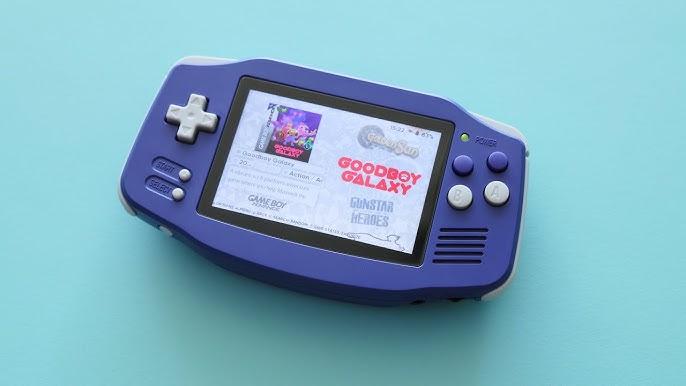
Cole Stubblefield's Held Games review (May 2026) calls PS2 "the surprise" on the Retroid Pocket RP Classic. AetherSX2 and NetherSX2 handled most of the library at native resolution comfortably. Some demanding titles needed the internal resolution kept at 1x for stable frame rates. The review also notes that the back of the device gets noticeably warm in PS2 sessions longer than 45 minutes. It is a vertical, Game Boy Advance-inspired shell with a small 3.92-inch screen, so treat it as the budget route to PS2 rather than the comfortable one.
For a wider comparison across every system, see our best handheld emulator guide for 2026.
FAQ
Where is Singularity? It was on this list until September 2026, and it should never have been. Singularity is a 2010 first-person shooter developed by Raven Software and published by Activision for Windows, PlayStation 3 and Xbox 360. There was no PS2 version. Its time-manipulation device, which moves objects backwards and forwards in time to age and de-age them, is worth seeing, just not on a PS2 list. Klonoa 2 took its place.
Why are games with mixed reviews on a hidden-gems list? Because "hidden" means two different things. Klonoa 2 (91) and Shadow Hearts: Covenant (85) were well reviewed and under-bought. Rule of Rose (59), Haunting Ground (67) and God Hand (73) divided critics at launch. God Hand shows the biggest turnaround: IGN's 3 out of 10 became a place in IGN's own top 100 PS2 games four years later. Each section says what critics disliked, so you can decide for yourself.
Can I play any of these without a PS2? Two have modern remasters: Klonoa 2 in the Klonoa Phantasy Reverie Series (2022), and GrimGrimoire as GrimGrimoire OnceMore (2022 in Japan, 2023 worldwide). God Hand was sold digitally as a PS2 Classic on PS3, and Haunting Ground on the Japanese PS3 store. We have not checked the current storefront status of the others. For those, a PS2-capable handheld running your own copies is the practical route.
Which one should I play first? Klonoa 2 is the safest bet: it has the highest score here and the most approachable design. Shadow Hearts: Covenant is the pick if you want a long JRPG, and God Hand if you want a fight you have to learn.
The bigger picture
The PS2 library is too big to exhaust. These ten are a starting point, and there are dozens more worth digging into once you finish them, including Drakengard, Mister Mosquito and Disaster Report.
Browse more PS2 guides: PS2 co-op games, our PS2 RPG list, our best-of-all-time list for PS2, and the full devices page to find the right handheld for your collection.