The NES is where console RPGs found an English-speaking audience, but a lot of what gets called an "NES RPG" never came out on the NES at all. Many of the Famicom's best-known role-playing games stayed in Japan. This list sticks to games that actually shipped on the NES in North America, and to games that are actually role-playing games.
Release dates, developers, publishers, mechanics and reception come from each game's documented release history and the outlets named in each section, checked 2026-09-13. Two of the five entries previously on this page did not survive that check: one was never released on the NES outside Japan, and one is not a role-playing game. Both have been replaced, and the FAQ at the end says what they were and why they went.
The five at a glance
| Game | Japan (Famicom) | North America (NES) | Developer / NA publisher | Style |
|---|---|---|---|---|
| Final Fantasy | 18 Dec 1987 | 1990 | Square / Nintendo of America | Turn-based, party of four |
| Dragon Warrior II | 26 Jan 1987 | Sep 1990 | Chunsoft / Enix | Turn-based, party of three |
| Crystalis | 13 Apr 1990 | Jul 1990 | SNK / SNK | Action RPG |
| Faxanadu | 16 Nov 1987 | Aug 1989 | Hudson Soft / Nintendo | Action RPG platformer |
| Dragon Warrior IV | 11 Feb 1990 | Oct 1992 | Chunsoft / Enix | Turn-based, five chapters |
Final Fantasy
This is the Final Fantasy that replaced Final Fantasy III on this list — the one that actually came out here. Square released it on the Famicom on 18 December 1987, and Nintendo of America translated and published it in North America in 1990.
The premise is four youths, the Warriors of Light, each carrying one of the world's four elemental crystals, which have been darkened by the four Elemental Fiends. The decisions that shape a playthrough happen before you take a step, because you build the party yourself from six classes: Fighter, Thief, Black Belt, Red Mage, White Mage and Black Mage. Later in the game each character can undergo a class upgrade, which matures their sprite and lets some classes use weapons and magic they previously could not.
Magic is where the early design shows most. Spells are graded from level one to eight, with four White and four Black spells at each level, and each character can learn only three spells per level — so every mage you build leaves a spell behind at every tier.
It shipped 520,000 copies on the Famicom in Japan, and all versions combined had passed two million worldwide by March 2003. Famitsu scored it 34/40, its NES retrospective aggregate on GameRankings is 81%, and GamesRadar and IGN have ranked it the 8th and 11th best game on the NES respectively.
Dragon Warrior II
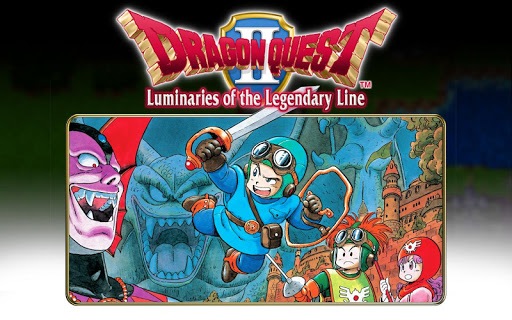
First, the name. In North America this is Dragon Warrior II, published by Enix in September 1990; Dragon Quest II is the Japanese title, from its Famicom release on 26 January 1987. Chunsoft developed it. This page used to list it under the Japanese name only, which is not what the NES cartridge says.
The old copy was right that it built on its predecessor, and it is worth being specific about how. It is the first game in the series to put multiple heroes and multiple enemies into a battle, and the first with a sailing ship. Rather than starting with a full party, the prince begins his quest alone and is later joined by his two cousins, the Prince of Cannock and the Princess of Moonbrooke.
It is also notoriously hard, and the reason is documented. Chunsoft's Koichi Nakamura wrote a program that simulated every combat to balance the game, but it failed to account for larger monster groups, which fell outside the model. Players still single out the traps in the Cave of Rhone and the final boss's ability to cast Healall.
The North American release replaced the Japanese version's password system with a battery backup, which is a real difference on a game this punishing. In Japan it sold 2.4 million copies by the end of its first year.
Crystalis
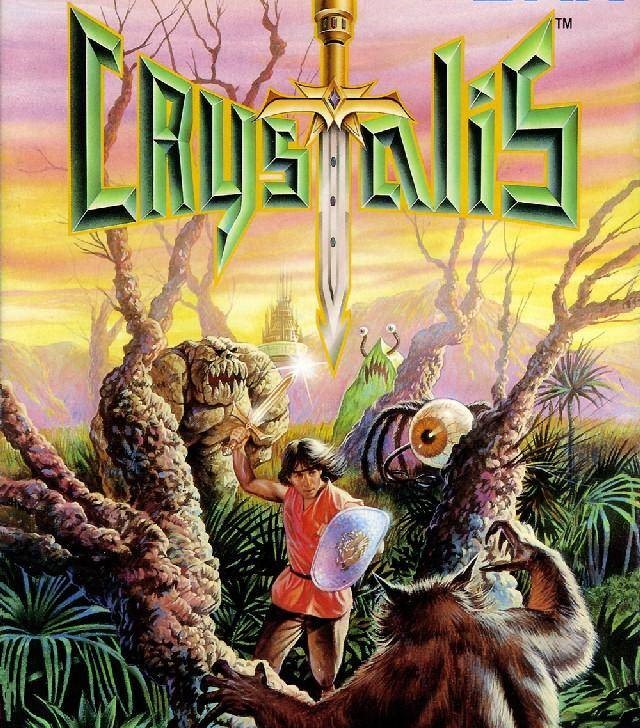
SNK's Crystalis came out in Japan on 13 April 1990 and in North America in July 1990. It is an action RPG, and its setting is stranger than most of the era's fantasy: the year is 2097, one hundred years after a global thermonuclear war that began on 1 October 1997 reverted civilisation to a primitive, medieval existence populated by mutated creatures.
Combat runs through four elemental swords — wind, fire, water and thunder — collected across the game, with a fifth, Crystalis itself, found in the final dungeon. Each sword has a normal slash and a powered-up attack that launches an elemental projectile. Two rules catch newcomers out. Some bosses and enemies cannot be harmed at all until the hero reaches a required level, and in the NES original certain enemies are immune to certain swords. The game regularly asks you to switch elements, or to go away and level up, rather than simply hit harder.
The old copy called it a "hidden treasure," which undersells its standing. IGN ranked Crystalis 42nd on its Top 100 NES Games, and Nintendo Power placed it 115th in a list of the 200 best games. A Game Boy Color version followed on 26 June 2000, developed by Nintendo Software Technology and published by Nintendo of America. It has a different opening and a fundamentally altered story, and it drops the sword immunities; GameSpot and IGN both scored it 8.0.
Faxanadu
Faxanadu does not look like an RPG at first glance. Hudson Soft developed it and released it on the Famicom on 16 November 1987; Nintendo published it in North America in August 1989 and in Europe on 28 December 1990. This page previously gave it as "Hudson Soft's Faxanadu (1989)", which conflates the Japanese developer with the North American release date. The name is a portmanteau of Famicom and Xanadu: it is a spin-off, or side-story, of Falcom's Xanadu, the second game in the long-running Dragon Slayer series.
It plays as a side-scrolling action game — an action role-playing platformer that is sometimes classified as a metroidvania — but the role-playing scaffolding underneath is substantial. You earn gold to spend in shops and experience to raise your rank, and the gurus who live in the churches both hand out mantras, the passwords you resume from, and bestow new ranks when you reach experience thresholds. That rank is a levelling curve in a very literal sense: it determines how much experience and gold you have when you resume a game from a password.
The setting does a lot of the work. The hero is a wanderer returning home to Eolis to find the town in disrepair and virtually abandoned, the elves' fountain water stopped and all the remaining water poisoned. Elves and dwarves had lived in harmony among the World Tree until the Evil One emerged from a fallen meteorite and turned the dwarves into hostile monsters. The journey takes you up through the tree itself — its buttress, the inside of the trunk and its branches — before ending in the dwarves' mountain stronghold, in pursuit of a magical sword the Dwarf King swallowed to hide it. The old copy had the hero as "an unnamed elf"; the documented record describes him only as a wanderer, so that detail is gone.
Later reviews have been kind to it: IGN 8.5/10, Nintendo Life 8/10 and a 75% aggregate on GameRankings.
Dragon Warrior IV
Dragon Warrior IV replaces Shadowgate on this list. Chunsoft developed it and Enix published it, on the Famicom on 11 February 1990 and on the NES in North America in October 1992 — more than two and a half years after the Japanese release.
Its structure is the reason it stands out. The game is split into five chapters. The first four tell the back-stories of the party members — Ragnar in chapter one, Princess Alena in chapter two, the merchant Torneko in chapter three, and the sisters Maya and Meena in chapter four — and the fifth follows the Hero as they meet up with everyone else. By the time the party assembles you already know who they are, which is a very different way to build a party from picking classes off a menu.
The battle system made a distinctive choice too. In the final chapter your companions become computer-controlled: an AI system called Tactics lets you give the party strategies while you keep full control of the Hero alone. A wagon lets you choose which characters take part in battle.
It won Famitsu's Best Game Grand Prize and Best RPG awards in 1990. In North America it was the last Dragon Quest game localised and published by Enix's American subsidiary before that company closed in November 1995.
Playing NES RPGs on a handheld
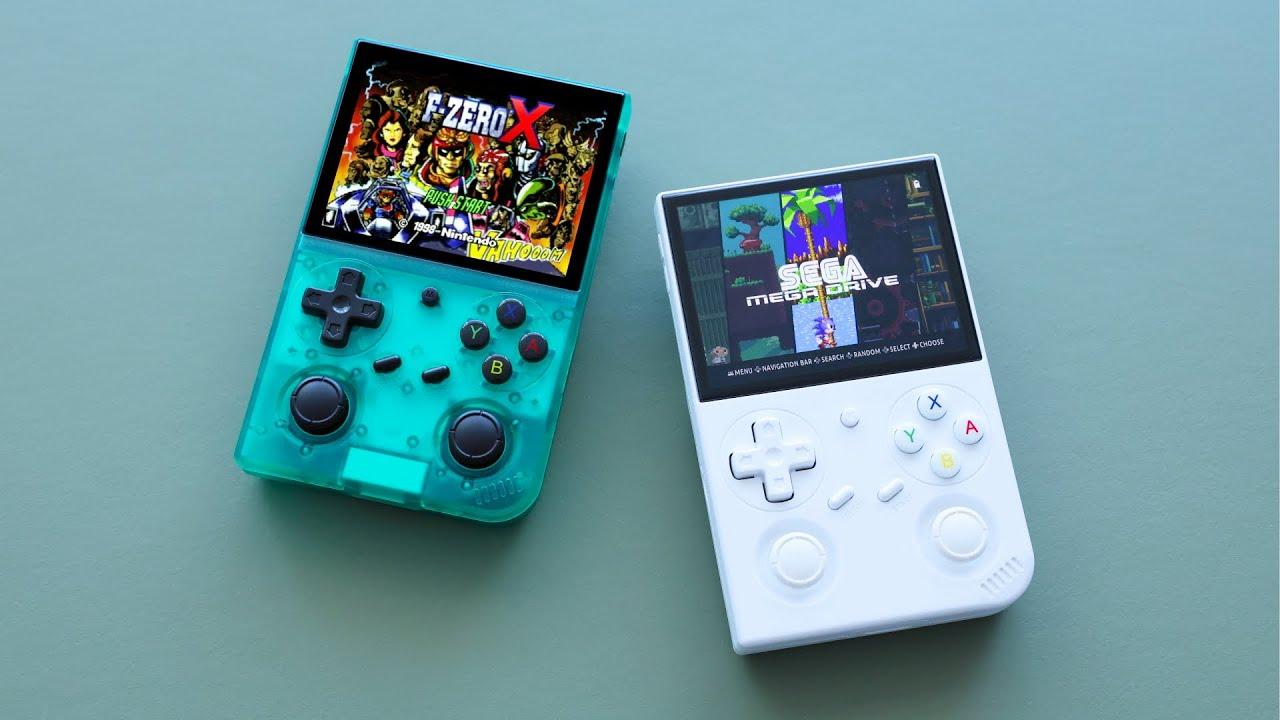
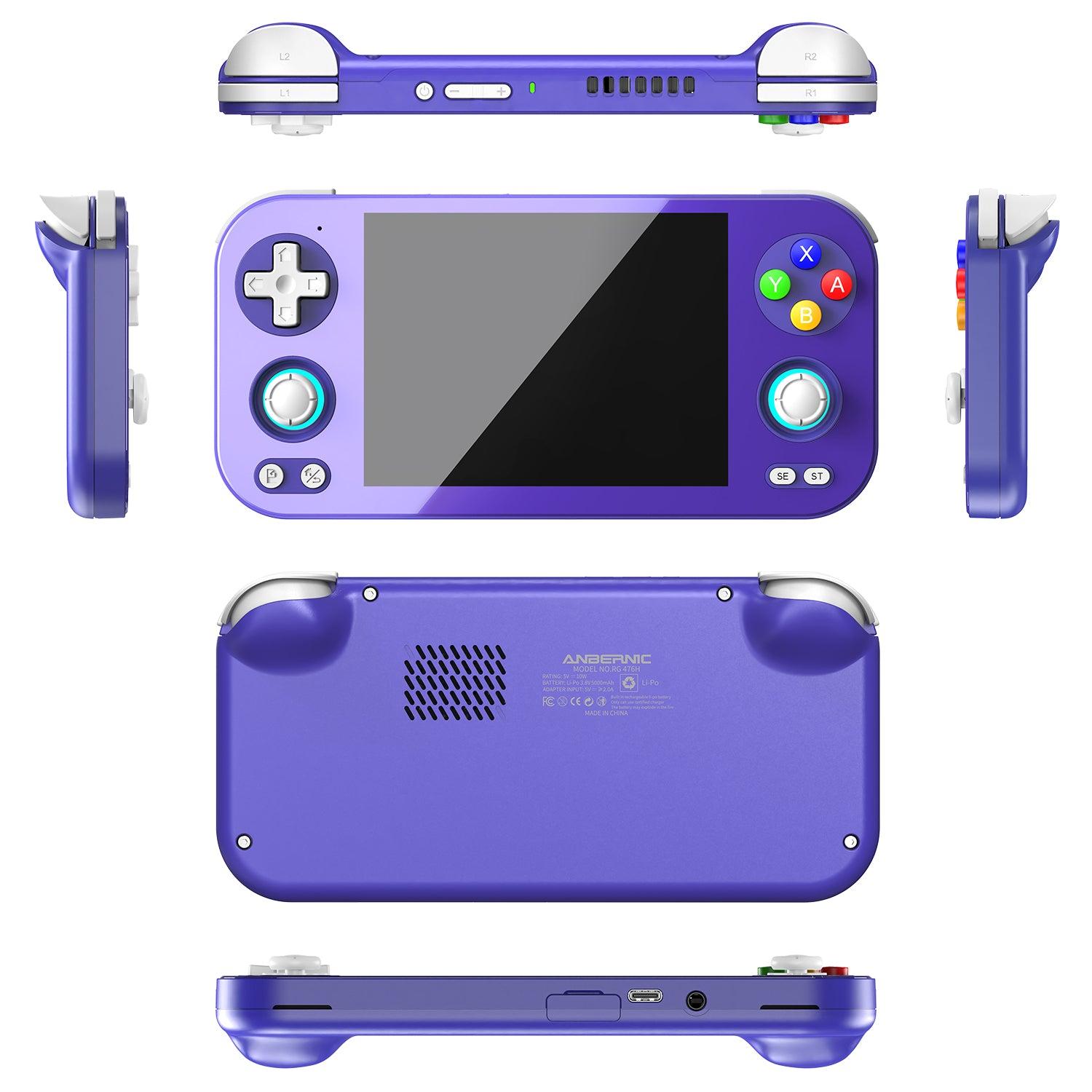
NES emulation is undemanding for any current retro handheld, the ANBERNIC RG 34XX included, so the practical questions here are about saving and patience rather than performance.
The saving differences are worth knowing before you start. Dragon Warrior II's North American cartridge saves to battery where the Japanese Famicom version used passwords, and Faxanadu resumes through its mantras, with your rank deciding how much gold and experience you come back with. A save state sidesteps both, which is especially welcome in the Cave of Rhone. Turn them off if you want the experience these games were designed around.
Frequently asked questions
Where is Final Fantasy III? Removed, because it was never an NES game outside Japan. Square released Final Fantasy III on the Famicom on 27 April 1990, and the original stayed Japan-exclusive until the Final Fantasy Pixel Remaster series first brought it to Windows and mobile on 28 July 2021; a 3D remake reached the Nintendo DS internationally in 2006. It is an important game — it introduced the job system to the series, with the party starting as Onion Knights who can gain and change jobs — and the Famicom original shipped 1.4 million copies in Japan by March 2003. But the old copy also praised its "deep character development," and the Famicom game's heroes are four generic orphans from the village of Ur rather than individually characterised leads. If you do play it, know that the final dungeon has no save points: Hironobu Sakaguchi removed them after a play tester complained that the final area was too easy.
Where is Shadowgate? Removed, because it is not a role-playing game. Shadowgate is a 1987 point-and-click adventure by ICOM Simulations, originally for the Macintosh and part of the MacVenture series alongside Déjà Vu and Uninvited; Kemco-Seika published the NES version in North America in December 1989. It has no experience, stats or levelling and no conventional combat — you use weapons such as a sword or a sling at the right moment against specific enemies. It is a well-reviewed adventure with a punishing design: you must always carry a lit torch or your character stumbles and breaks their neck, and deaths come constantly. AllGame scored the NES version 4.5/5 and Nintendo Power 7.3/10. It belongs on an adventure list, not this one.
Which should I start with? If you want real-time action, Crystalis and Faxanadu are the quickest to get into. If you want a turn-based party RPG, Final Fantasy has you build the party yourself, while Dragon Warrior IV introduces its characters one chapter at a time. Dragon Warrior II is the one to save for when you want a fight with the game itself.
What should I play after these? Square's 16-bit follow-ups, Final Fantasy VI and Chrono Trigger among them, are on our best Super Nintendo RPGs list. For the rest of the NES library, start with our best NES games and the lesser-known picks in our NES hidden gems.