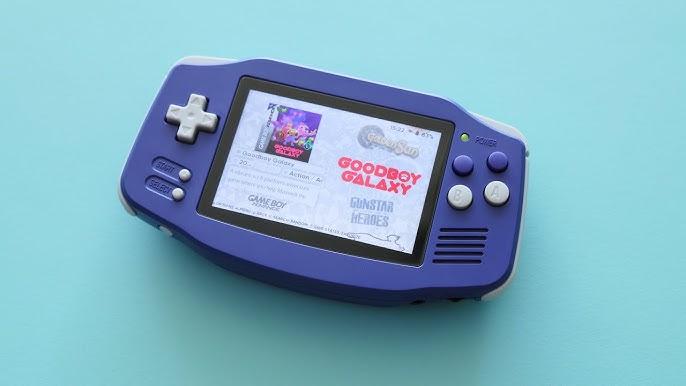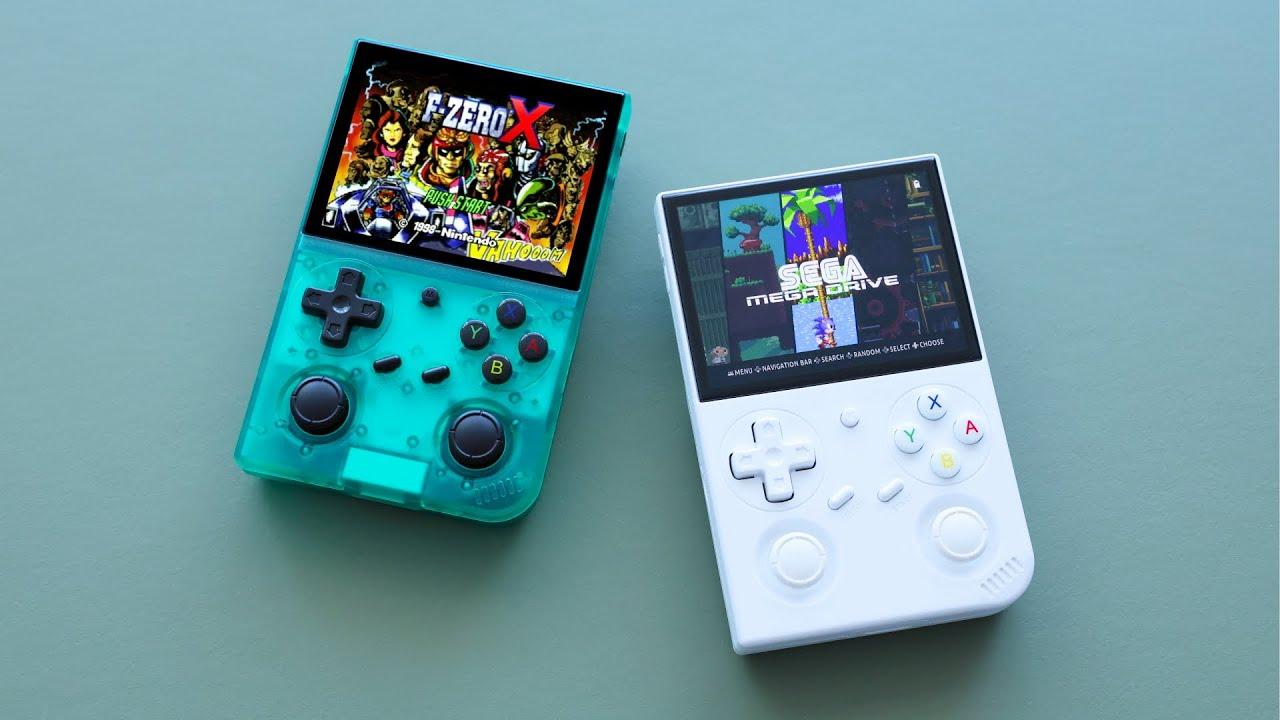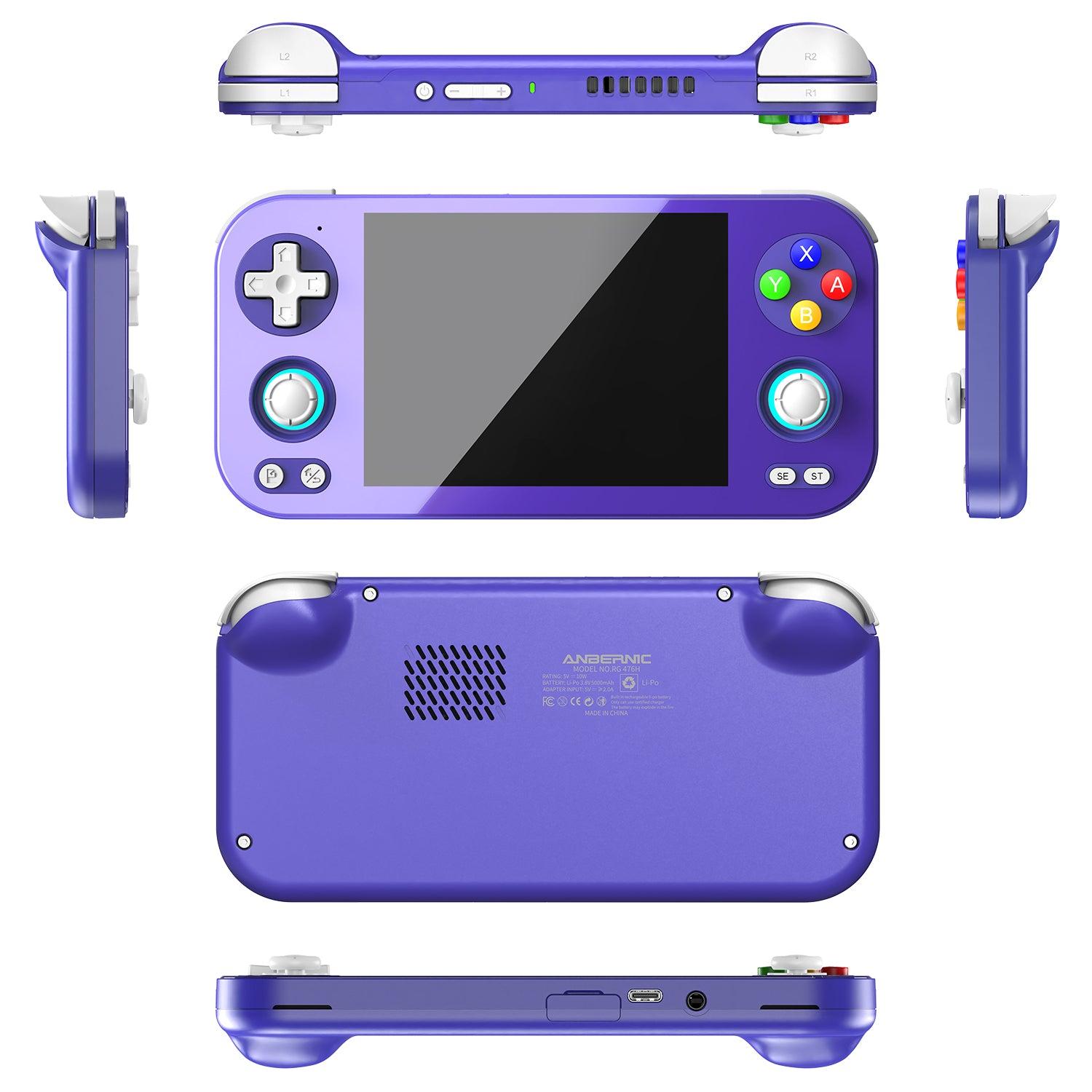
The Master System lost the 8-bit generation in North America and won it almost everywhere else. It managed 1.5-2 million units in North America by 1992 against more than 34 million NES consoles, and yet it was the best-selling console in Europe by 1990 — which is why the games below are household names to some readers and completely unknown to others depending on where they grew up. The library splits the same way: just over 100 games were released in North America, against more than 300 licensed titles in Europe. The hit rate at the top is very high, and a handheld like the ANBERNIC RG 34XX runs all of it without breaking a sweat.
A note on the word "gems," because lists like this one tend to abuse it. Four of the six games here are the Master System's canonical best, and calling them overlooked would be nonsense — they are simply overlooked if you only ever owned a NES. Two of them, Zillion and Golvellius, are genuine obscurities. Release dates, regional differences, gameplay mechanics and review scores below come from each game's documented release history and the outlets named in each section, checked 2026-09-12.
The six at a glance
| Game | Year (NA) | Developer / Publisher | Genre | Reception on record |
|---|---|---|---|---|
| Wonder Boy III: The Dragon's Trap | Sep 1989 | Westone / Sega | Action-adventure platformer | Sega Pro 97%, Mean Machines Sega 95%, C&VG 86% |
| Phantasy Star | Nov 1988 | Sega / Sega | Turn-based JRPG | EGM Best Graphics 1988 |
| Shinobi | Sep 1988 | Sega / Sega | Side-scrolling hack-and-slash | Computer Entertainer 8/8, Dragon 4/5 |
| Alex Kidd in Miracle World | Dec 1986 | Sega / Sega | Platformer | IGN 9/10, GameRankings 80% |
| Zillion | Nov 1987 | Sega / Sega | Action-adventure | The Games Machine 76% |
| Golvellius: Valley of Doom | Dec 1988 | Compile / Sega | Action RPG | C&VG 87%, Console XS 82% |
Wonder Boy III: The Dragon's Trap
The best-reviewed game on the console, and the one where the Master System's limitations stop being visible. Westone built an action-adventure platformer with a central conceit that nothing else in 1989 was doing: you are cursed into an animal body, and every dragon you kill changes which body you are stuck in.
It is worth being precise about how that works, because it is usually described as a menu you flip through and it is not. You start as Hu-Man, with the best equipment and the most health, and each boss transforms you into the next form. There are five: Lizard-Man breathes fire and can duck but carries no shield; Mouse-Man walks on walls and ceilings using checkered blocks; Piranha-Man swims freely and reaches water-only areas; Lion-Man swings its sword on a vertical arc that hits what nothing else can; Hawk-Man flies but takes damage in water. The form you are wearing is what gates the map, so the game is a Metroid-shaped world where your traversal verbs arrive on a schedule rather than as pickups.
Sega published it in North America in September 1989 and in Europe the same year. It never got a Japanese Master System release at all — Master System development had already wound down there in favour of the Mega Drive — so Japan did not see it until a 1992 Game Gear port released as Monster World II: Dragon no Wana.
The contemporary press was close to unanimous. Sega Pro scored it 97%, Mean Machines Sega 95% with Matt Regan writing that it "ranks as one of the greatest Sega Master System games ever!", and Computer and Video Games 86%. Electronic Gaming Monthly named it Master System Game of the Year for 1989 and ACE listed it among the console's top three. Retro Gamer later put it in its Perfect Ten for the system.
Phantasy Star
One of the earliest console JRPGs and still one of the strangest-looking. Sega released it in Japan on 20 December 1987 and in North America and Europe in November 1988. It was expensive enough at retail that Computer and Video Games would recommend it only to hardcore RPG fans, on price grounds rather than quality ones.
The setup is not the generic save-the-world plot it gets summarised as. You play Alis, whose brother Nero has been killed by King Lassic, and the story is revenge first and liberation second. Alis being a woman in a leading role in 1987 is itself part of why the game is remembered. The setting is not one planet either: it is the Algol star system, and you travel between three of them — lush Palma, arid Motavia and frozen Dezoris — which is a large part of why the game felt enormous at the time.
The technical headline is the dungeons. They are first-person, animated, full-screen 3D wireframe corridors, programmed by Yuji Naka partly to save cartridge memory, and nothing else on an 8-bit console looked like them. Electronic Gaming Monthly gave the game its Best Graphics award for 1988, Computer Gaming World called it "the big shot in the arm for Sega," and Zzap! called it a must-have for RPG fans. The combat around all this is straightforward turn-based fare with a fixed party rather than a built one.
Shinobi
Worth correcting a label this game collects constantly: Shinobi is not a beat 'em up. It is a side-scrolling hack-and-slash with platforming and a good deal of run-and-gun in it — you throw shuriken at range far more often than you punch anything. Sega R&D1 made the 1987 arcade original, and you play Joe Musashi, whose job is to stop the Zeed terrorist organisation from kidnapping students of his clan.
Sega converted it to its own console in 1988, in June in Japan, September in North America and November in Europe, and the port is not a straight downgrade — it is a meaningfully different game. The arcade version kills Joe in one hit; the Master System version gives him a health gauge. Rescuing hostages becomes optional rather than a requirement to finish a stage, though it still buys weapon upgrades and health. The bonus rounds move to after each regular stage instead of after bosses, and ninjutsu becomes a reward for clearing them. Net effect: the home version is the more forgiving of the two, which is unusual for an 8-bit arcade conversion.
Computer Entertainer gave it a perfect 8/8 and called it "the best game with a martial arts theme that we've seen on a video game system." Computer and Video Games praised the well-defined graphics and the gameplay, and Dragon gave it 4/5.
Alex Kidd in Miracle World
Sega's mascot platformer, and the reason a generation of European and Australian players can hum the theme from memory: from 1990 onwards it was built directly into many Master System and Master System II consoles, so it was the game you got whether you bought one or not.
The mascot history is usually compressed into "Alex Kidd came before Sonic," which skips a step. Alex was Sega's second mascot, taking over from Fantasy Zone's Opa-Opa in 1986 and holding the job until Sonic the Hedgehog displaced him in 1991. Sega released Miracle World in Japan on 1 November 1986, in North America that December and in Europe in 1987.
The boss design is the bit worth knowing about. Rather than a fight, the end of many stages is a round of jan-ken-pon — rock-paper-scissors — against one of Janken the Great's henchmen, and it is lethal in both directions: Alex dies from a single hit, or from losing the match. Between those you get a genuinely broad platformer with vehicle sections, swimming and shops, which is what Computer and Video Games meant in 1991 by calling it "Sega's answer to Mario," and Sega Pro by praising how much there is to do and how many ways there are to do it. IGN revisited it in 2008 and gave it 9/10 with an Editor's Choice, calling it an exceptional platformer; its GameRankings aggregate sits at 80%.
Zillion
Here is an actual hidden gem, and the place where most write-ups of this game — including the previous version of this page — get the mechanics wrong.
Zillion is a Metroid-shaped action-adventure based on Tatsunoko Production's anime of the same name, released by Sega in Japan on 24 May 1987, in Europe that October and in North America in November. You play J.J., infiltrating an underground Norsa base room by room. There is no countdown and no time limit — the tension comes from resource scarcity and from not knowing where you are, not from a clock. What you are collecting is two different things: five floppy disks, which together trigger the base's self-destruct sequence, and computer ID cards plus four-digit door codes found in capsules scattered through the facility. Capsules also hold upgrades to gun power, speed, jump height and health.
The mechanic the game is genuinely built around, and the one most descriptions omit, is the party. Rescue Apple and Champ and you can switch between three playable characters with different attributes — Apple is fast and fragile, Champ is slow and strong — which turns some rooms into a question of who to send in.
The Games Machine scored it 76% and drew the comparison that fits best: it plays like Epyx's Impossible Mission, where you inspect objects to extract codes, rather than like a straight action game. The Metroid comparison people reach for is fair on structure and misleading on pace.
Golvellius: Valley of Doom
The other genuine obscurity, and the closest thing the Master System had to a Zelda-shaped game: a top-down action RPG with an overworld, hidden chambers and dungeons to clear in order. Compile developed it, Sega licensed and published the Master System version, and it reached Japan on 14 August 1988, North America in December 1988 and Europe the same year.
You play Kelesis, entering the Valley of Doom to rescue Princess Rena, and the game splits into eight environments, each ruled by a boss you have to beat to progress. Overworld combat is top-down sword work with secret chambers hidden around it that hand out weapons and advice; the cavern sections alternate between side-scrolling and top-down screens on the way to each boss lair. Clear all eight and Golvellius himself waits in a hidden lair.
One thing to know if you have played the MSX original: the Master System version is not a port so much as a redesign, with entirely different overworld and dungeon layouts. Knowing one map does not help you with the other.
Computer and Video Games scored it 87% in 1989, Computer Entertainer 7 out of 8, and Console XS still gave it 82% in 1992 — three separate verdicts, four years apart, all positive. That is a better record than most people would guess for a cartridge this obscure.
Playing the Master System library on a handheld
Master System emulation is about as undemanding as it gets, so any modern retro handheld will run this library at full speed with no settings to tune. Two things are worth thinking about anyway.
The first is screen shape. The Master System outputs 4:3, so on a widescreen handheld you either accept pillarboxing or stretch the sprites. Devices with a squarer panel suit this library better, which is why a Game Boy-shaped handheld like the ANBERNIC RG 34XX and its 3.5-inch IPS display is a more comfortable home for it than a 16:9 Android device.
The second is region, which matters more here than on most consoles. Because the Master System sold best in PAL territories, a lot of the cartridges people remember are the 50 Hz versions, which run roughly 17% slower than their NTSC counterparts and have music pitched to match. If a game feels sluggish compared to your memory of it — or faster than you expected — the region is usually the reason rather than the emulator.
For the rest of Sega's back catalogue, our Genesis hidden gems round-up covers the 16-bit side, and Sega's handheld classics covers the Game Gear, which shares a great deal of hardware with the machine on this page.
Frequently asked questions
Is the Game Gear library the same as the Master System library? Overlapping rather than identical, and the reason is the hardware. The Game Gear runs the same Zilog Z80 at 3.5 MHz and the same Texas Instruments SN76489 sound chip as the Master System, with a wider palette — 4,096 colours available against the Master System's 64, though only 32 on screen at once — and a 160x144 backlit LCD. That similarity, plus the landscape screen, made Master System games cheap to port, so a large part of the handheld's library is conversions, and a Master Gear adapter lets a Game Gear play Master System cartridges outright. Plenty of Game Gear titles never went the other way. If it is the obscure end you are after, our Game Gear hidden gems list is the closest companion to this page.
Which of these is the best starting point? Wonder Boy III: The Dragon's Trap, without much hesitation. It has the strongest review record of anything on the console, it teaches its own systems well, and it is the least likely to feel like a history lesson. Alex Kidd in Miracle World is the next step if you want the platformer the hardware is famous for.
Why does everyone know Alex Kidd but not Golvellius? Distribution. Alex Kidd in Miracle World was built into Master System and Master System II hardware from 1990, so millions of people played it without choosing to. Golvellius was a cartridge you had to seek out, in a genre the console barely served.
Did the Master System really outsell the NES anywhere? Yes. It was the best-selling console in Europe by 1990, and in Brazil it was not close: distributor Tectoy claimed 80% of the Brazilian market, and Nintendo did not arrive there until 1993. Brazil is also the extreme case for longevity — Tectoy kept producing Master System hardware into at least 2016, selling around 150,000 units a year as of 2012, and shifted roughly 8 million licensed consoles in total. Globally the console managed about 13 million units outside Brazil. That split is the single biggest reason this library feels unfamiliar to North American readers and canonical to everyone else.
Is Phantasy Star worth playing now or only as history? Worth playing, with one caveat: the dungeons are first-person mazes with no automap, and the game was designed on the assumption you would draw them on paper. If you play it with a map open next to you it holds up genuinely well. If you do not, it will feel like work.