The original PlayStation arrived at the exact moment the fighting game genre split in two. Capcom and SNK were pushing hand-drawn 2D sprite work to its absolute limit, while Namco, Square and Tecmo were proving that polygons could carry a fighting game at 60 frames per second. The PS1 got both, and the result is one of the deepest fighting libraries on any single console.
It is also one of the most uneven. The PlayStation's small RAM budget and weak sprite handling meant that some of the greatest arcade fighters of the era arrived home visibly damaged, while other games were built for the hardware from the start and still look superb. A useful list of PSone fighting games has to be honest about which is which.
Below are the 15 best fighting games on the PlayStation 1, ranked, with what each one actually is, where it came from, and how faithful the conversion was. At the end there is a section on the PlayStation ports that were compromised, a note on the games people search for as PS1 fighters that never appeared on the console at all, and a practical guide to playing these on a modern handheld.
How this list is ranked
Three things decide the order:
- How good the game still is to play, not how important it was in 1997.
- How well the PS1 version represents it. An excellent arcade game with a poor PlayStation conversion ranks below a merely good game that runs properly on the hardware.
- How much the home version added. Several of these games have more content on PS1 than they ever had in the arcade, and that counts.
The 15 best PS1 fighting games
1. Tekken 3 (1998)
The high-water mark for the console and still the reference point for how a 3D fighter should feel. Namco's arcade original ran on System 12 hardware in 1997, and the PlayStation conversion was close enough to it that the compromises are hard to spot in motion — a genuinely remarkable piece of engineering given the gap between the two machines.
What makes it worth playing on an emulator or on original hardware is that Namco used the home release to add rather than subtract. Tekken Force, a side-scrolling beat-'em-up mode, and Tekken Ball, a volleyball variant with the full fighting engine underneath, are PlayStation additions, and both are far better than they need to be. The four-button layout — one per limb — remains the most intuitive control scheme any 3D fighter has used.
2. Street Fighter Alpha 3 (1999)
The best 2D fighter on the system, and the clearest case of a PS1 port being the definitive version of its era. The arcade release ran on Capcom's CPS2 board in 1998; the PlayStation conversion arrived a year later with a substantially larger roster and a mode the arcade never had.
The PS1 version added Juli, Juni, Balrog, Dee Jay, Fei Long and T. Hawk to the selectable cast, plus Guile, Evil Ryu and Shin Akuma as unlockables. The route to unlocking them is World Tour, a single-player campaign that lets you build and customise a fighter's move properties as you travel. It is the most substantial single-player mode Capcom ever attached to an Alpha game, and it is the reason this version is still the one people go back to.
The three-ism system — X-ism, A-ism and V-ism, each changing how meter and combos work — gives the game more strategic range than any other Alpha entry.
3. Soul Blade (1997)
The PlayStation entry in the Soul series, and the one most people get wrong. Namco's 1995 arcade game was called Soul Edge; the home conversion was retitled Soul Blade outside Japan. (The famous sequel, Soulcalibur, is a Dreamcast game and never appeared on PS1 — more on that below.)
Weapon-based combat gave it an identity the fist-and-foot 3D fighters did not have: range mattered, and the guard-crush system meant blocking was a resource rather than a default. The PlayStation version's headline addition is Edge Master Mode, a long single-player campaign in which each character earns dozens of alternative weapons with different stat trade-offs. For a 1997 fighter, the amount of single-player content is extraordinary.
4. Rival Schools: United by Fate (1998)
Capcom's Japanese-high-school fighting game is the most generous package on this list. The arcade original launched in 1997; the PlayStation conversion shipped on two CDs.
Disc one is the arcade game, enhanced with animated intro and ending sequences, voiced story mode, and two extra characters — Hayato Nekketsu and Daigo Kazama — who were not selectable in arcades. Disc two, the Evolution Disc, is a collection of minigames and side modes built around the cast. The Japanese release included a full life-simulation mode; the international Evolution Disc kept the minigames but dropped the dating sim, which Capcom abandoned over translation workload.
The fighting underneath is a genuinely distinctive team-based system with tag-in assist attacks, and it has aged far better than its reputation suggests.
5. Tekken 2 (1996)
Before Tekken 3 refined everything, Tekken 2 established the template: a large roster, per-limb buttons, and a home conversion loaded with unlockable characters and modes. It is slower and stiffer than its sequel, and the visual gap is obvious, but the arcade-to-PS1 conversion was again unusually faithful, and the roster's oddities — Jack-2, Kunimitsu, Devil — give it a character the later games traded away for polish.
Play it if you want to see how quickly Namco iterated. Two years separate this and Tekken 3, and they look like different console generations.
6. Bloody Roar II (1999)
The sequel improves on the original in every direction that matters. The hook is unchanged: fill a beast gauge, transform mid-match into an animal form with a different moveset, altered damage properties and access to new cancels. What Bloody Roar II adds is a much faster base game, better transitions in and out of beast mode, and a fighting system that rewards you for managing the transformation as a resource rather than triggering it on sight.
The first Bloody Roar (1997) is also on PS1 and worth playing, but the sequel is the one to start with.
7. Guilty Gear (1998)
The most historically important game on this list, and the one people are most surprised to find here. Arc System Works' debut was not an arcade conversion — the original Guilty Gear was built for the PlayStation, and everything the series later became on arcade hardware started on this disc.
It is fast, aggressive, and unusually lethal for its era, with instant-kill Destroy moves and a heavy-metal presentation that had no real precedent in the genre. The sprite work is coarse next to Capcom's best, but the design ideas — air-dash-driven pressure, an offence-first neutral, a cancel system the later games would formalise — are all here in embryo.
8. Darkstalkers 3 (1998)
Known as Vampire Savior in arcades, this is Capcom's most mechanically adventurous 2D fighter and arguably the best-animated game the CPS2 board ever produced. The Damage Gauge system, chain combos and pursuit attacks make it enormously aggressive, and the monster-movie cast gives every character a genuinely different silhouette and rhythm.
The PlayStation version cannot match the arcade board's sprite throughput and drops animation frames to compensate. It is still very playable, and it remains the only way to get this game on PS1 hardware.
9. Street Fighter EX Plus α (1997)
The first polygonal Street Fighter, developed by Arika rather than Capcom's internal 2D teams, and a genuine curiosity: 3D character models fighting on a strictly 2D plane, with Street Fighter's inputs intact and a new super-cancel system layered on top.
The Plus α release is PlayStation-specific and adds Dhalsim and Sakura to the roster over the arcade version, on top of a deep bench of secret fighters that includes Evil Ryu and the wireframe Cycloid models. Arika's original cast, Skullomania in particular, developed a following that outlived the sub-series.
10. Marvel vs. Capcom: Clash of Super Heroes (2000)
Superb game, compromised port, and you should know which you are getting. The arcade original is the foundation of the entire Vs. series. The PlayStation conversion had to fit a game built on CPS2 sprite hardware into the PS1's RAM budget, and something had to go.
What went was tag-team play. Capcom removed the ability to switch characters at will in order to protect the game's speed and visuals, and the port also runs with noticeably fewer animation frames than the arcade version. In exchange, the PS1 release lets you pick the same character twice — which, with the two extra colour palettes each character gained, allows four instances of one fighter in a single match.
It is still a chaotic, entertaining fighter with a great roster. It is not the arcade game.
11. Dead or Alive (1998)
Tecmo's debut fighter reached the PlayStation in March 1998 with a different graphics and fighting engine from the arcade version, new background music, and two additional characters: Bass, available from the start, and Ayane, unlockable — her first appearance anywhere, and the start of a character who went on to headline her own series.
The danger-zone stage edges that explode when you knock someone into them, and the hold-based counter system that made striking a genuine risk, both make more sense here than in the arcade version's more cramped design.
12. Capcom vs. SNK: Millennium Fight 2000 Pro (2002)
One of the last significant fighting games released for the PlayStation, arriving in North America in August 2002, years after the console had been superseded. The Pro revision adds Joe Higashi and Dan Hibiki as playable characters, new moves for the existing cast, and additional modes.
Be realistic about the conversion: it has slight load times between rounds and downgraded graphics and sound relative to the Dreamcast release. The ratio system — spending a fixed point budget across a team of one to four fighters — is intact, and that is the part worth playing for.
13. Tobal No. 1 (1996)
Squaresoft and DreamFactory's fighter is remembered by a lot of people as "the disc the Final Fantasy VII demo came on", which is unfair to a genuinely inventive game. Its grappling system is far deeper than its contemporaries — throws chain into position-dependent follow-ups — and the Quest Mode is a randomly-generated dungeon crawler played with the fighting engine, which no other game of the era attempted.
The character art is by Akira Toriyama. The flat-shaded models look austere today, but they run beautifully.
14. Ehrgeiz: God Bless the Ring (1999)
DreamFactory's follow-up, published by Square, and best known for a console roster that includes Cloud, Tifa, Sephiroth, Yuffie, Vincent and Zack from Final Fantasy VII. The arena fighting is unusual in that it uses fully free 3D movement rather than a fixed plane, which makes it feel closer to a brawler than a traditional versus fighter.
Like Tobal, it carries a large single-player side mode — a dungeon-crawling quest — that is arguably the better half of the disc.
15. Battle Arena Toshinden (1995)
The PS1's first notable fighter and, for a while, its showpiece — and, like Guilty Gear, a PlayStation original rather than an arcade conversion. Tamsoft and Takara released it in January 1995, and it is widely credited as the first fighting game to make sidestepping a real mechanic: shoulder buttons that let you dodge projectiles and circle an opponent, which every 3D fighter afterwards adopted in some form. Its character models were the reason a lot of people bought a PlayStation that year.
It has aged the least gracefully of anything on this list — the balance is loose and the animation is stiff — but it is short, characterful, and genuinely historically significant. Play it to understand what everything above was reacting to.
Quick reference
| # | Game | Year (PS1) | Type | Origin | Port fidelity |
|---|---|---|---|---|---|
| 1 | Tekken 3 | 1998 | 3D | Arcade, 1997 | Excellent, with added modes |
| 2 | Street Fighter Alpha 3 | 1999 | 2D | Arcade CPS2, 1998 | Expanded beyond arcade |
| 3 | Soul Blade | 1997 | 3D weapons | Arcade (Soul Edge), 1995 | Excellent, adds Edge Master |
| 4 | Rival Schools: United by Fate | 1998 | 3D team | Arcade, 1997 | Two discs, heavily expanded |
| 5 | Tekken 2 | 1996 | 3D | Arcade, 1995 | Excellent |
| 6 | Bloody Roar II | 1999 | 3D | Arcade, 1998 | Strong |
| 7 | Guilty Gear | 1998 | 2D | PlayStation original | Built for PS1 |
| 8 | Darkstalkers 3 | 1998 | 2D | Arcade CPS2, 1997 | Reduced animation |
| 9 | Street Fighter EX Plus α | 1997 | 2.5D | Arcade, 1996 | Expanded beyond arcade |
| 10 | Marvel vs. Capcom | 2000 | 2D tag | Arcade CPS2, 1998 | Tag-team removed |
| 11 | Dead or Alive | 1998 | 3D | Arcade, 1996 | New engine, extra cast |
| 12 | Capcom vs. SNK Pro | 2002 | 2D | Arcade, 2000 | Downgraded, content intact |
| 13 | Tobal No. 1 | 1996 | 3D | Square / DreamFactory | Built for PS1 |
| 14 | Ehrgeiz | 1999 | 3D arena | Arcade, 1998 | Expanded with FFVII cast |
| 15 | Battle Arena Toshinden | 1995 | 3D weapons | PlayStation original | Built for PS1 |
The Capcom sprite problem, explained
If you collect PS1 fighting games, you will run into this, so it is worth understanding once.
Capcom's late-90s 2D fighters were built for the CPS2 arcade board, which had far more memory available for sprite data than the PlayStation did. Every one of Capcom's Vs. games was therefore cut down to fit:
- X-Men vs. Street Fighter (PS1, 1998) lost several frames of animation, runs slower, and had its defining feature — true tag-team switching — removed. A limited version is accessible via a code, but the second character otherwise only appears during Variable Combinations and Variable Counters.
- Marvel Super Heroes vs. Street Fighter (1999) shipped with the same restriction.
- Marvel vs. Capcom (2000) is the same story, as covered above.
The instructive contrast is the Sega Saturn, which received an arcade-accurate X-Men vs. Street Fighter — but only because that version required a 4MB RAM expansion cartridge to supply the memory the base console lacked. The PlayStation had no equivalent accessory, so Capcom cut the game instead.
None of this makes these games bad. It does mean that if you specifically want the arcade experience of Capcom's tag fighters, the PlayStation is the wrong place to look, and the single-plane Capcom games — Alpha 3, Darkstalkers 3, EX Plus α — are the ones that survived the transition intact.
Games that were never PS1 fighting games
Four titles come up constantly in searches for PlayStation 1 fighters and were never released on the console:
| Game | Where it actually appeared |
|---|---|
| Soulcalibur | Arcade and Dreamcast. The PS1 game is Soul Blade. |
| Street Fighter III: 3rd Strike | Arcade CPS3, Dreamcast, PS2 |
| Marvel vs. Capcom 2 | Arcade NAOMI, Dreamcast, PS2, Xbox |
| Tekken Tag Tournament | Arcade and PS2 |
The Soulcalibur confusion is the common one, and it is understandable — Soul Blade and Soulcalibur are consecutive entries in the same series, released two years apart on different hardware.
Playing PS1 fighting games on a modern handheld
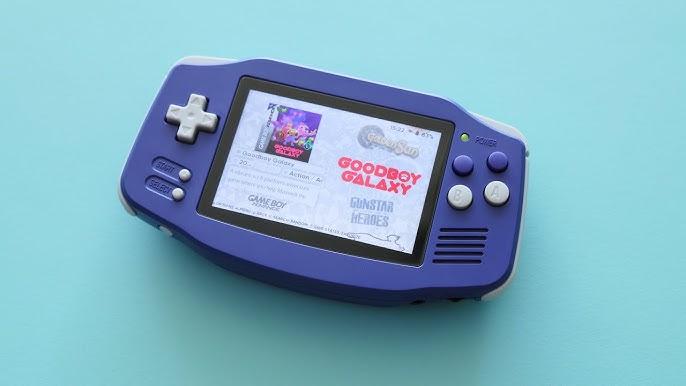
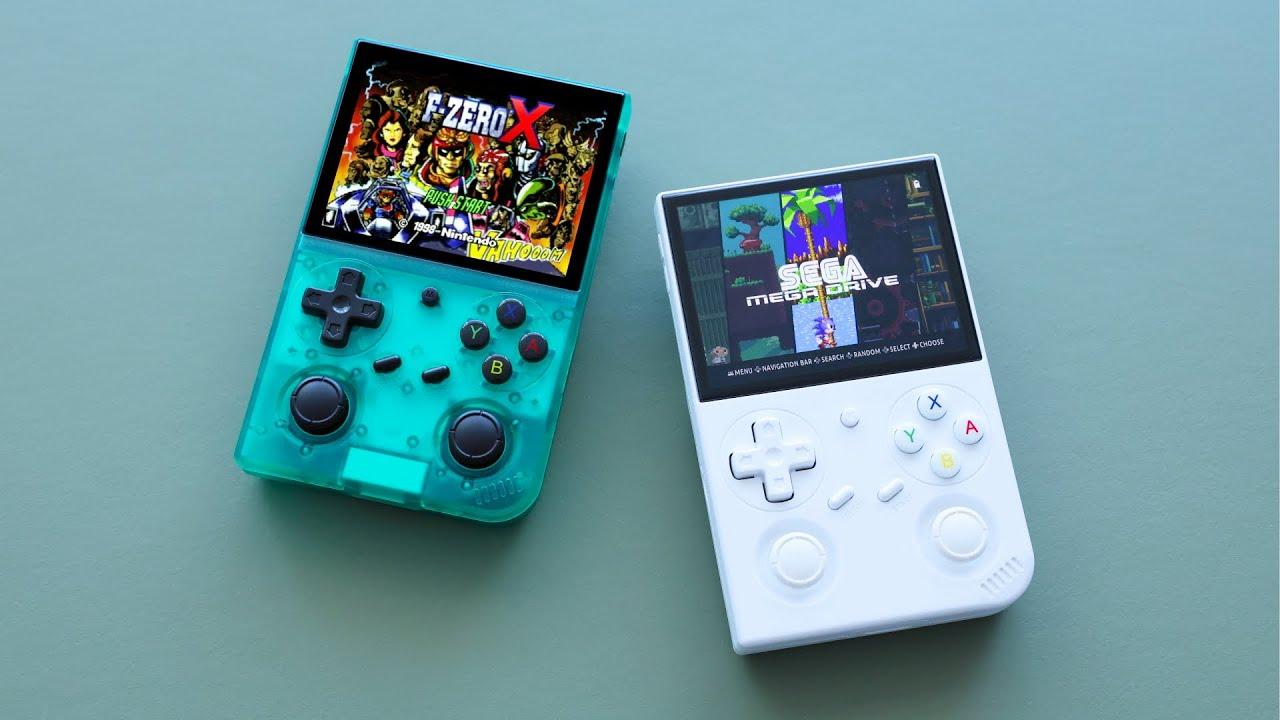
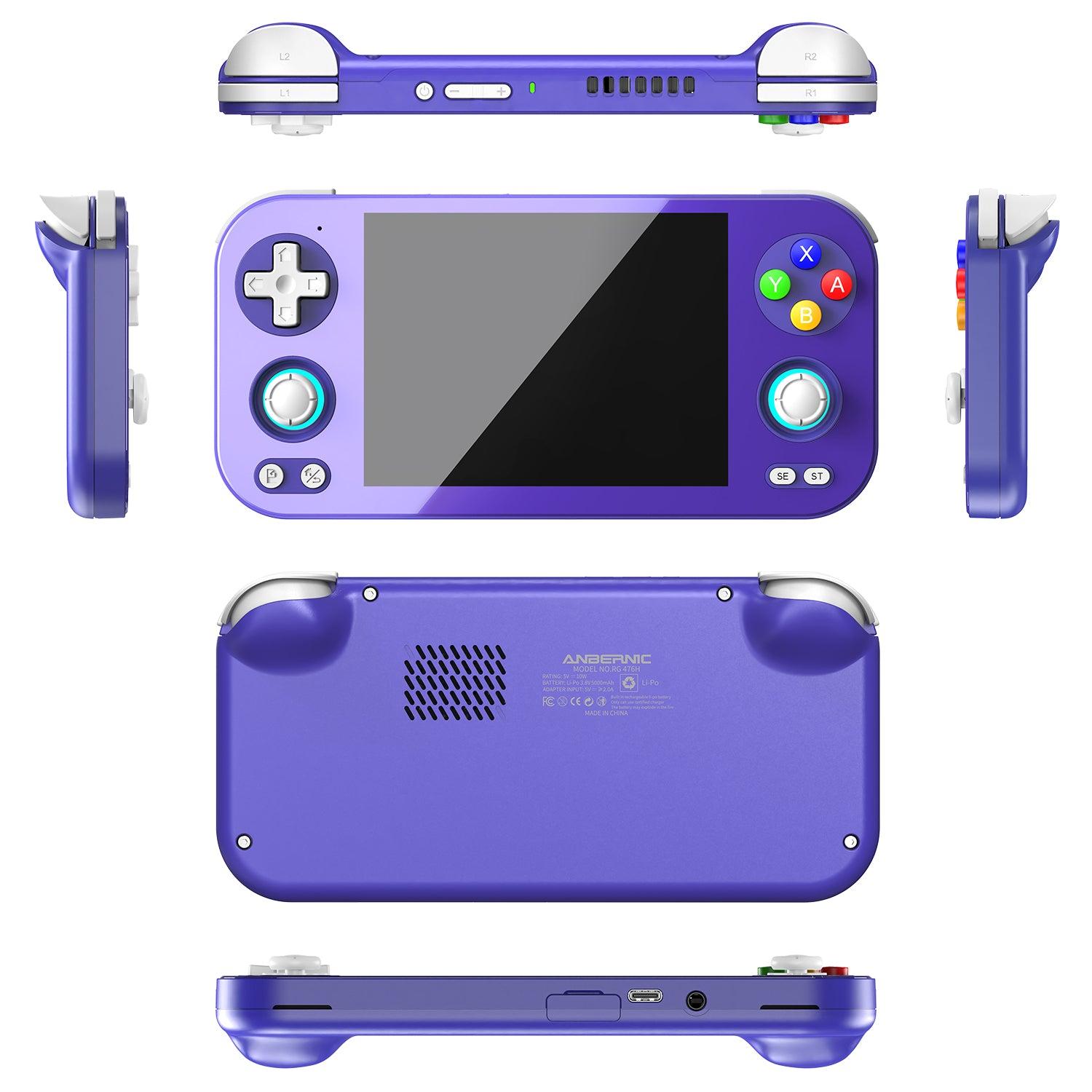
PlayStation emulation is the most mature target in the retro handheld market. Essentially every device sold today above the very cheapest tier runs PS1 games at full speed, which means raw processing power is not the thing to shop for here. For fighting games specifically, three other factors matter far more.
The d-pad. Quarter-circles, dragon-punch motions and charge inputs all depend on a pad that registers diagonals cleanly and does not need a roll through the corner. This is the single biggest determinant of whether a fighting game feels playable on a handheld, and it is worth prioritising over screen size or chip.
The button layout. Capcom's 2D fighters use six attack buttons — three punches, three kicks. On a four-button diamond you have to map two of them to shoulder triggers, which is workable but never comfortable for Alpha 3 or Darkstalkers 3. Namco's Tekken games, by contrast, are designed around exactly four attack buttons and map perfectly to any standard handheld.
The screen shape. PS1 output is 4:3. A 4:3 panel fills edge to edge; anything wider pillarboxes, and anything squarer letterboxes. Neither is a defect, but a 4:3 screen makes better use of the panel you paid for.
One thing that does not matter much: analog sticks. These games were designed around the digital pad, and almost every one of them plays better on it.
The 3D fighters here — Tekken 3, Soul Blade, Ehrgeiz, Tobal No. 1 — are polygonal, so an emulator that renders at a higher internal resolution genuinely cleans them up. The 2D sprite games gain nothing from that, and are better served by an integer scale at native resolution, where the original pixel art stays sharp.
Handhelds worth considering
Prices below were read from each store's own product listing on 30 August 2026 and will drift.
| Device | Screen | 4:3 fit | From | Buy |
|---|---|---|---|---|
| TrimUI Brick | 3.2" 1024×768 IPS | Exact 4:3 — fills the panel | $49.99 | LitNXT → |
| ANBERNIC RG 34XX | 3.4" 720×480 IPS | 3:2 panel — slight pillarboxing | $59.99 | Anbernic → |
| Anbernic RG35XX Plus | 3.5" 640×480 IPS | Exact 4:3 | $89.99 | LitNXT → |
| Anbernic RG40XX V | 4.0" 640×480 IPS | Exact 4:3, largest of the budget group | $95.99 | LitNXT → |
| Retroid Pocket RP Classic | 3.92" 1240×1080 OLED | Near-square panel; 4:3 fills the width | $229.99 | LitNXT → |
One of those is worth singling out for this genre. The Retroid Pocket RP Classic's listing offers a six-button face layout as one of its colour options — the only device in this group that maps Capcom's three-punch, three-kick scheme to face buttons without borrowing the shoulders. If your collection is mostly Alpha 3, Darkstalkers 3 and EX Plus α, that is a real advantage. If it is mostly Tekken and Soul Blade, it buys you nothing, and the cheapest 4:3 machine in the table does the job.
For a wider look at the budget end of this market, see our guide to the best retro handhelds under $100.
Frequently asked questions
What is the best fighting game on the PS1? Tekken 3. It is both the strongest game in the genre on the console and one of the best-selling PlayStation releases of any kind, which does not always happen.
Is Soulcalibur on PS1? No. Soulcalibur was an arcade and Dreamcast game. The PlayStation entry in that series is Soul Blade, the home conversion of the arcade game Soul Edge.
Which PS1 fighting games have the best single-player content? Rival Schools (an entire second disc), Street Fighter Alpha 3 (World Tour), Soul Blade (Edge Master Mode), and Tobal No. 1 and Ehrgeiz, which both include full dungeon-crawling modes. PS1 fighters were unusually generous with solo content compared to the arcade boards they came from.
Are the PS1 versions of the Capcom Vs. games worth playing? As games, yes. As conversions, they are compromised — X-Men vs. Street Fighter, Marvel Super Heroes vs. Street Fighter and Marvel vs. Capcom all had true tag-team play removed to fit the PlayStation's memory. If tag-team is the thing you want from them, these are not the right versions.
Do I need an arcade stick? No. Every game here shipped with a control scheme designed around the PlayStation digital pad. The six-button Capcom games are the only ones where a standard four-button handheld layout is a genuine compromise.
Related reading
If you like the 2D side of this list, the best Neo Geo games covers SNK's side of the same era, and the top fighting games on the Super Nintendo covers the generation immediately before it. For the rest of the console's library beyond the headliners, try our PS1 hidden gems. And for where these series went next, the best PS2 games of all time picks up in 2000.